David - Baroque vs Renaissance
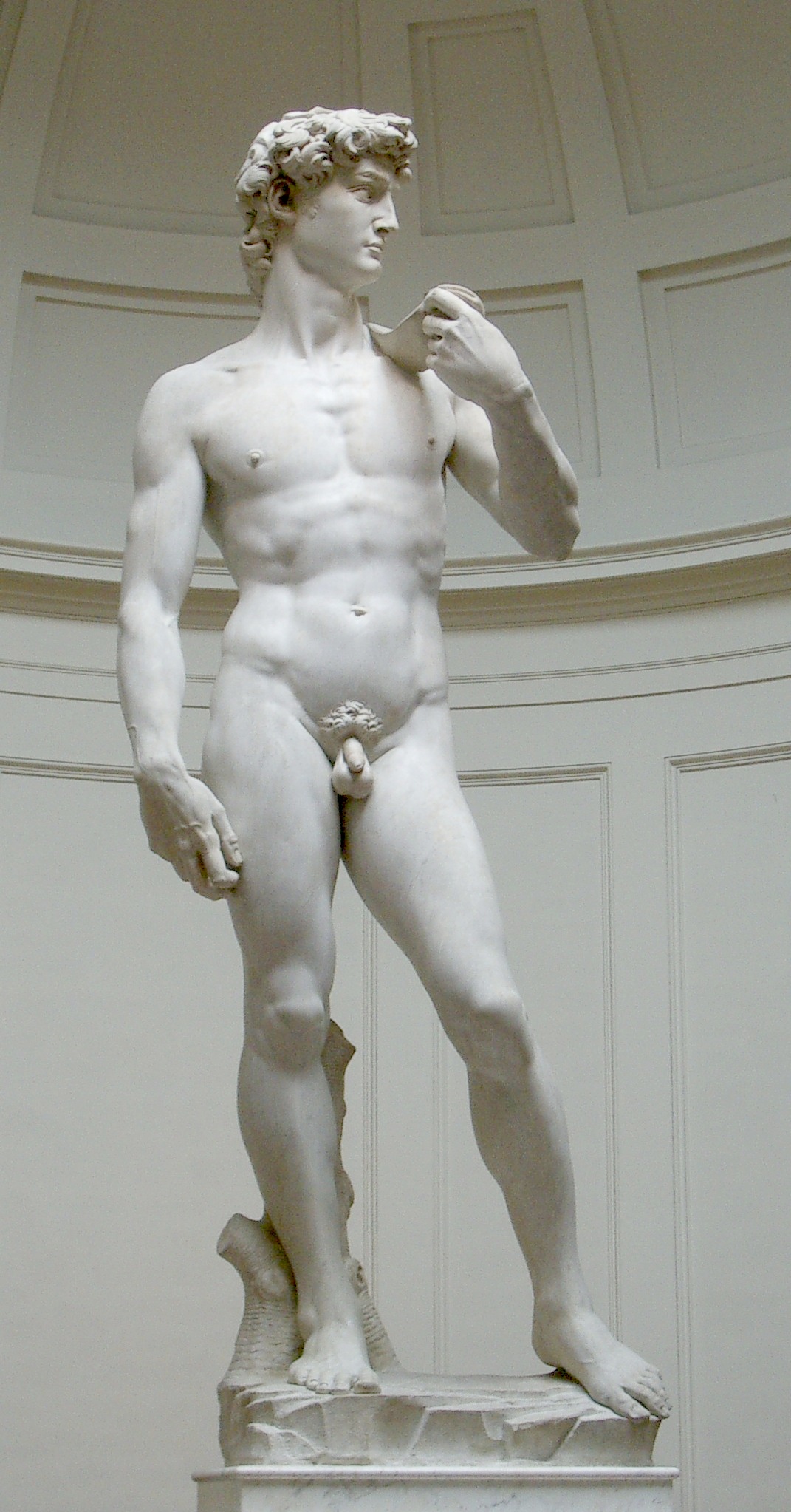
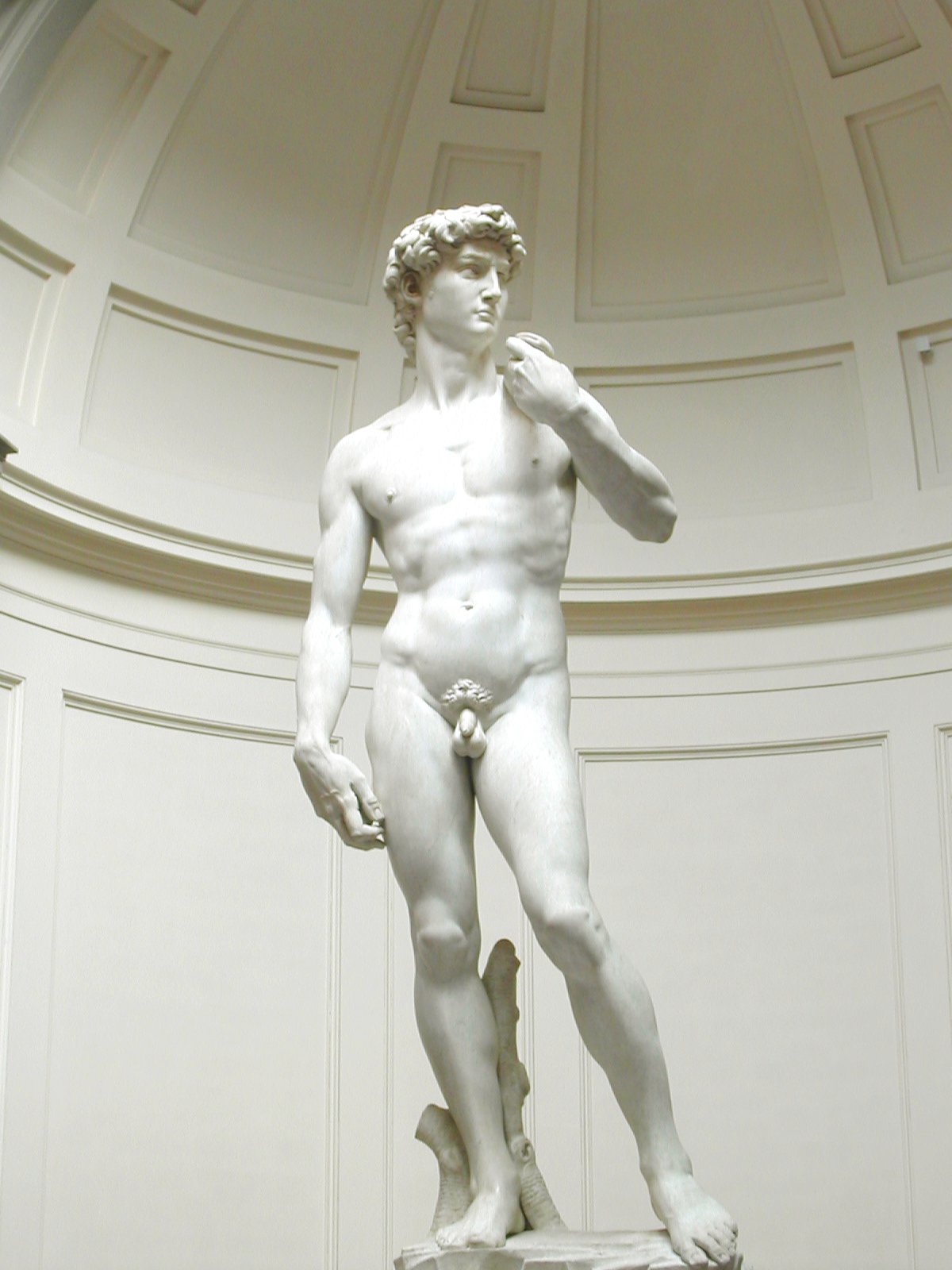
When I first began comparing the two different statues of David, Bernini's Baroque "David, and "Michelangelo's Renaissance "David" the first thing that came to my attention was the facial features. As you study the face of Michelangelo's "David" there is a sense of calmness to it. There is little or no emotion depicted in his face whatsoever. Here is a man, ready to face a giant with nothing more than a sling, a stone, and his faith in God, yet there is no emotion on his face. No signs of fear, anger, trepidation, determination, nothing. It is nothing but an emotionless stare as if he knows what it is he must do and is content in fulfilling that task.
As you study the face of Bernini's "David" however, there is a much different scene. You can see within his face a look of sheer determination and anger. His eyes are set with all of the rage in his body seemingly crunched up into his brow. The snarl of his closed and pursed lips demand attention as if they are telling Goliath of his fate as if he had foreseen it in a dream. Pure hatred pours out of every feature on his face. His cheeks are tense and muscular as if he is gritting his teeth, his nose flares with every breath and even his hair seems as if it is poised for the strike.
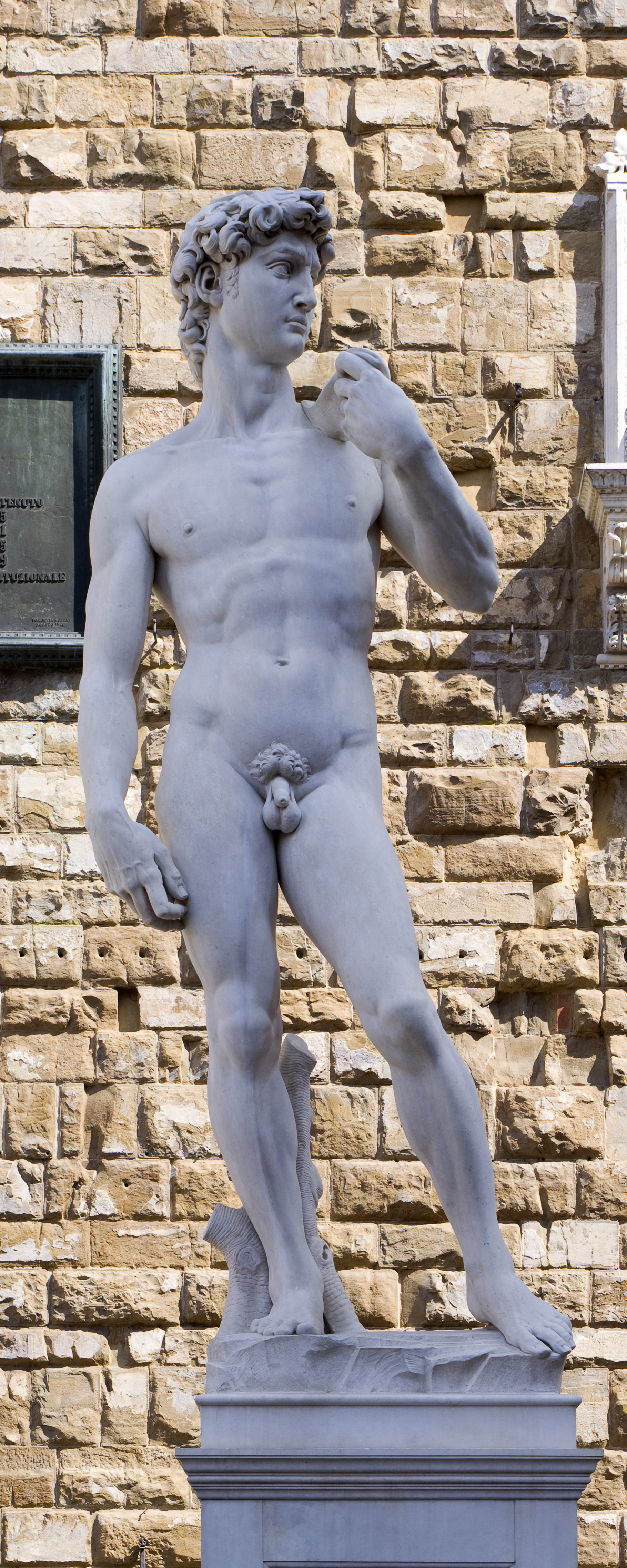
Moving on past the heads of the sculptures the next thing I took notice of was the positioning of the arms, his sling, and the stone. On Michelangelo's statue, David's right hand hangs somewhat relaxed at his side holding the lethal stone while his left hand rests lazily on his shoulder, concealing the sling, a weapon that was traditionally used by shepherds during that time,
More Works of Art
essays:
Michelangelo's "David" - with works cited
... his faith in God. The image of David contains such power and symbolism that the representation generated a popular theme in art. One work in particular influenced by the story of David is Michelangelo di Lodovico Buonarroti Simoni's sculpture ...
MICHELANGELO'S DAVID - Explains the steps that michelangelo took to complete the work for David, gives detailed features of the sculpture, explains how it became the symbol of the city
... it." Michelangelo presented his version of David differently than most other artists; as an athletic, manly character, very concentrated and prepared to fight. Unlike Verrochio's and Donatello's Davids, whose were depicted after their victories over Goliath, standing ...
Michelangelo's David: A critique
... of art. The perfection of form, which was so idealized in renaissance art, is clearly shown in Michelangelo's David. It is a closed form, which means that all sections ...
King David Statue
... at Michelangelo's David he is strong and broad, while also standing quite tall. Very similarly to the statue of King David was another sculpture done by Antelami, Ezechiel with Pilgroms, which is very similar to David in size ...
Artists and Art and Learning during the Renaissance
... different from Michelangelo's, whose art, nevertheless, influenced him. Portomo's extreme sensitivity bordered on the line of being crazy, and in his own life he was aloof and antisocial. In the next generation, younger artists began to reject the seemingly ...
Discussion and comparison of 2 works of Art from the MET. "Merry Company on a Terrace" by Jan Steen vs. "Modern Rome" by Giovanni Paolo Panini.
... by Michelangelo, a statue of David by Gianlorenso Bernini etc. The painting is quite large which gave Panini a lot of space to work with. It is clear that each individual painting and statue with in the ...
DAVID MICHELANGO, DONATELLO, this is on the four different architures that are sculptures of David.
... tradition. Michelangelo's sculpture is closed in form, like Donatello's David. All the elements move firmly around a central axis (Fichner-Rathus 345). Finally, there is Bernini's David, which is notably different from ...
Subject Matter explication on Cupid and Psyche.
... was determined to follow his mother's orders, but to his surprise, he fell in love with Psyche's beauty and charm. " Even though the beauty of Psyche had fascinated many, no man presented himself to demand her ...