The Day After Tomorrow Research Essay. An essay comparing and disproving scientific events in the movie, with similar scientific events in the real world.
Hollywood movies often exaggerate by creating claims and assumptions to propel their plots. One of these movies is The Day After Tomorrow. There are various events and scenes that support or disprove the movies claims including the following. There was a large breaking of an ice shelf in Antarctica resulting in higher sea levels. Secondly, a giant hurricane descended from the Arctic, freezing people with winds up to -150° F. Lastly, the abrupt change in climate seems to occur within a few weeks. Evidently, the movie, The Day After Tomorrow, is known to use science loosely to amplify its plot because of these three phenomena mentioned earlier.
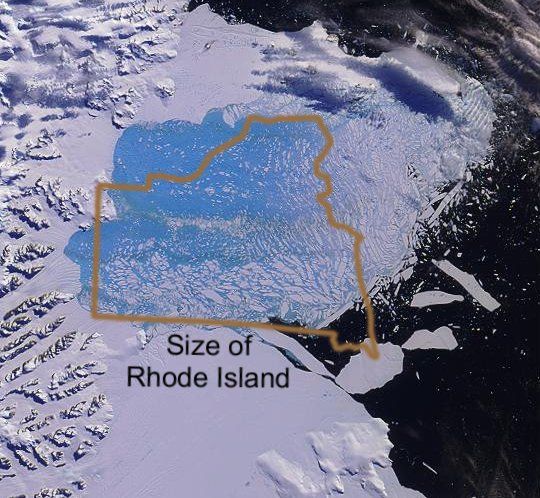
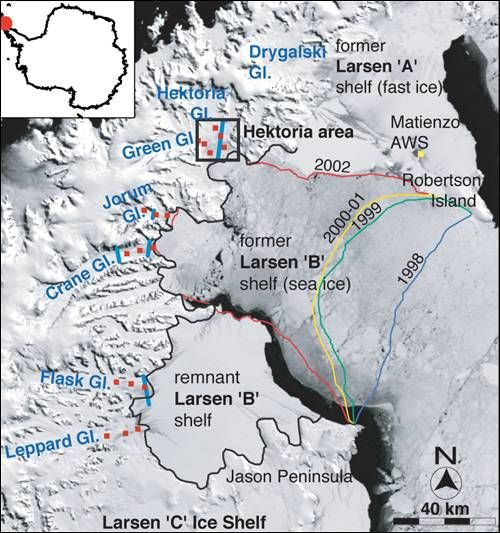
In the beginning of this movie, there was an event that consisted of an ice shelf that cracked and broke loose from the continent of Antarctica. This action resulted in a sudden rise in sea level and consequently a tidal wave in New York. The movies explanation for this phenomenon is that there was a cataclysmic climate shift and that global warming was causing the melting of the polar ice caps. From a scientific perspective, it is true that global warming can cause the sea level to rise. This is because global warming accelerates the rise of sea levels by transforming glaciers into water and incorporating that into the oceans. Global warming makes the volume of the water expand as it warms. This expansion results in an increasing sea level. At the current rate, global warming only increases sea level by two millimetres every year. What are not quite accurate are the rapid increase in sea level and the creation of an enormous tidal wave in New York due to global warming [1]. The movie stated that an ice shelf the size of Rhode Island broke of Antarctica and was one of the...
More Meteorology
essays:
Description of meteorology and different fields meterologists can work in
... air currents. Specific topics that may be researched include general circulation, synoptic-scale weather phenomena, and atmospheric predictability of physical processes in the atmosphere. Physical meteorologists study the physical nature of the atmosphere ...
Measurement of the structure and composition of the Earth's atmosphere
... more rapidly. At the peak of the mesosphere the temperature reaches approximately -95 °C. This is also the layer where meteoroids are burnt up when they enter the atmosphere. Thermosphere: The thermosphere begins about 80 km above the Earth. Temperatures increase ...
What Are the Effects of Acid Rain?
... on oceans. Particularly in static lakes, all acid rain is saved and the acidity of water comparatively increases. If lakes have a pH value of less than 5.0, most of the organisms ...
Dealing with floods mainly in Canada. Past floods, prevention, flood management etc
... reach of the river. It mobilized river sediments; reworked rapids and fans of debris; made sandbars one to two meters taller; and, through scouring, increased the size of backwater ...
A Statistical Account of Hurricane Katrina and it's Effect on the Gulf Coast, Posed Question: Would this natural disaster have occured the same way if the politicans in command had been different?
... this rate New Orleans will be between 2.5 m - 4 m below sea level by the year 2100. (Sea-Level Rise) The sinking of the city along with rising sea levels will ...
Meteorologist: Alfred Wegener
... that continents do indeed move. Moreover, as Wegener had predicted, the movement is part of a grand scale process that causes mountain-building, earthquakes, volcanic eruptions, sea-level fluctuations, and apparent polar wandering ...
Disasters, speaks of the study of hurricanes
... bands of thunderstorms 2: whip up ocean spray, which increases evaporation. The storm begins feeding on itself, using the evaporated warm water as additional energy. 3: Rising air near the center of the storm ... out. After looking at all of the data ...
The Ozone Layer: What Does It Do And What Happens When It's Gone?
... and the loss of it would actually decrease the global warming effect on Earth instead of increasing it (Introduction). Ozone in the stratosphere is beneficial to life on Earth, but ozone at ground level is ...