In 1066, the conquest of England by the Normans caused England to develop into a Monarchy. Bye 1215, with the Magna Carta the absolute power of monarchs in England was already being challenged. As time progressed the power of monarchs decreased and the power of parliament became supreme.
In 1066 William I, setup a strong new ruling class of nobles. This was know as feudalism. At this time the power of a monarch was very high and practically absolute. During the Plantagenet Dynasty Henry I set up a basis for royal courts clashing with nobles over jury system, English common law, and royal finances. During the Tudor dynasty the monarchs managed to strengthen their power by taking control of the churches of England. This detached them from any control religious figures had at the time. The rulers during the Tudor dynasty also had occasion disputes with parliament. The Stuart dynast tried to completely ignore parliament.
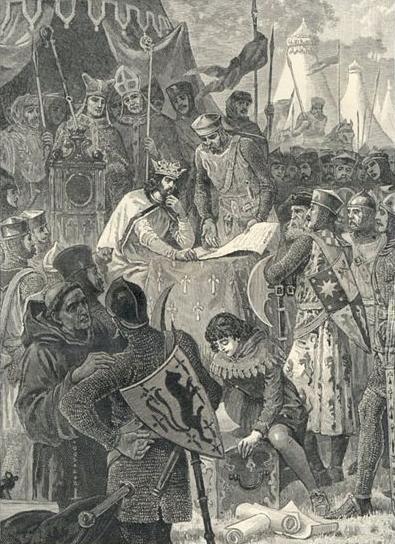 English: John of England signs Magna Carta. Image ...
 Detail of the Magna Carta monument at Runnymede. I...
 King John of England signing Magna Carta on June 1...
James I and Charles I tried to reign as absolute monarchs. In 1649 - 1659 England was ruled by the Commonwealth government under Oliver Cromwell. Soon after the end of the Commonwealth government the power of future monarchs began to decrease rapidly. Charles II accepted sharing power with parliament. Then in 1688 parliament overthrew James II and installed William and Mary. During the Hanover Dynasty and the Windsor Dynasty the power of Parliament was becoming supreme.
The power of monarchs decreased for several reasons but, the main reason was because parliament was forcing monarchs to lose their power. It started with the Magna Carta in 1215 which nobles forced king John to sign in order to limit his power. In 1295 parliament gained control of money granted to the king. Later the houses of lords and commons emerged as representation expanded. In 1628 the petition...