In the late 1870s the king of Belgium, King Leopold colonized the Congo. King Leopold saw that without colonies Belgium would not be prosperous, but he decided to privately establish a colonial empire because he knew that his people would not support colonization. During the Berlin Conference they recognized King Leopolds clam on the Congo. In the mid 1890s king Leopold's control was established in moist parts of the state. In 1891-1892 Katanga, which is the capital of modern democratic republic of the Congo, was conquered. In 1892 and 1894, east Congo was forcibly taken from the control of east African Arab and Swahili traders. King Leopold did not have sufficient funds to develop the Congo. He received loans from the Belgium parliament in 1889 and 1895. At that same time, Leopold declared all unoccupied lands belonged to the state giving himself many of the natural resources including rubber and ivory.
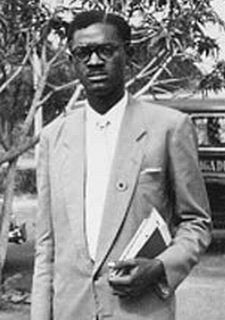 Patrice E. Lumumba; Congo prime minister, premier ...
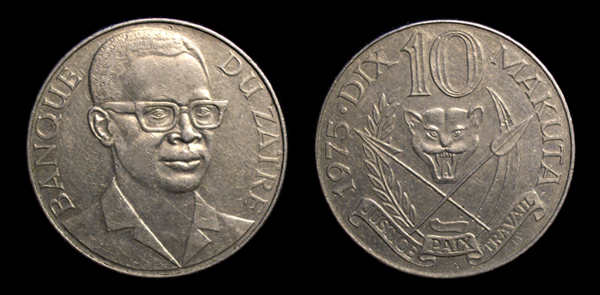 English: 0
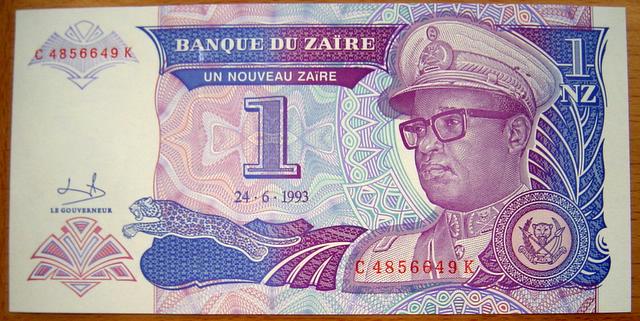 שטר של זאיר חדש אחד, קונגו-ז×...
Much of the land was given to businesses which would in turn build railroads. Private companies were established to use the mineral wealth of the regions.
As a return for the loans, Belgium was given the right top annex the Congo in 1901. Under Belgium rule the worst force labor began to diminish but it was still regarded as a European investment. They continued to develop the Congo by constructing railroads and other transportation facilities. Many large plantations and vast miming operations were set up. The mining operations were set up for copper, gold, silver, and diamonds. In the early 1930s Christian missionaries were very prominent in the Congo, they were the main source of medical help and education. However only in 1950 when two universities were built were the people educated over the primary level.
Simon Kimbangu was the leader of a note worthy indigenous religious movement who...