I believe that the least remarkable of Democritus' very great contributions was his "atomic theory", which was basically accepted by modern science 2000 years later (with some refinement and modification). His atomic theory was naturally highly suggestive of some quantum phenomena also. The most remarkable thing about Democritus' Atomic Theory was that he devised it by violating every major principle of modern science, especially the importance of empirical observations and "reasonable" testability. (Could he have developed it any other way? The Sophists likely said that if you can't measure or test it, it has no meaning "to them." ) http://www.causeeffect.org/articles/greeks.html
Thus he established the Law of Conservation of Mass.
Repeating the experiments of Priestley, he demonstrated that air is composed of two parts, one of which combines with metals to form calxes. However, he tried to take credit for Priestley's discovery. This tendency to use the results of others without acknowledgment then draw conclusions was characteristic of Lavoisier.
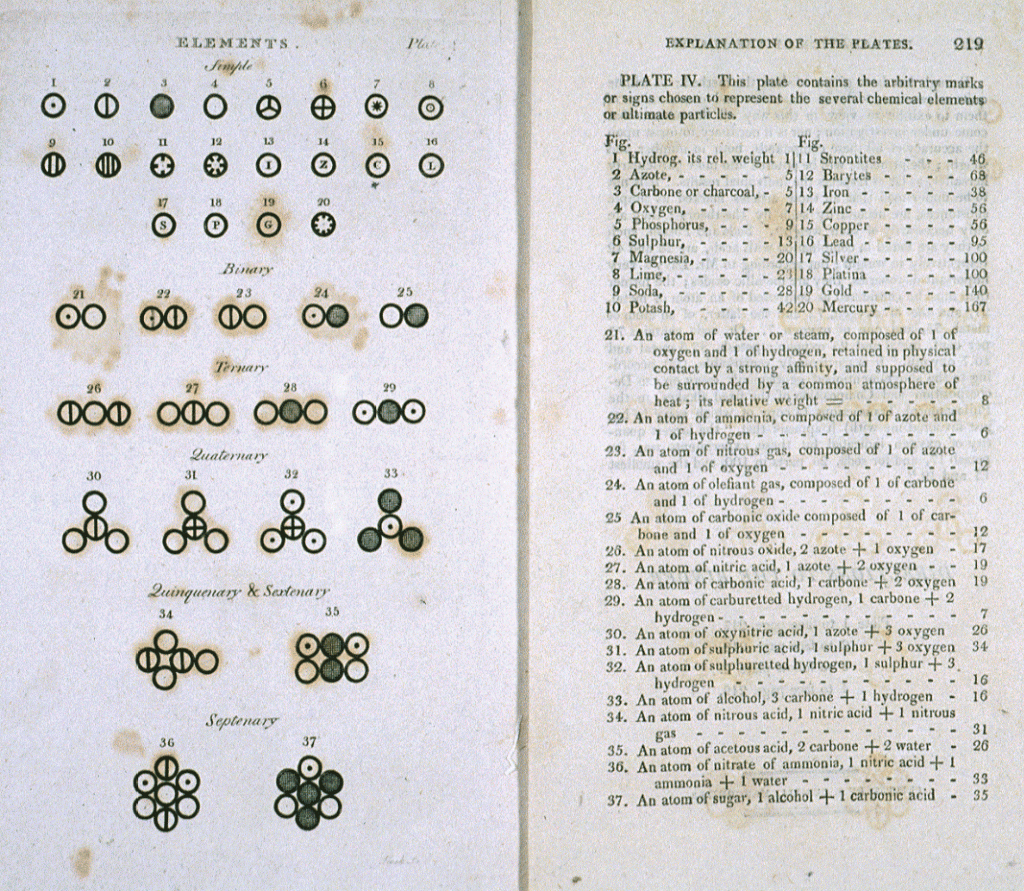 Various atoms and molecules as depicted in John Da...
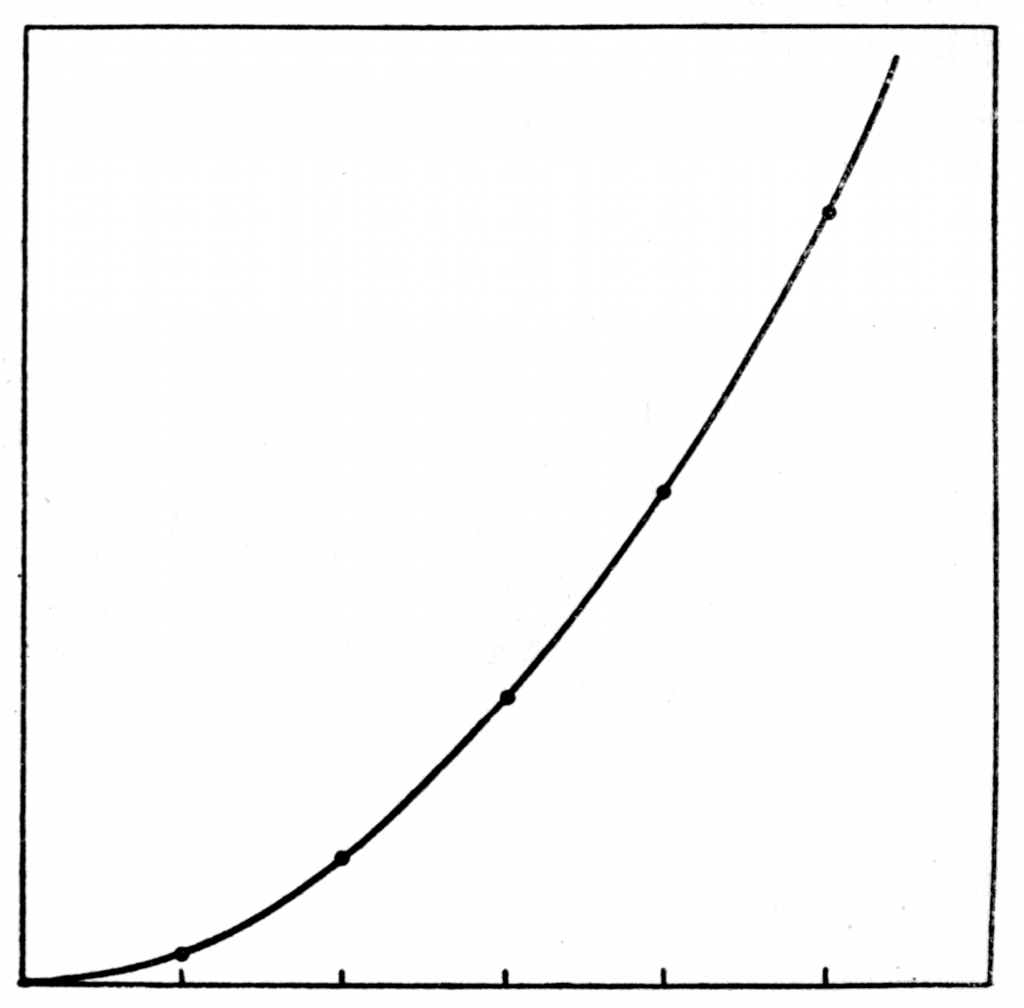 figure in a work on the atomic theory
 Statue of Joseph Priestley in Chamberlain Square, ...
In Consideraciónes Gérales sur la Nature des Acides (1778), he demonstrated that the "air" responsible for combustion was also the source of acidity. The next year, he named this portion oxygen (Greek for acid-former), and the other azote (Greek for no life). He also discovered that the inflammable air of Cavendish which he termed hydrogen (Greek for water-former), combined with oxygen to produce a dew, as Priestley had reported, which appeared to be water.
http://scienceworld.wolfram.com/biography/Lavoisier.html
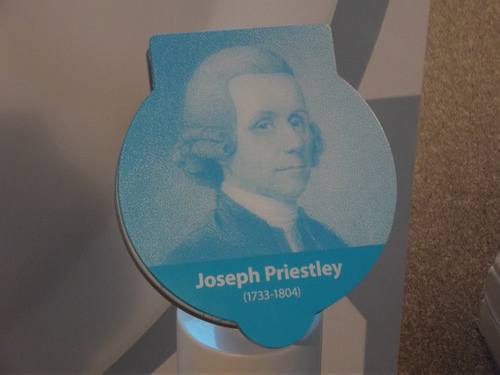 Birmingham History Galleries - Birmingham its peop...
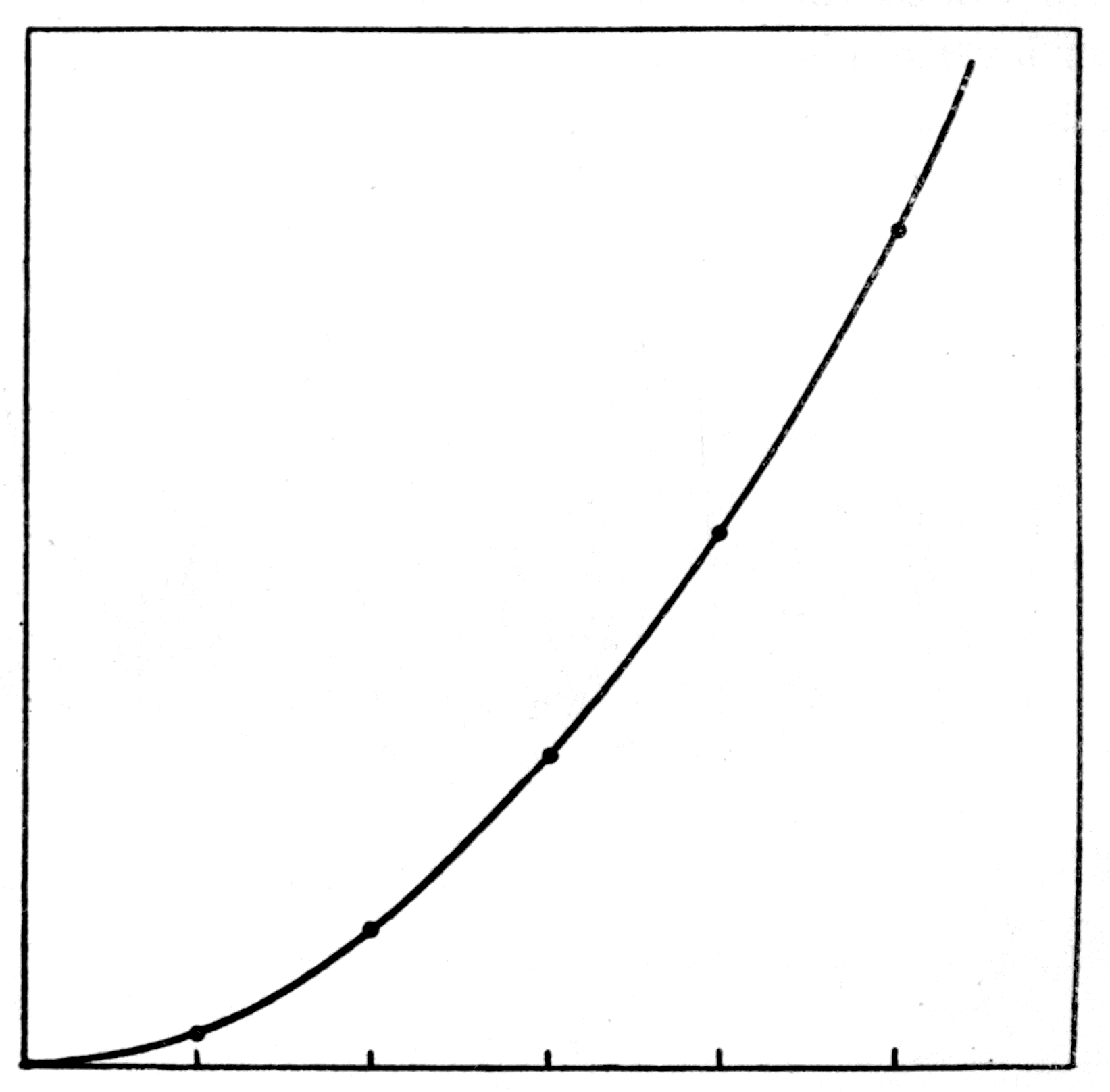 figure in a work on the atomic theory