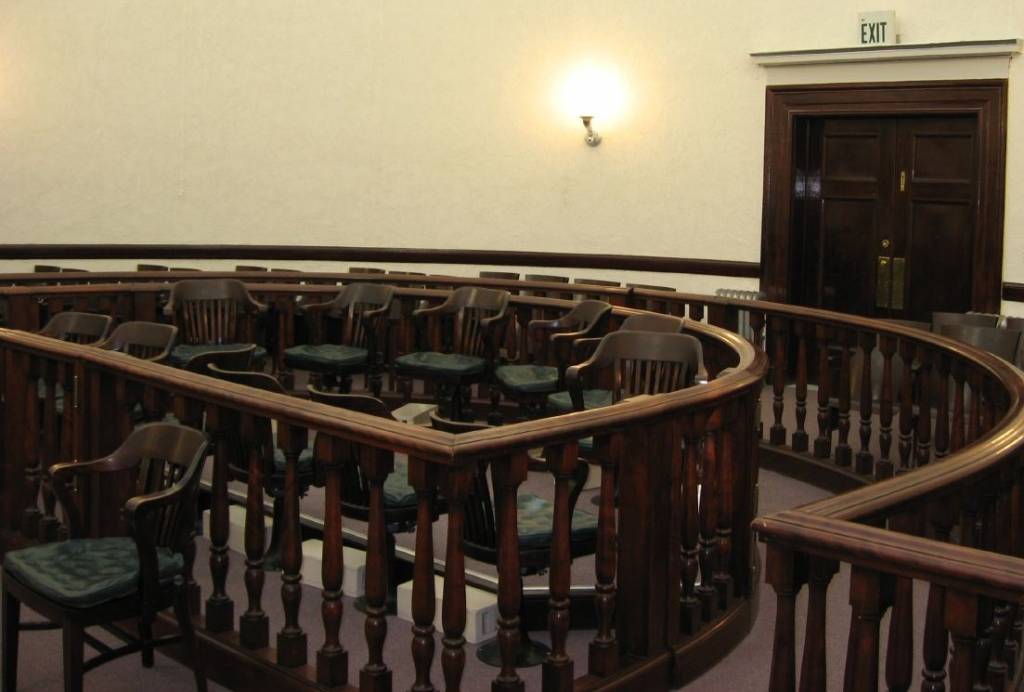
Description of a jury trial in an english court, how effective they are and some criticisms.
What is a jury?
All cases of serious criminal offences are tried by a jury.
-A jury is a panel of 12 people who listen to the evidence presented in a court case and then give a verdict on the guilt or innocence of the person or persons on trial.
-The members of the jury are impartial, they don't know anyone in the trial and don't care about the result
-Their verdict is based solely on the evidence they have heard.
There are also a few civil (i.e. non-criminal) cases in which juries are involved, such as inquests and libel trials.
-In civil cases the jury is usually made up of eight people.
Who can serve on a jury?
Everyone in the United Kingdom who is on the electoral roll can be summoned for jury service if they are aged between 18 and 70 and have lived in the UK for a period of at least five years since they were 13 years old.
Some people, however, are ineligible for jury service. This might be because of their work (e.g. judges and priests), or because they are mentally ill. Some people are disqualified from jury service because they have committed a crime themselves and been imprisoned or put on probation.
It is illegal to serve on a jury if you know you are ineligible or disqualified, and anyone who does can be fined heavily.
Some people also have the right to be excused from jury service. This category includes:
-Those over 65
-Members of the UK or European Parliament
-Members of the armed forces
-Those who have served on a jury in the previous two years
What does jury service involve?
If called upon for jury service, you are usually expected to serve for ten working days, although you can...
More Law
essays:
Breach of contract and specific performance: the law in India and England.
... the same guiding principle that compulsion to perform labour or service against one's will, even if that be in breach of contract, is an offence to human dignity. iii) Determinable contracts: Where the contract allows ...
Identify and evaluate the roles of the Prosecution and Defense in a criminal trial. Identify & discuss the sentencing powers, available to a Judge in a specific criminal case.
... and Criminal Evidence Act 1984 (PACE) and The Prosecution of Offences Act 1985 lead to the establishment of the Crown Prosecution Service (CPS) in 1986. The CPS is responsible, on behalf of the state, for prosecuting criminal cases investigated ...
The Right To A Free Trial in America
... the Jury Room, showed a videotaping of a real life jury as seen in a small criminal courtroom. The case was Wisconsin v. Leroy Reed, a criminal trial for ... guilty" verdict was eventually reached due to doubt, not necessarily innocence. In the jury simulation ...
The distinction between insanity, automatism and diminished responsibility in the Laws of England and Wales. Covers the M'Naghten rule which is also a dominant rule in US legal doctrine.
... criminally responsible . As Duff remarks of the potential insane defendant "if she cannot understand what is being done to her, or why it is being done, or how it is related as a punishment to her past offence ...
The Roles of the Main Players in A Canadian Criminal Law Case
... a jury, where verdicts should be reached based on facts beyond reasonable doubt rather than emotion or opinion. It is also important that the crown present unbiased evidence to the court so that the innocent are ...
Demeanor of a Trial Judge.
... jury to ensure equality between contestants under the law. It would be an ideal situation to have all judges' follow every principle given in accordance and always find truth and a just decision, but this is not the case ...
Critically Assess The Roles Of The Magistrates’ Courts And Lay Justice In The English System Of Justice
... million criminal cases a year, which is 95 percent of all criminal trials, with ... Studies in 1987 showed that persons charged with an indictable offence had a 31% chance of being remanded in Bournemouth, compared ...
The Law process of a Stealing charge
... the year. In criminal trials, there will often be a jury of ... an offence, even if they are completely innocent. If some one resists arrest, they are committing an offence with ...