The Dichotomy Between Sanity and Insanity in Durrenmatt's The Visit and Dorfman's Death and the Maiden
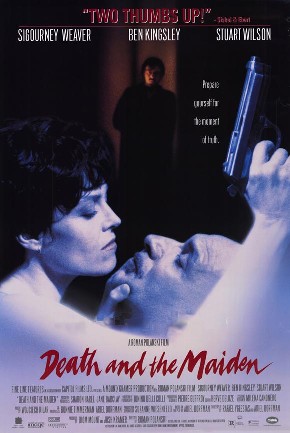
A sane state of mind is generally associated with serenity and an individuals ability to decipher between iniquities and make sound judgment. However, in Frrederich Durrenmatts The Visit and Ariel Dorfmans Death and the Maiden, a paradoxical dichotomy of sanity derived from a perceived insane state is revealed. Although these two plays differ in plot, they both present a common theme of vengeance sought by a seemingly fanatical female protagonist. Death and the Maiden exposes Paulina Salas as a tortured and raped blindfolded woman that years later believes she recognizes her capturer. In The Visit, similar Claire Zachanaishann wishes to render justice years later for the grievance delivered to her by her lover; Ill. The two plays demonstrate the conflicting dichotomy between insanity and sanity and the related irony of the gain of consciousness through the loss of sanity. Durrenmatt reveals this through an alcohol motif representing intoxication while Dorfamn uses the theme of memory in Paulinas experience to reveal the ambiguous nature of sanity.
The alcohol motif in The Visit is present in all relation dealing with morality. The blind pair Koby and Loby reveals that they had been bribed by Ill with a pit of brandy to lie in court and testify that they had impregnated Claire instead of Ill. As a later consequence Claire seeks revenge and blinds and castrates them (Durrenmatt 38). It is in this condition that they are brought back into the town of Guellen to re iterate the truth. Ironically is as the blind pair that they confess the truth (Durrenmatt 25). Blindness connotes the loss of ones ability of sight and an associated impaired judgment; however ironically Durrenmatt displays that as one is drawn closer to a senseless state he ironically is more susceptible to gain consciousness and reveal the truth. However,
More World Literature
essays:
Analyse two prescribed and related texts on how composers conform to the Revenge Tragedy genre to suit their context, purpose and style.
... their deaths and the audience's sense of moral order is reinforced by their vicarious participation in the tragic events. The atypical complete absence of this kind of moral growth in Vindice and the irony that ...
"Pygmalion" and "Wide Sargasso Sea" essentially project a patriarchal society, where the female succumbs and the male prevails" Do you agree with this statement?
... these two works enhance the projection of a patriarchal society, a situation where the female succumbs and the male prevails. The personalities of the main ... As the main male protagonist, Rochester is not the typical ...
'How does this damn love unman me!' (Lovelace, Clarissa). How does the Rake figure illuminate the contradictions of masculine desire in Samuel Richardson's 'Clarissa'?
... undermines the sexual act. Nobody experiences the rape. The rape, his moment of victory, actually initiates her slow death and the utter ... her death, than the male protagonist. When Clarissa questions the Rakish ...
"Confessions of a Mask": Kochan (Narrator) Character Analysis
... novel, "Confessions of a Mask", by Yukio Mishima examines the struggle for acceptance by a man living outside of the socially accepted norms. A pattern that strongly pervades this novel is death and the images ...
Interpretations of texts can shift and change with time and place reference to Slyiva Plath's "You're" and "Last words"
... her death and the life after she is gone by showing changing the context of time. By constantly referring to the historical symbols such as a sarcophagus and Ishtar Plath creates a motif of ...
Comparison of the Gothic Genre in "SAW", "Frankenstein" and its 1931 filmic adaptation.
... by the Gothic concerns of the suffering antagonist and the psyche of insanity- each three texts prove the genres adaptability and hence ... alien nature. The Monster can be seen as a symbol for the duality of human nature and its ambiguity highlighted with the motif of fire. The Creature ...
This paper discuses the formation of an enemy and how it is represented in Dante's "Divine Comedy" and Melville's "Moby Dick". Along with Citations.
... enemies (death) before they can come to us and kill us by doing so we will have destroyed death and become immortal. The three ... hate the Archbishop with a vengeance. We have seen how Dante characterizes the enemy in situations of both love and hate ...
"The Hunter" by Julia Leigh: How is the main character constructed to represent the novel's underlying values and attitudes?
... to the plateau. He begins to forget the Armstrong family as he once again descends into "The natural man". "He comes to think of his fondness for Lucy and the children ...