Discuss the roles of development, learning and evolution in the construction of the nervous system.
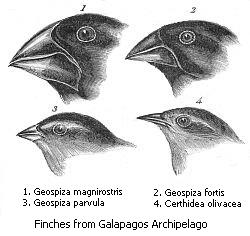
Evolution, development and learning all affect the organisation of nervous systems and all are inextricably linked together. The importance of evolution can be observed easily simply by looking at the differences that occur in nature, from the relatively simple systems in invertebrates through to what is perhaps the pinnacle of complexity in the primates. Natural selection will act upon the behaviours asserted by the animals and the underlying neural circuitry will be selected as a consequence. New structures that arise as a result of such selection will be present in some animals as opposed to others as developmental systems will have been affected due to the appearance of novel homeobox genes. As a result, individuals of phyla will have similar basic neural organisations, differing only due to polymorphism which also provides the raw material for natural selection. There is also a third mechanism which acts to modify this general circuitry, and this is learning. Such a mechanism is viable due to many epigenetic processes which can act to revise synaptic connectivity in response to experience, thus allowing individuality. Learning is linked to development as this is the period during which the system is most amenable to such processes, in addition to learning having a genetic basis, which also links it to evolution. Thus each of the factors plays an important role in the organisation of neural circuits, albeit to different degrees, the first two, for example are likely to contribute more to the disparity between higher taxonomic groupings, whereas the latter will assert its effects primarily in variation within species. In this essay I shall discuss each of the factors and their contributions to the differences observed in the nervous systems of animals.
The capacity...
More Human Biology
essays:
Pilot fatigue The Causes, Effects and Consequences
... this system at A.B Won Guam International Airport. Had these navigational features been available to the pilots, enabling them to be able to conduct a precision rather than non-precision approach, the accident may have been avoided ...
A critical and in depth analysis of pituitary dwarfism!
... system. Because it releases the major hormones involved in growth, we will be concerned only with the anterior section of the gland. The major function of the anterior pituitary is tropic. This suffix is used to point out hormones that affect ...
Adult Tissue Angiogenesis: Evidence for Negative Regulation by Estrogen in the Uterus.
... not have been necessary depending on the assumed readership of the journal. It may have been supposed ... in the conclusion which briefly mentions related diseases and conditions affecting pregnancy and the uterus in humans. This does not allow ...
Digestive system
... that have been shed from the mucosa. These materials are ... heart and through the arteries, and return to the digestive system, where they stimulate digestive juices and cause organ movement. The ...
Analysis of Cutaneous Sensation and Reflexes by examining Receptive Responses.
... of H-reflex modulation with the Jendrassik maneuver and postural complexity ... body compensates for changes in the environment to maintain equilibrium. Materials and MethodsThe sensation portion of the experiment was divided into ...
Stem Cells In The Brain
... replacement. Until recently, it was believed that cells of the nervous system did not participate in cell regeneration and replacement. However, as ... also have been found to hinder neuron production. Stress has been found ...
The Nervous System: A basic Summary of the nervous system and some little peices on how it is affected by disease and drugs.
... all animals have a highly specialized nervous system. Those with more simplified systems are usually small and very mobile or large and immobile. The evolution of nervous systems must have been an ...
The Big 'M' Menopause How does it start, what is it exactly, and how do I handle those night sweats.
... Estrogens have an effect on about 300 different tissues throughout a woman's body--not only those involved in the reproductive process, such as the uterus, breasts and external genitalia - but also tissues in the central nervous system (including ...