discusses whether it is all right to disobey or to obey the government. Includes some of Plato's ideas
- -
For centuries many philosophers have asked themselves, 'What is the right thing to do?'. They do have some guidance but cannot totally rely on most of these references. One of these references is the system of laws that the government has imposed onto the population that lives inside their boundaries. Can this system of laws really be just? Can we base our judgement on what is right and what is wrong according to these set of rules? In the following pages, I will explain whether it is all right to disobey or to obey the government.
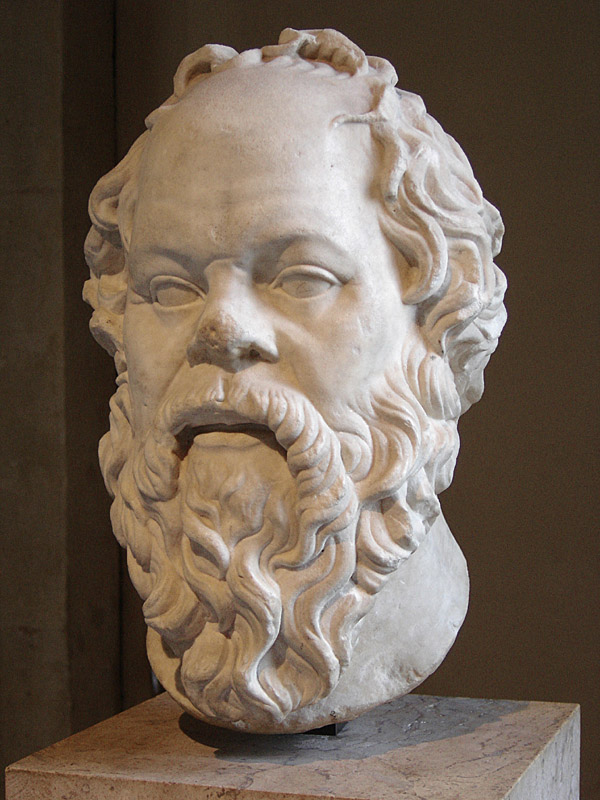
In Plato: The Trial and Death of Socrates, Socrates discussed with Crito his argument on the topic of 'Persuade or Obey.' Socrates states that you must persuade the government that your actions were just or one must obey its laws. Whether it 'requires you to fight in a war and die for your die for your country or be wounded, you must still obey (p51b3).' He goes on to say that to obey is 'right, and one must not give way or retreat or leave one's post, but in courts or war, one must obey
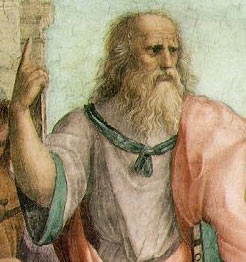
the commands of one's city and country (p51b6-b8).' The next part of his argument states that one that disobeys does wrong in three ways, by disobeying his parents and those who brought him up, and by disobeying, he neither obeys us nor he tries to persuade us to do better. Socrates' point is that we must obey the laws of the city or country where you reside in because you chose to stay and use the resources offered to you. Choosing to stay also tell us that you are satisfied to live there. Therefore, you exclusively choose the government and agree to be one of their citizens.
More Contemporary Philosophy
essays:
It is 300BC, you are a Platonist. Your friend, also a student, has been condemned to death by the Athenian court. Write him a letter preparing him for his last hours.
... arguments. Bibliography PLATO, The Trial and Death of Socrates, Four Dialogues (Unabridged), Jowett B (Trans), 1992, Dover Publications Inc, New York. PLATO, Republic, Lee ... they comfort me when I think of you, for you have ever chosen the path of the true philosopher and, so long as ...
Crito And the Lessons to be Learned from his Failed Attempt to Save Socrates
... harm the state of Athens itself. Crito, and other followers of Socrates, view his death sentence, as suicide. They believe that his trial was unjust, and that he should escape, on the grounds ... virtuous and honorable philosopher. On a somewhat less philosophical note, if Socrates were ...
PLATO: Greatest Contributor to Philosophy A report about Plato's contributions to the development of philosophy. It covers his Academy, Dialogues, and his student Aristotle.
... upon and shared with others from his society. It is believed that Plato, student of Socrates, was one of the greatest contributors of philosophy. Proof of Plato's prominence in the world of philosophy ...
The Republic of Plato, the Socratic thought process
... translation of The Republic of Plato, the divided lines look something like this: FormsIntellection The mathematical objectsThought ThingsTrust ImagesImagination The above diagram is a thought process that is prevalent throughout Socrates' thinking ...
Philosophy: Mind vs. Body discussion NOTE: THIS IS A WORK OF FICTION WRITTEN BY THE AUTHOR OF THIS ESSAY.
... result of dualism regarding death. Murrow: Was Plato the very first philosopher to argue about this? A.V.S: Some philosophers argue that Plato was not the first person to discuss this argument. Pythagoras in sixth century B ...
Plato - "The Ring of Gyges".
... Plato, "The Ring of Gyges" In "The Ring of Gyges" we are told about a shepherd, for the king of Lydia, named Gyges. One day as Gyges was letting his flock graze, an earthquake opened the Earth ... born within us. Plato says that no man, when faced with the opportunity, could act justly and with morals ...
An essay on Plato's theory of forms.
... reflection of what is real. For Plato, the real world is not what we see around us, it is only the "World of forms" that is real and unchanging ... clearer than what he saw in the cave. The ignorant left in the cave wanted nothing to do with the philosopher's alternate and perfect world because they ...
The Effect of the Philosophers on 17th and 18th Century Society
... characterizes the Philosophers of the 17th and 18th Centuries: 'Politically and socially, most propagandists of the Enlightenment like the scientists whom they popularized were conservatives. Intellectually and morally, they undermined the values of the traditional ...