A discussion on the principle ways in which heat is gained and lost by the body, explaining the various mechanisms involved in the regulation of body temperature
Since evolution began Man has spread to all areas of the globe, his ability to regulate his body temperature independently of his external surroundings contributes significantly to this success. This assignment will discuss the methods by which heat is exchanged, the effect of this exchange on the body and how it is utilised in thermoregulatory mechanisms. The importance of these regulatory measures will be demonstrated by a brief description of the effects on the body when they do not function properly.
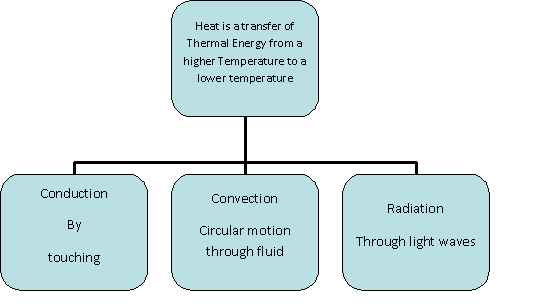
Body temperature is not constant, as discussed by Heath (2003), it fluctuates in accordance with endogenous and exogenous variables, such as metabolism and ambient temperature. Regulatory mechanisms help keep the core (internal) temperature within a narrow range of 36.1°C to 37.8°C (the 'set point'). To keep within this narrow range a balance must be maintained between heat loss and heat gain. The body has three mechanisms it can draw on to achieve this: generating its own heat, gaining heat from the environment and loosing heat to the environment. This movement of heat between the body and surroundings occurs by conduction, convection, radiation and evaporation.
Movement by conduction requires two solid objects in direct contact with each other e.g. when standing barefoot heat will be conducted from the soles of the feet to the floor. This exchange will continue until contact is broken or equilibrium is reached, at this point the floor ceases to drain heat from the feet, acting instead as insulation. As a result, Clark & Edholm (1985) estimate the role of conduction in thermoregulation to be no greater than 2%.
Convection is the transfer of heat by a moving gas or liquid. Heat from the skin transfers to the surrounding air, as the air is heated is becomes less dense and rises to be replaced by cooler...
More Human Biology
essays:
Steroid and non-steroid hormones differ in how they affect target cells. Describe the mechanisms involved using specific examples of each. How is it that hormones affect some cells and not others?
... cascades amplify the effects of hormone molecules on target cell metabolism. When the blood sugar level lowers, insulin is released. The same basic mechanisms are used in many diffferent hormone and target cell combinations ...
Compare and contrast the negative feedback regulation of blood pressure via short- term mechanisms and long-term mechanisms.
... cause an increase in blood pressure. While all of these mechanisms work to regulate blood pressure sometimes the body needs a long-term solution. This is where the kidneys ...
Birth defects
... interactionist view. The clinical view is the overcoming of the internal quilt reaction. Many parents show sighs of physical illness, nervous conditions or display defence mechanisms such as denial, not excepting their child is handicapped. Solnit ...
The effects of altitude on human physiology.
... the body. Some of these changes happen immediately in response to reduced levels of oxygen while others are a slower adaptation. Some of the most significant changes are: Chemoreceptor mechanism increases ...
The effects of altitude on human physiology
... the body. Some of these changes happen immediately in response to reduced levels of oxygen while others are a slower adaptation. Some of the most significant changes are: Chemoreceptor mechanism increases ...
THE EFFECTS OF ALTITUDE ON HUMAN PHYSIOLOGY
... the body. Some of these changes happen immediately in response to reduced levels of oxygen while others are a slower adaptation. Some of the most significant changes are: Chemoreceptor mechanism increases ...
What are the different ways, physiological and pharmacological, in which blood vessel diameter can be modified? Angelina Lorenos
... adjustment mechanisms dominate. These include: Local temperature, myogenic effects, local metabolites, autocoids and NO. Extrinsic mechanisms: The ... vessel diameter): Baroreceptors at the carotid sinus (the bifurcation of internal and external carotid arteries in the neck) and the aortic ...
Discuss the roles of development, learning and evolution in the construction of the nervous system.
... individual and the parents, where parental care is manifest. Master regulatory genes will act to define a basic neural composition, and ...