How does the concept of text evolve from the 18th century onwards? Show how the role of the actor is integrated into the idea of text. Underline any contrasting views on the subject.
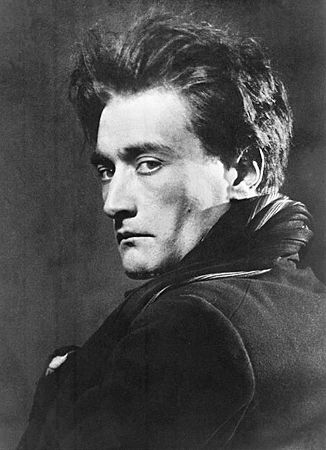
The 18th century nursed some of the major important changes in the development of text especially with regards to the role of the actor as incorporated within the idea of text. Many of these changes came about because of the need for different countries to affirm their theatre and mostly, especially in France, because the concept of a new reformed theatre was being born. During the 19th century theatre was being used as a social tool in order to convey political issues as well as social issues to the public. The emphasis made was that theatre should reflect the contemporary issues of the time having didactic characteristics. The most radical changes took place during the 20th century where the concepts of Antonin Artaud gave theatre a mystic and supernatural outlook, eliminating the written text completely and focusing mainly on the actor and his role as the transmitter of signs and symbols in order to come closer to some metaphysical level. All these breakthroughs in theatre throughout these three centuries will be further discussed below.
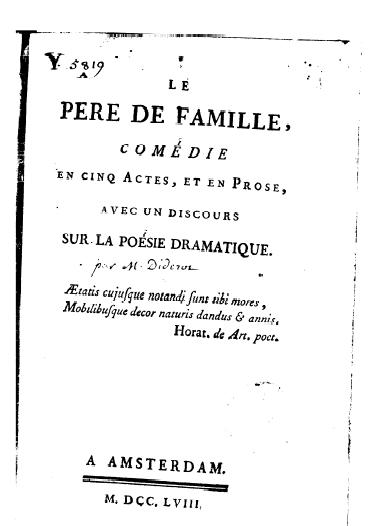
The introduction of the encyclopedia during the 18th century mainly by Diderot and D'Alembert, brought along a different look on all phenomena using reason. The order of things was being questioned among which theatre was also a member. During this turbulent time of the controversy and hype of the encyclopedia, Diderot developed a new interest: playwriting. He produced two works of striking originality with highly significant accompanying essays, Le Fils naturel (1757) and Le Pere de Famille (1758), which suggest great reforms in the theatre. Diderot considered his reforms, once articulated, to be self-evident as to win immediate acceptance, but the antagonism aroused by the Encyclopedia controversy made this an idle dream. The ultimate impact of his ideas was enormous, but the immediate effect on the...
More Drama
essays:
Text from a dramaturge notebook on the play "mother courage and her children" by Bertolt Brecht
... part with her livelihood - the cart. The episodic structure and didactic purposes epitomize epic theatre. It is arguable that Brecht's message in this was ... and their predicament. Thus, they could study the play's social or political message and not the actual events being performed on stage ...
Brief summary and commentary on the first three scenes in Act III of Macbeth.
The first scene starts with Banquo voicing his suspicions about Macbeth killing Duncan in order to become the King. He is aware that the witches had prophesized that his sons would become Kings. But he doesn't let this thought obsess him. He is capable of controlling his thoughts and checking his ...
Mother Courage and Her Children -- dramatic elements, synopsis, analysis.
... epic theatre. This genre attempts to distance the audience from the action, and involve the audience in an analytical mode, rather than having them react to the staged events on an emotional level. In an introduction to the play, written by ...
Explain how you have used Stanislavski's methods in the performance of a scene from The Doll's House also mention the the the role of the male and female of the times.
... control freak spellbound by the status quo of the late 19th century. Whereas I am a young modern mould of the individual ... in the play. In my case an action, Nora has changed her clothes late at night and looks to be leaving ...
How does Feste's song from Act 2 Scene 3 of Shakespeare's 'Twelfth Night' relate to the themes and characters of the play?
... from place to place or to foreign lands. It makes good use of love, as has been said, as a 'tool' through which it can put itself forward. If we take a closer look at the entire first verse including the ...
Theatre of the Absurd: The meaningless of human existence - How does Theatre of the Absurd use dramatic forms and stylistic features to comment on the meaningless of human existence?
... therefore the motivation behind human actions is uncertain. There are a range of dramatic forms and stylistic features used in Theatre of the Absurd to comment on the meaningless of human existence. Elements such as symbolism, comedy, violence and language are ...
"No Sugar" by Jack Davis: How does the text present minority groups and their reaction to oppression?
The stage drama No Sugar, by Jack Davis explores the bad treatment of minority groups and their responses to this treatment. The performance set in the 1930's presents the Milimurra family who are the minority group fighting against the injustices inflicted on them by white authorities. No Sugar ...
The Myth of Perfection, semi-philosophical comparitive essay comparing "A Doll's House" by Ibsen and "The Metamorphosis" by Kafka
... the last scene of the novel, when Nora renounces her family, her social status, and her husband, an action which would undoubtably give her intense ... as perfection and imperfection or hot and cold. We can only perceive changes or comparisons based on what we already know. Through experience, we can ...