In "Dover Beach," Matthew Arnold creates a monologue that shows how perceptions can be misleading. The theme of illusion versus reality in "Dover Beach" reflects the speaker's awareness of the incompatibility between what is perceived and what truly is real. Arnold conveys the theme of "Dover Beach" through three essential developments. First, he uses visual imagery. Second, he uses sound (aural) imagery. Third, he uses rhythm and metric. These mechanics alone do not explain why illusion and reality differ, but they do help to explain how Arnold sets up the poem to support the theme.
The strongest support of the theme comes from its intense imagery which is scattered throughout "Dover Beach." The most affecting image is the sea. The sea includes the visual imagery, used to express illusion, as well as the auditory imagery, used to express reality. The image is intensely drawn by Arnold to vividly see the faith disappearing from the speaker's world.
 Arnold Schwarzenegger
 Arnold Schwarzenegger
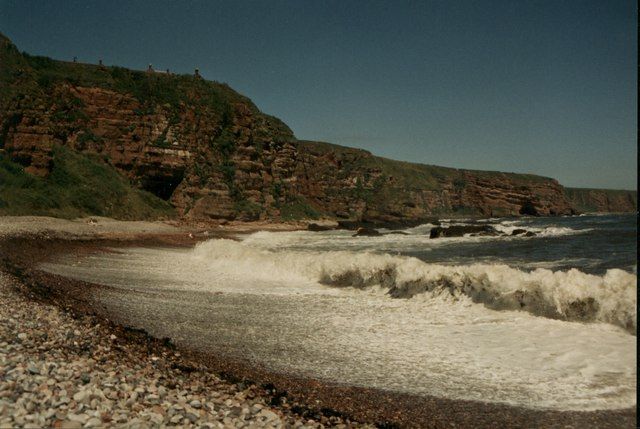 English: The beach at Auchmithie. Even on a relati...
The image of darkness encompasses the speaker's life just like the night wind pushes the clouds in to change a bright, calm sea into dark, "naked shingles." The irony of "Dover Beach" lies in the contrasting elements of the troubled speaker and the calm sea with tranquil moonlight. For example, the moonlit cliffs of the first stanza appear again in the lines "for the world/Which lies before us like a land of dreams. The sea which begins calm and tranquil, becomes a roaring shore; with "naked shingles" and "night-wind" which in turn disrupts the speaker's faith. The symbolism of the speaker's faith, as well as light and dark, reinforce the theme of illusion versus reality. The illusionary quality of the sea infers how very shaky and insecure the speaker's faith has become. In line...
Good on technicalities, not enough on their thematic effects.
Excellent description of rhythm, feet, metre, rhyme etc but little focus on their effects on themes, small mention of religious doubt yes, but what about clinging to love as security or the cyclical nature of history - Sophocles as having been in the same situation before yet humans have not moved on?
1 out of 1 people found this comment useful.