Drama got a major start in ancient Greece, where it was used by the people as a means of intermingling and communicating. It also served as a major learning center of the community, as it is sometimes used in this way today. The frills and the style of drama have changed over the years, from masks of the ancient Greek, to the largely imaginary settings of the Elizabethan era and the elaborate costumes of the Victorian era. Today the effects used by the directors of movies are changing the lighting, the camera angles, and the computer generated Special Effects.
During the Elizabethan era in England, Shakespeare looked back to the times of ancient Greece to get stories for some of his plays, like Julius Caesar. Many of the ideas and themes that were used are timeless, and will always be used. Some examples of themes that are timeless are True Love, Vengeance, Hate, Violence, and war.
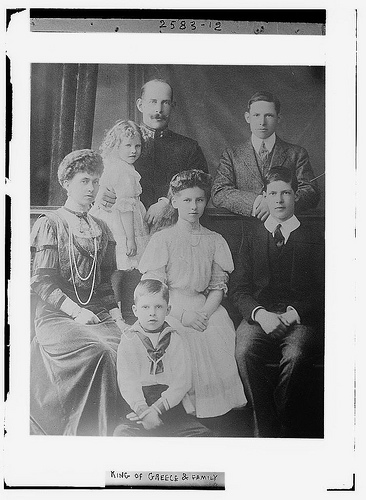 King of Greece & family (LOC)
 English: The "Darnley Portrait" of Elizabeth I of ...
 March 25 - Greece Independence Day
Theatrical performances will always convey a point, if the audience is keen enough to catch it, sometimes it's a moral, sometimes its some other piece of knowledge, other times its spiritual, and very occasionally its just to make you leave the theater with a smile on your face and with general good humor.
There also have tended to be golden ages of drama, where in-between there is usually little theater to watch. The first was the Greek golden age followed immediately after by the roman golden age. The next golden age was to follow after over 1000 years in England during the Elizabethan era, while the next golden ages would take place during the 20th and the 21st century, which has just begun.
I disagree
you say that between the " golden ages" of drama that you have defined , there was nothing much to watch. I would totally disagree. you eras tottally discount the reatoration, for a start, thet was full of funny comedys. also the rise of the actor manager meant there were many interestingly rewritten shakespeare revivals.
5 out of 5 people found this comment useful.