Dying is an Art: The Poetry of Sylvia Plath
"Dying is an art, like everything else. I do it exceptionally well. I do it so it feels like hell. I do it so it feels real. I guess you could say I've a call."
Sylvia Plath wrote these lines, from her poem "Lady Lazarus," in the winter of 1962 (Barnard 75), only months before taking her own life at the age of thirty (Barnard 23). It is an oft quoted line, containing in it much of the ironic and morbid outlook for which she has become famous. Driven by intense perfectionism and plagued by the unnecessary death of her father, Sylvia Plath crafted deeply personal poetry that expresses a feeling of incompleteness and a romantic view of death.
Plath's poetry is full of symbols and allusions cryptic to those unfamiliar with her biography, so it is necessary to begin any analysis of her work with a brief account of her life. Sylvia Plath was born on October 27, 1932 near Boston and for much of her childhood lived near the sea, which finds its way into many of her poetic images (Barnard 14). Her father, Otto Emil Plath, was an immigrant from Germany and her mother, Aurelia Schober, a second generation Austrian American (Barnard 13). Allusions to her German heritage and to World War Two era Europe abound in her work.
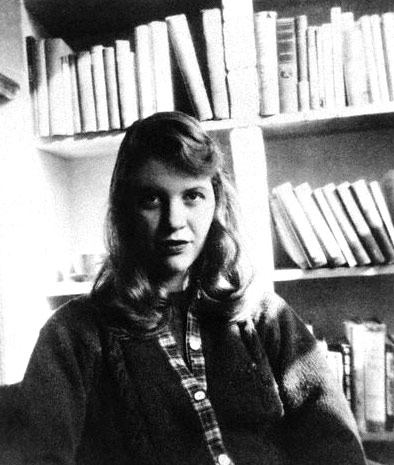
Doubtlessly the most significant and defining chapter of her biography is on the death of her father. He was a very educated man and a professor of biology and German at Boston University. When his health began failing in 1936, he diagnosed himself with lung cancer. Convinced medicine could not save his life, he continued teaching and refused medical attention for three years. When his illness was finally correctly identified as diabetes, it was already too late to...
More Poetry
essays:
Death and Rebirth In the Poetry Of Sylvia Plath
... Lady Lazarus" The Explicator Summer 2002 v60 i4 p234 Hardy, Barbara ed. Bloom Harold "Sylvia Plath: Enlargement or Derangement?" in Modern Critical Views American And Canadian Women Poets 1930-Present Clelsea House Publishers Philedelphia, PA 2002 Plath, Sylvia: The Complete Poems ...
This essay like the summary of my last duches
... person figure when the painter's remarks, perhaps inadvertent, drew out the duchess's character. Fra Pandolf, whose addressee is indeterminate, elicited a facial expression ...
Syliva Plath- Using the poems "Daddy" and "The Arrival of The Bee Box," write a poetry response to Plath's works noting the language and imagery
... the noise inside of it, is actually isn't. In Sylvia Plath's two poems, the feelings of ambivalence are prominent all throughout with the ...
This paper is a analysis of "The Love Song of Alfred Prufrock" by Alfred Prufrock.
... s view of his own life as wasted. Personally, when I read this poem, I ... romantic, wondrous, magical, and passionate. But it has been just that; a dream world, and reality awaits - a life devoid of love, ending in sorrow and in death ...
The life of Anne Sexton
... of poetry as a priests confessional where a person could in some way receive forgiveness. In the poem "Mercy ... strong relationship with her parents she was traumatized by their deaths. She was more insecure. She began to regret having such ...
This is an interpretation of Robert Frost's "Stopping by Woods on a Snowy Evening".
... he is trying to convey is debated among critics. The poem that seems just a narrative of a person walking through the woods, has an underlying meaning. The man ... himself that he cannot wander off into the woods to die a merciful death because he has prior responsibilities to consider. He has too much ...
Robert Frost's life and how it affected the writing of his poem "design"
... for many years in Massachusetts and Vermont, then died in Boston on January 29, 1963. In Frosts poem, Design he poses very simple yet deep questions about the ... amazing view on life and on nature is shown through his poetry His Poetry gives ...
Comparison of Blake's "Songs of Innocence and Songs of Experience" both poems included
... to express his view of innocence. There are no cares in the world for the poet. It seems as if he does as he pleases, and has no ties. So much so, that he drops everything to write down his poems ...