During the thirteenth and fourteenth centuries, a transformation occurred in Italy with respect to society, economics, politics, and religion. One of the major factors that led to such a change was the shift from a farming culture to a culture of industry dominated by merchants. This led to an urban economy, the expansion of cities, and the alteration of government to accommodate the growing population. In addition, Christian sects such as the Franciscans and the Dominicans began to form, advocating new religious philosophies involving bringing faith to the masses. This combination of reform in the economy and in organized religion brought about an increase in the production of art. The creation of artworks became an esteemed industry, and artists gained more respect in the eyes of Italian citizens. Typically, most of the art that was produced was religious in nature, and was seen as a mechanism for visually representing faith in a more tangible manner.
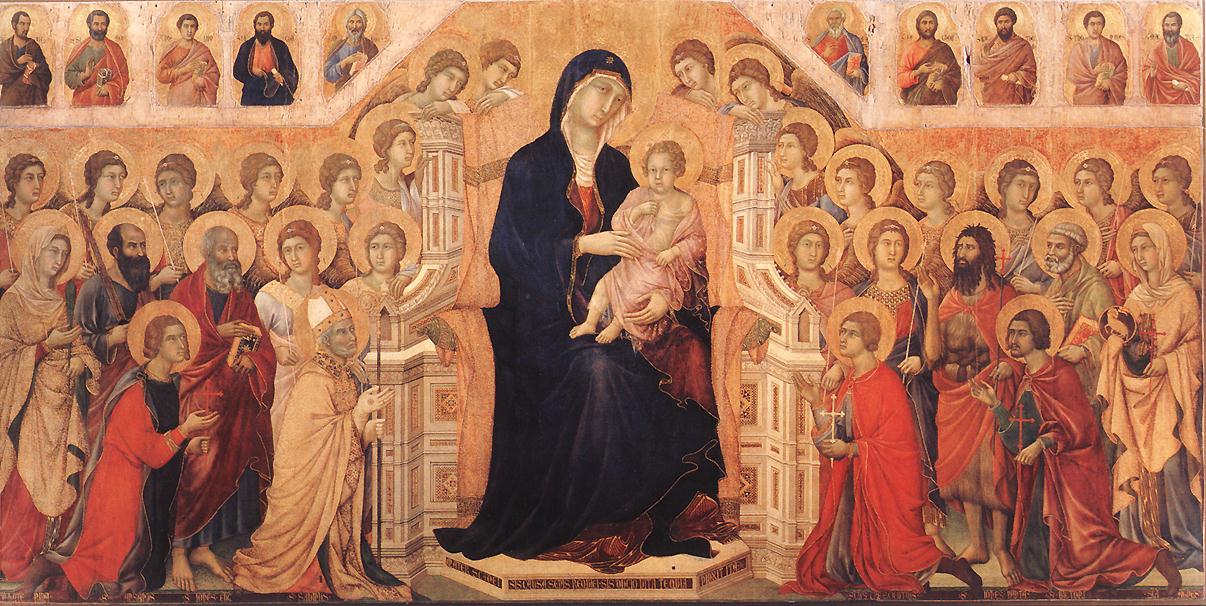 Maestà by Duccio (1308-11) Tempera on wood, 214 x...
 Duccio di Buoninsegna - Crevole Madonna (detail) -...
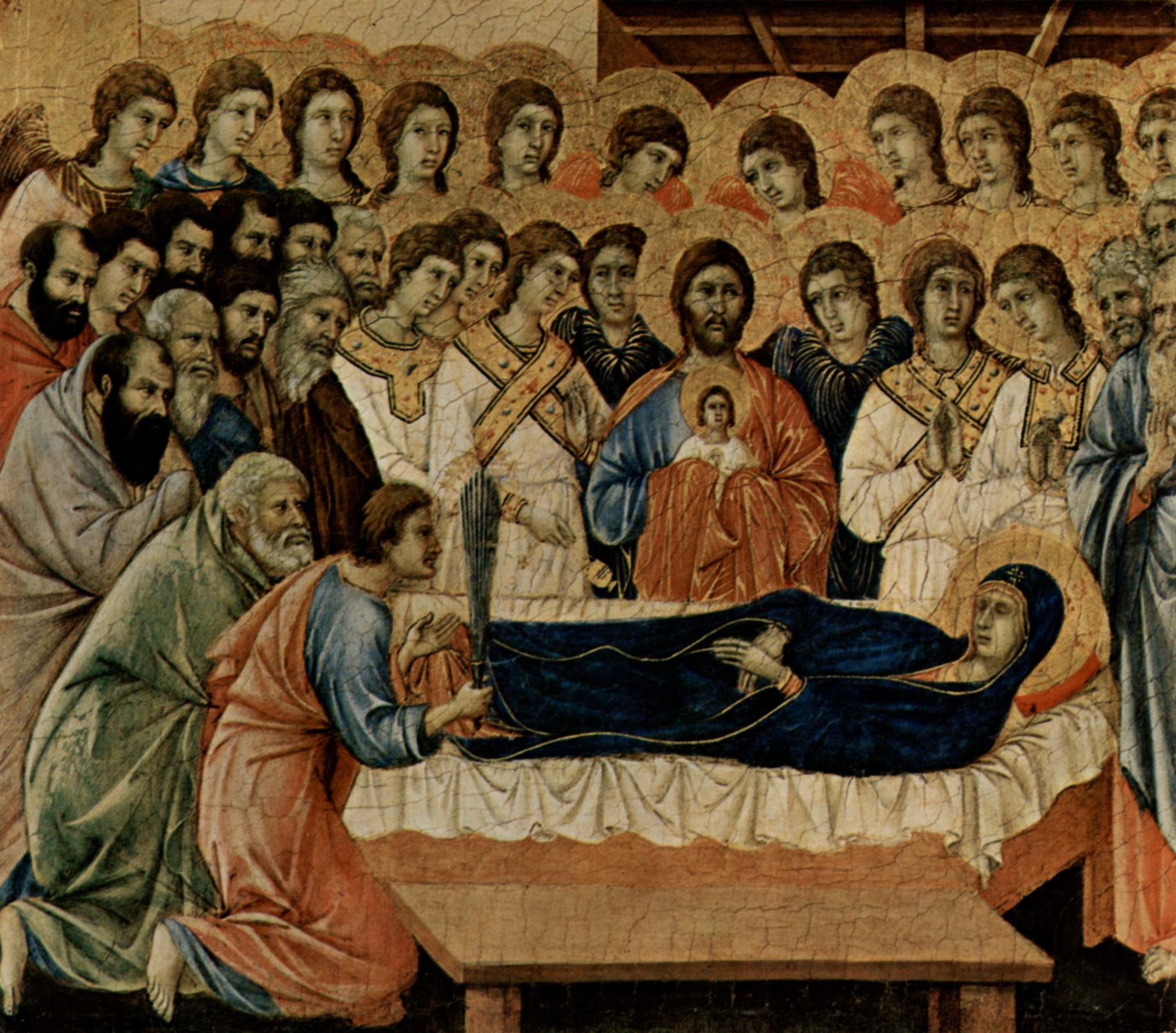 Duccio di Buoninsegna 046
During this dynamic period, artistic styles began to change as well. A transition from medieval, Byzantine art to a more naturalistic, humanistic style occurred in Italy. This included an increase in drama and emotion in art and a revival of Classical forms and ideals, leading to the designation of the period as the "Renaissance," meaning rebirth.
Two rival schools of painting, Siena and Florence, rose to the forefront of this transformation during the beginnings of the Renaissance. In his Lives of the Artists, Vasari denotes the main proponents of the movements in Siena and Florence to be Duccio di Buoninsegna and Giotto di Bondone, respectively. Vasari saw Duccio, called the "Father of the Sienese Renaissance" by many art historians, as an extremely talented artist who deserves much respect and consideration. He credits Duccio with initiating a new period in aesthetics characterized by a combination...