Synopsis
The Story So Far:
In the 16th century the island of Timor was owned in the west by the Netherlands and in the east by Portugal. When Indonesia became independent, the western half of Timor became part of Indonesia.
In 1971-72, Indonesia and Australia began negotiations, concerning the maritime seabed boundaries. The result was a boundary which gave Australia control of, approximately three quarters of the continental shelf.
The negotiations were such a success because of Australia's economic trade strength and political advantages for both countries. The Australian government and oil companies knew of the potential oil and gas reserves in the area, this was information which they knew and kept to themselves.
In 1974, the Portugal dictatorship of East Timor was overthrown and a new Portuguese government was created, including three main East Timorese political parties. Shortly after, in mid 1975 a civil war erupted and Indonesia was sought upon to take control, by the political parties.
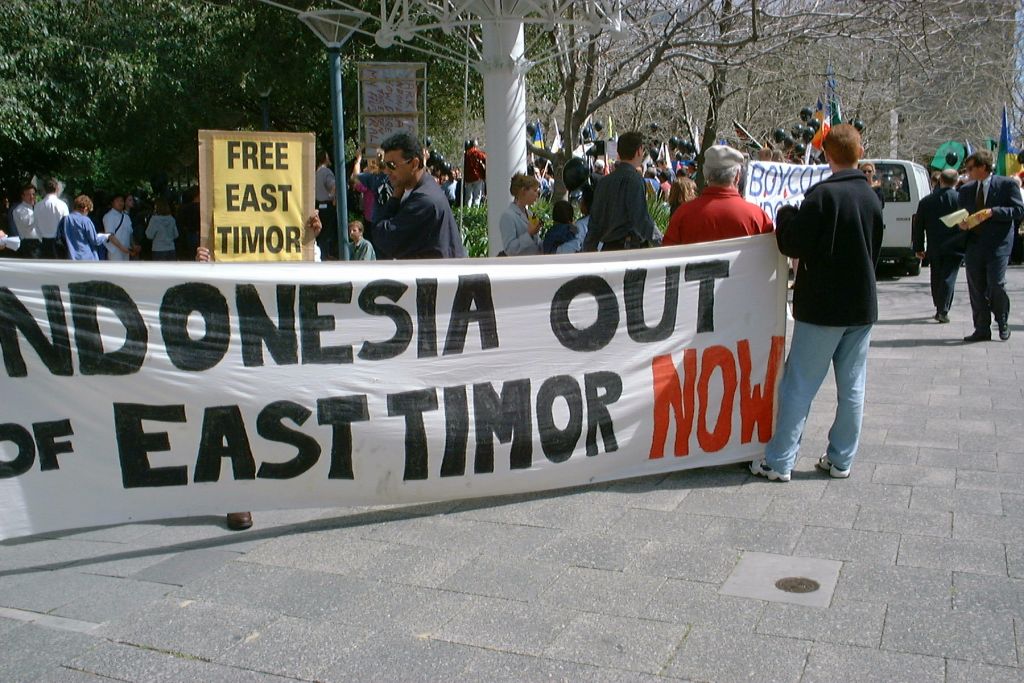 Demonstration against Indonesian occupation of Eas...
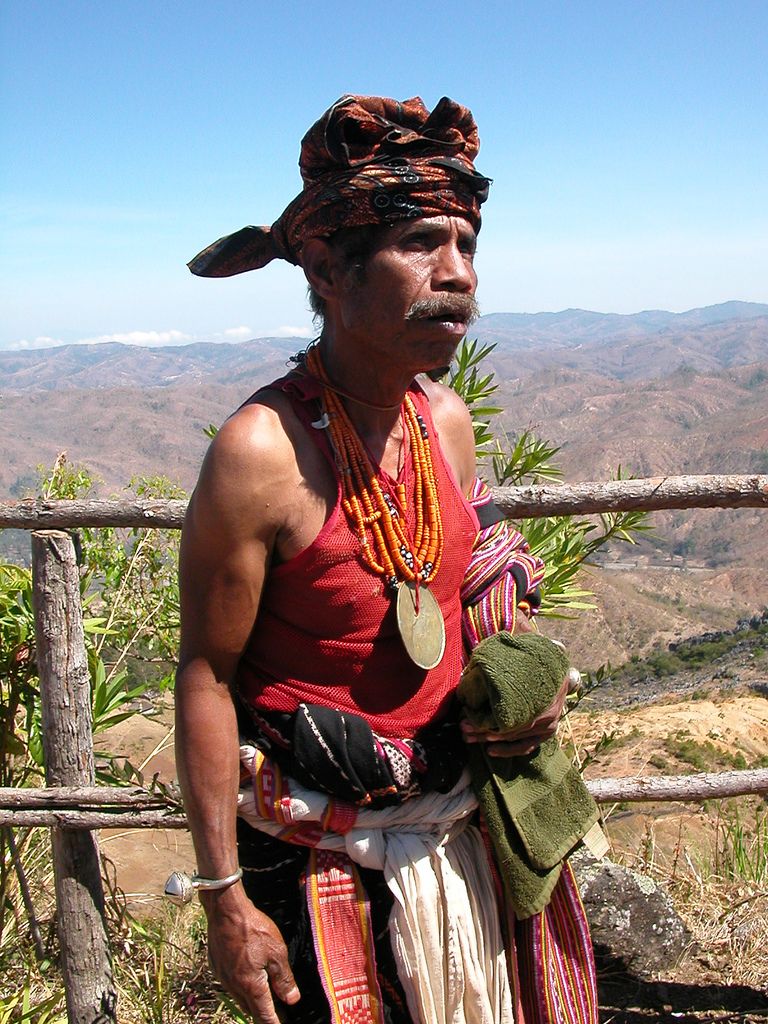 An East Timorese man in traditional attire, includ...
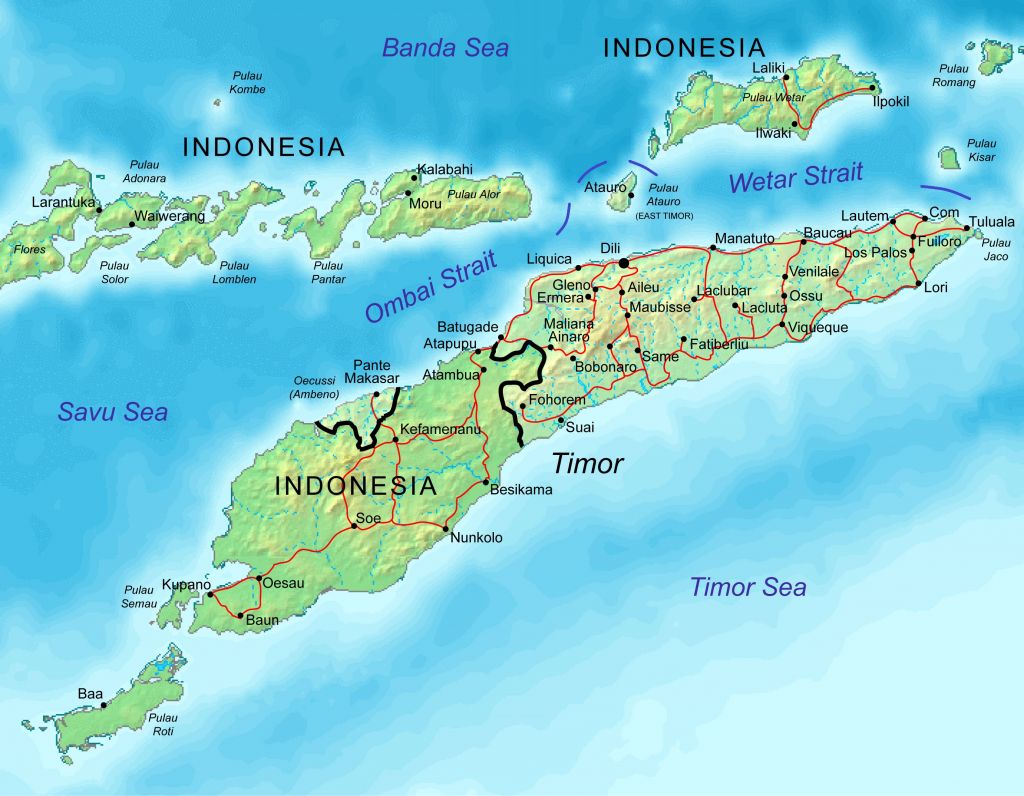 Adopted from Image:Timor.png. Names, roads, etc fr...
Indonesia invaded on the 29th of November 1975 and the political party forces put up little resistance and were forced to withdraw into guerrilla warfare, which would last 24 years. Australia was against the invasion.
With the annexation of East Timor, Indonesia inherited the Timor Gap dispute and on October 1976, negotiations began about the Timor Gap, and coincidentally, Australia no longer opposed Indonesia's invasion of East Timor.
In 1979 Australia's foreign minister, Andrew Peacock, acknowledged Indonesian sovereignty over East Timor, which caused uproar in Australia and can be speculated as an appeasement to the Indonesian government. After a decade of negotiations, in 1989 the Timor Gap Zone of Cooperation Treaty was signed by both, Australia and Indonesia.
In February 1999, President of the Indonesian East Timor, B.J. Habibie announced that he was willing to hold a referendum on East Timorese...