The Ebola Virus
A virus is an ultramicroscopic infectious organism that, having no independent metabolic activity, can replicate only within a cell of another host organism. A virus consists of a core of nucleic acid, either RNA or DNA, surrounded by a coating of antigenic protein and sometimes a lipid layer surrounds it as well. The virus provides the genetic code for replication, and the host cell provides the necessary energy and raw materials. There are more than 200 viruses that are know to cause disease in humans. The Ebola virus, which dates back to 1976, has four strains each from a different geographic area, but all give their victims the same painful, often lethal symptoms.
The Ebola virus is a member of a family of RNA viruses known as 'Filoviriade' and falling under one genus, 'Filovirus'. 'The Ebola virus and Marburg virus are the two known members of the Filovirus family' (Journal of the American Medical Association 273: 1748).
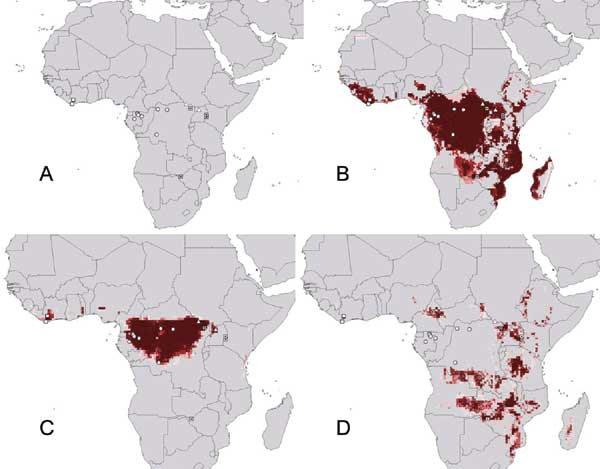 Ebola virus disease
 None - This image is in the public domain and thus...
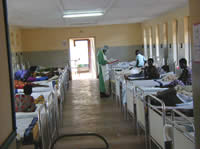 The isolation ward of Gulu Municipal Hospital, Gul...
Marburg is a relative of the Ebola virus. The four strains of Ebola are Ebola Zaire, Ebola Sudan, Ebola Reston, and Ebola Tai. Each is named after the geographical location in which it was discovered. These filoviruses cause hemorrhagic fever, which is actually what kill victims of the Ebola virus. Hemorrhagic fever as defined in Mosby's Medical, Nursing, and Allied Health Dictionary as, a group of viral aerosol infections, characterized by fever, chills, headache, malaise, and respiratory or GI symptoms, followed by capillary hemorrhages, and, in severe infection, oliguria, kidney failure, hypotension, and, possibly, death. The incubation period for Ebola Hemorrhagic Fever ranges from 2-21 days (JAMA 273: 1748). The blood fails to clot and patients may bleed from injections sites and into the gastrointestinal tract, skin and internal organs (Ebola Info. from the CDC 2). The Ebola...