Introduction
This paper will discuss in depth, the five indicators, and how Wal-Mart can and will impact the U.S. economy through them. Additionally, a final analysis will be made of recommendations and strategic initiatives for Wal-Mart. The indicators are: real gross domestic product (GDP), the unemployment rate, inflation rate, producer price index (PPI), personal income, and Federal Reserve actions. Colander (2004) defines indicators with: "...a set of signs that indicate when a recession is about to occur and when the economy is in one...They are called indicators, not predictors, because they're only rough approximations of what's likely to happen in the future" (p. 510). Business Planning Solutions (2005) identifies several results from their recent study:
"evidence that Wal-Mart has directly raised the economy's potential to produce by investing in more capital, does not appear to be paying below-market wages, is more capital intensive, contributed modestly to lower import prices, and their innovations in distribution and inventory control efficiencies have generated an increase in the economy's total factor productivity" (p.
 English: Extract from the text of the original doc...
 A protest in Utah against Wal-Mart
 English: Gross domestic product growth from 2007 t...
7).
Real gross domestic product
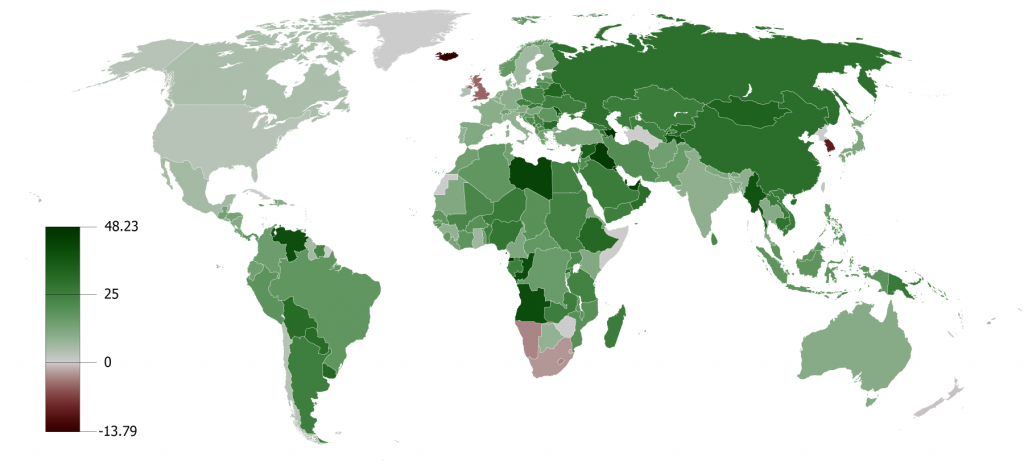
Gross domestic product is the total market value of all the final goods and services produced within an economy in a given year. There are two types of gross domestic product, real and nominal. Real gross domestic product is adjusted to how prices have changed, while nominal gross domestic product is the current price as it is calculated. Below is a graph illustrating the growth in real GDP per quarter for the United States from the fourth quarter in 2001 to the third quarter in 2005 as measured by the U.S. Bureau of Economics.
The GDP generally lags other indicators' release dates. As such, other indicators build up to the market's anticipation of how the GDP numbers describe the state of the economy. The data...