Entitled The Effects of the "Gilded Age".
The term "Gilded Age" refers to the post-Reconstruction era in the late 1800's. The phrase originally began with Mark Twain. Gilded means "covered with a thin layer of gold," and so the Gilded Age implied that while this time period seemed to be a prosperous one for America, only a thin layer of prosperity covered the poverty and corruption of the time period. While many labels have been used to describe the time period, the "Gilded Age" is the most accurate when describing the time period.
The largest economic issue concerning in the Gilded Age was determining the Federal government's role in the business sector of America. In the late 1800's, businesses operated for the most part without government regulation. This hands-off approach to economic matters is known as "Laissez-fare," and holds that government should play a very limited role in business. This was the predominant economic theory in the late 1800's, but it quickly acquired opposing factions. Supporters of this strategy maintained that if government does not interfere, the strongest businesses would succeed and bring wealth to the nation as a whole. Opponents of this theory proclaimed that if government did not regulate the business sector, it would become corrupt.

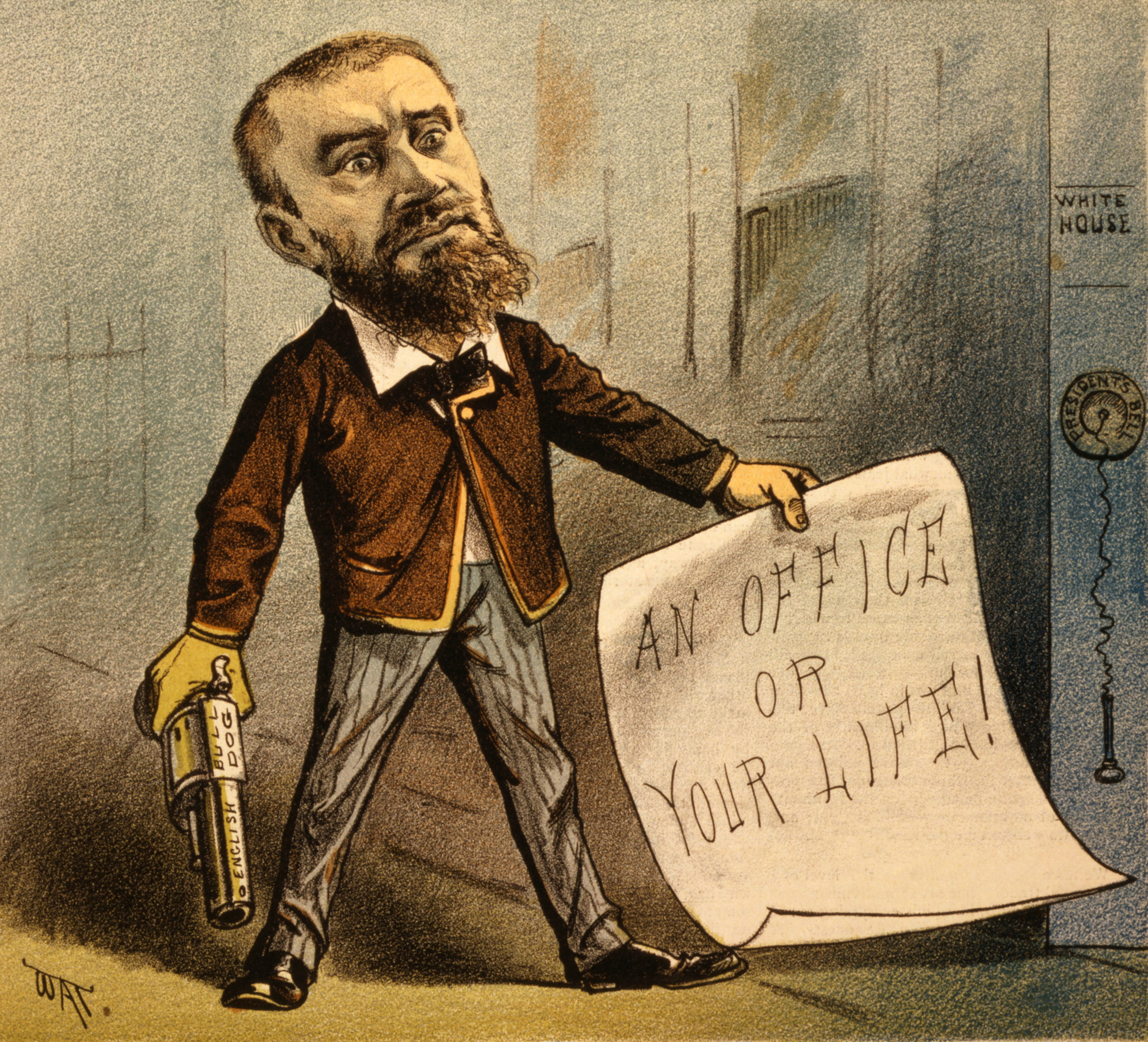
The strongest political issue of this time involved the spoils system, in which elected officials appointed friends and supporters to government jobs, regardless of their qualifications. Politicians liked the spoils system because it ensured them a loyal group of supporters in future elections. However, government as a result was filled with unqualified, dishonest employees. This issue was made pertinent during the brief Garfield administration. Garfield was elected primarily through Stalwart Republicans, the faction of the Republican Party that was a strong advocate for the spoils system. A man named Charles Guiteau, who was a strong supporter of the Republicans,
More North American History
essays:
The Failure of the Gilded Age. The essays describes the main political failures of the Gilded Age of America such as: Laissez - faire government, Interstate Commerce Act of 1887,
... the Gilded Age failed to deal with the real issues. Since the government would not intervene with most of the economics of this time then that meant that the big businesses had the power to do anything they wanted no matter ...
The Gilded Age, it earned a reputation of widespread corruption in government and business, as well as persistent economic, social, and political problems facing the nation.
... the Gilded Age earned a reputation of widespread corruption in government and business, as well as the failure of the era's Presidents to resolve the persistent economic, social ...
Assess the validity of the following statement: The American Government was successful in protecting the public from the elimination of competition during the gilded age.
... the Reconstruction. As a few shrewd businessmen gained money and power in vast quantities, Congress quickly lost the ability to regulate commerce almost entirely. Though the American government tried to protect consumers with new constraints on business such ...
Politics in the Gilded Age
... the Gilded Age). This seemingly endless laziness and corruption hurt society and eventually caused a depression. The Depression of 1893 was caused by the unwillingness of the government to participate in social and economic issues. The federal government pursued ...
How did America change after the War of 1812? This essay describes the economic and political changes after the War of 1812, including the effects of the cotton gin and Sectionalism.
... that economic changes were ubiquitous during the time period after the War of 1812. During the time after the war, political changes influenced society significantly. Different issues like ...
Basic Civil War summary
... from Reconstruction, the nation looked upon the corruption with dismay. Much of Gilded Age politics revolved around the effort of the government to find some system with which to regulate the expanding economy and big business, as ... the "Gilded Age". The name was given to the period by Mark Twain and ...
The Basis for John Adams's uncertainty for the future Prosperity of America
... political, economic, and militaristic struggles throughout the time period influenced him to feel a sense of distress and uncertainty for America. Not only in Adams did this feeling emerge, but many presidents, political supporters, and ...
Corruption in "the Gangs of New" York by Herbert Asbury
... in Gilded Age, opportunities were harder to come by thus increasing reciprocity and more chances for corruption. Political machines became in power, basically a business of corruption. Corruption spread in all forms of government even ...