There are many reasons why enzymes have such a high specificity. The first variable is an enzyme's primary structure. A primary structure is just a combination of amino acids. There are twenty different amino acids that the primary structure can be created from. Every enzyme has a different order that the acids are placed in and each one has a different number or amino acids. The slightest change in this structure can affect a protein's conformation and function.
The secondary structure is a regular, repeated, coiling and folding of a protein's polypeptide backbone. This folding is stabilized by hydrogen bonds between peptide linkages. These sections of polypeptide chains are repeatedly coiled or folded into patterns that add to the protein's overall conformation. There are two types of secondary structures. They are alpha helixes and beta pleated sheets. Alpha helixes are helical coils stabilized by a hydrogen bond between every fourth peptide bond.
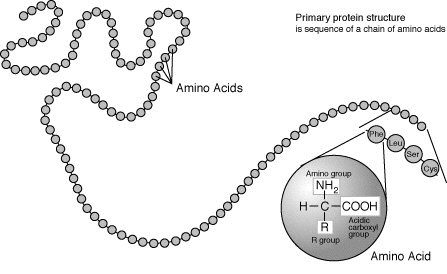 Primary structure of a protein
 English: Crystal structure of hexagonal ice (I h Ð...
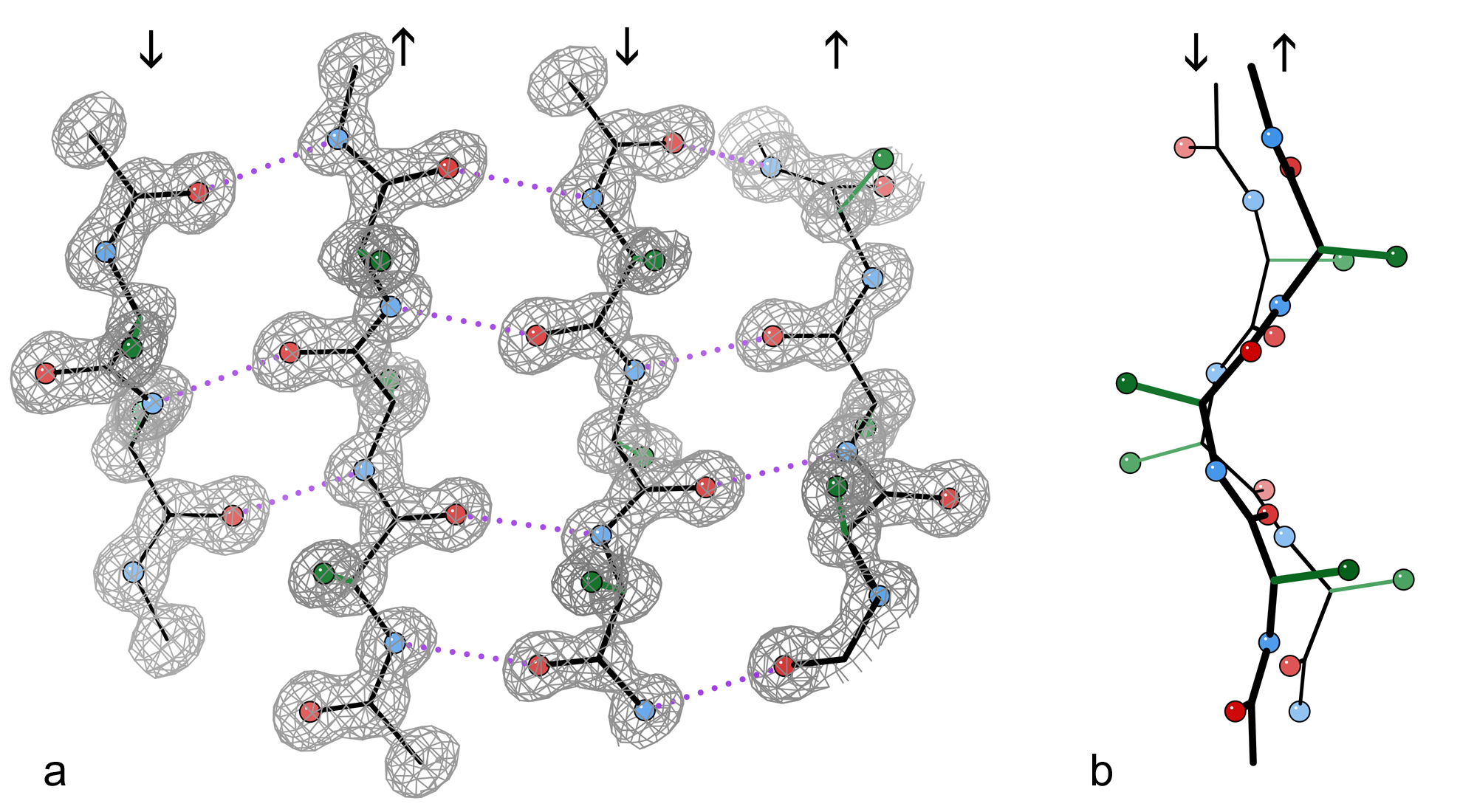 Beta sheet
They are usually found in fibrous protein such as keratin and collagen. Beta pleated sheets are structures where two regions of the polypeptide chain lie parallel to each other. Again hydrogen bonds between the parts of the backbone in the parallel regions hold the structure together. The cores of many globular proteins are made of beta pleated sheets.
The 3-D shape of a protein is otherwise known as the tertiary structure. Superimposed on the patterns of secondary structure is a protein's tertiary structure, consisting of irregular contortions from bonding side chains of the various amino acids. There are many types of bonds that are found in this structure including hydrogen, ionic, hydrophobic interactions, and van der Waals interactions. Stronger bonds such as the disulfide bridges form from covalent bonds between side chains of cysteine pairs. The sulfur of one cysteine bonds to the sulfur of the seconds...