German 100 Essay.
Date: 07/05/2001
Title: German reunification: Causes and consequences.
By: Laurence O'Neill
In November 1989 the citizens of East and West Germany began tearing down the most significant testament to imposed division of the modern age: the Berlin Wall. The wall was a mechanism of soviet control erected by the GDR to both confirm communist presence in Germany and prevent the lures of Western Capitalism. However, changes in attitudes and global politics, rendered it merely a physical obstacle standing in the way of a reunification longed for by so many Germans both East and West. This essay will explore the significance of these changes as well as describing some of the major consequences of German reunification.
It could be said that the first, and arguably most important, cause of Germany's reunification was that the German people were never really in favour of a division in the first place .
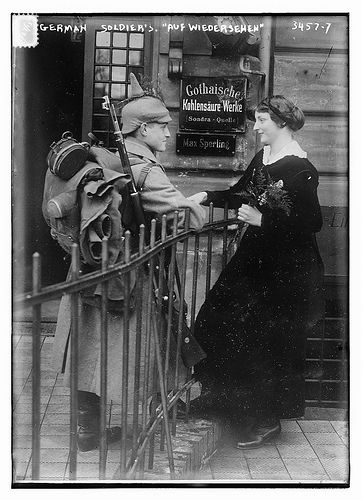 German soldier's "Auf Wiedersehen" (LOC)
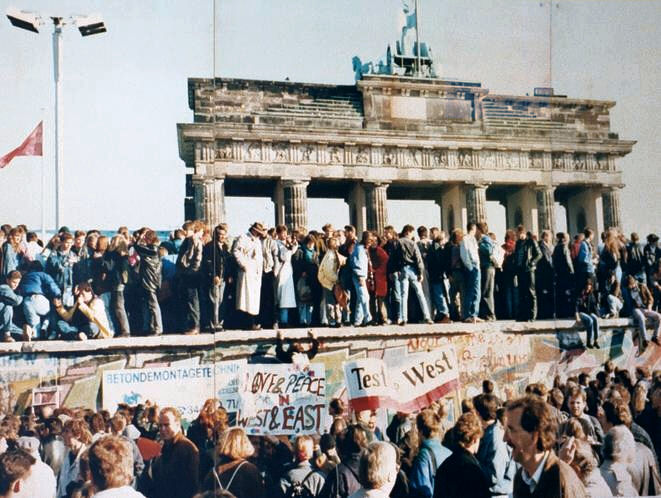 English: The Fall of the Berlin Wall, 1989. The ph...
 Map showing the division of East and West Germany,...
After the war they became pawns in a bigger game; one played by two opposing forces, the Western Allies on the one side and the Russians on the other. As time progressed the East Germans became more and more disenchanted with the State in which they lived. Their personal freedom was severely restricted both by physical blockades and state mechanisms such as the notorious Stasi.
For years the communist regime had ruled with an Iron fist using the Red Army to crush any unrequited calls for political or social upheaval. It was probably this historical fact, and also the events of 1953 in East Berlin, that prevented East Germans from taking a more proactive stance in trying to 'liberate' East Germany. However, several poignant events gave the East German people the motivation and hope that they needed to stand up against their almost tyrannical government. Gorbachev's refusal to use...
I liked it.
A very good essay, it flows well and really gets its arguments across. The level of detail is high too.
5 out of 5 people found this comment useful.