Essay on 'A Christmas Carol,' and 'Through the Tunnel.'
The two stories, 'A Christmas Carol,' and 'Through the Tunnel,' contrast each other in different ways but are surprisingly similar in others. The fact that Dickens wrote in the Victorian times and Lessing produced a post 19th Century novel is reflected in their style of writing.
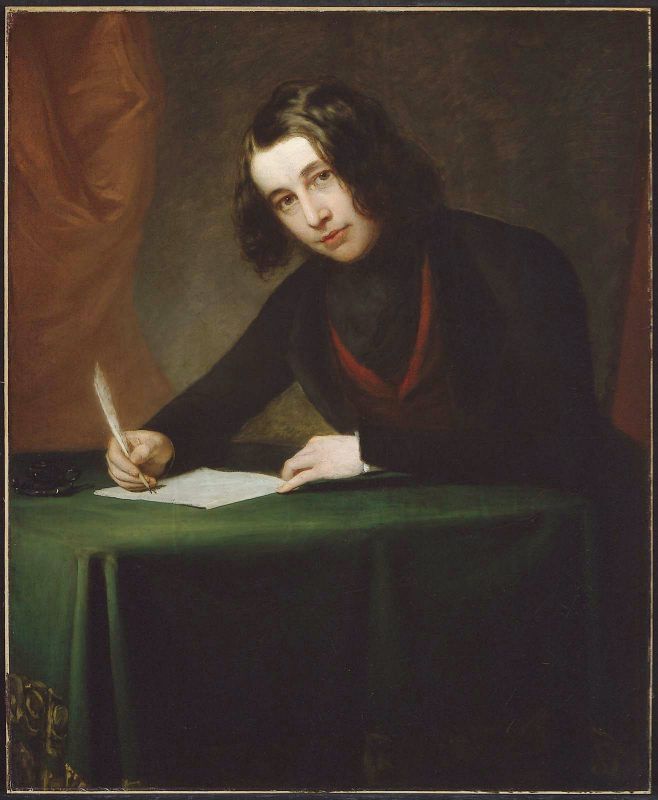
Dickens's father was constantly in debt, which caused the family to escape from people who they owed money. As a result, Dickens's father was sent to a debtors' prison when Dickens was at the age of twelve. What Dickens saw and heard during these terrible time remained a vivid memory that influenced Dickens to use in his writing. Dickens lived through the Industrial Revolution and attacked the economic system that was causing hardship and poverty. His concern for the poor, the orphaned and the unfortunate led him to write of certain situations in his books both didactically and for entertainment for the festive season.
Dickens's main techniques are using figurative language, complex sentences and polysyllabic words. For example, 'it was not in impenetrable shadow as the other objects in the yard were, but had a dismal light about it, like a bad lobster in a dark cellar.' From this quotation the adjective 'bad' links in with the adjective 'dark' that gives a sense of enchantment. In this case, Dickens is describing a 'bad lobster' (which is normally black) being locked away in a 'dark cellar' so that no one can find it. However, typically, the simile is so outlandish that is brings a smile to the reader.
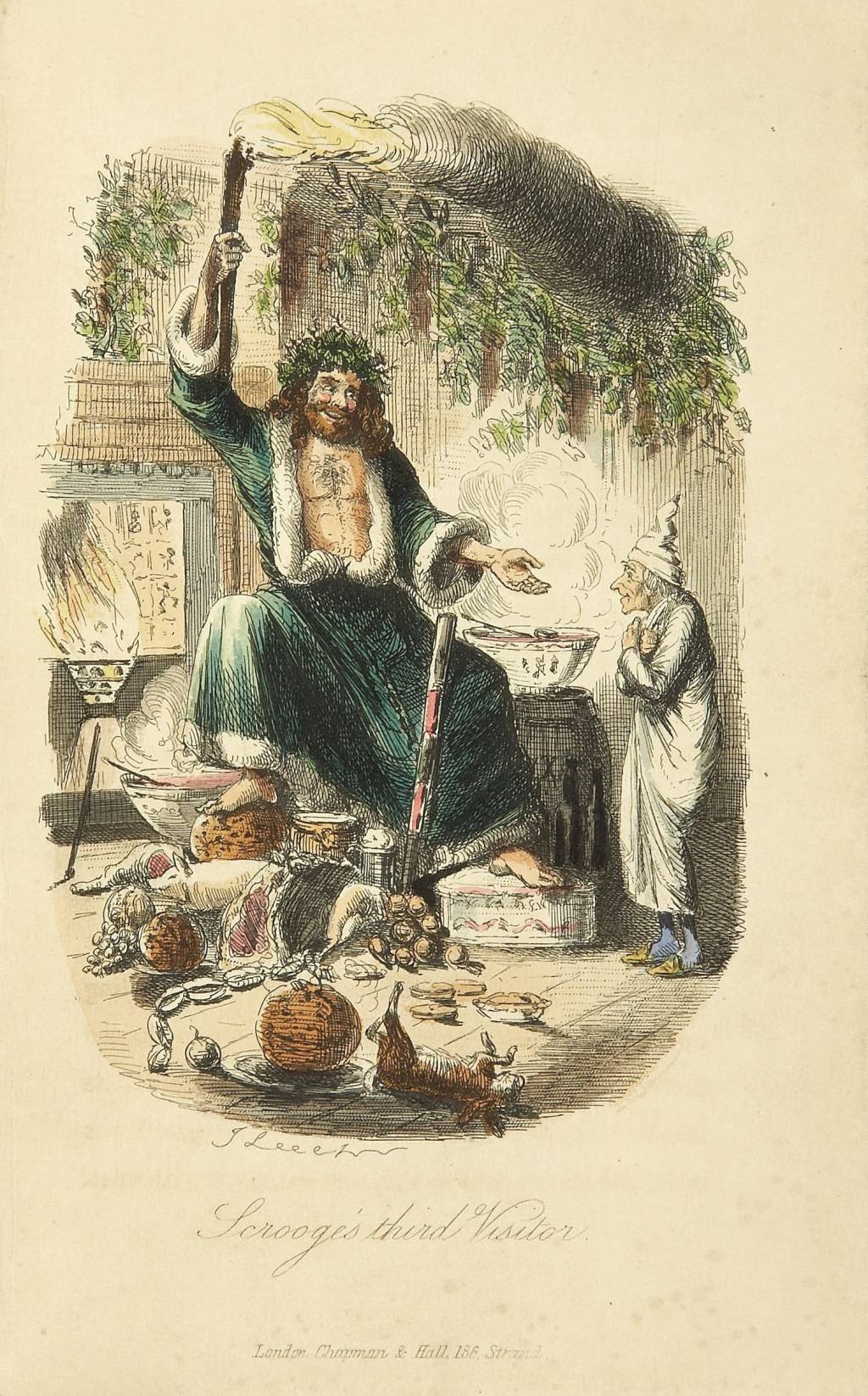
'A Christmas Carol,' tells a story of Scrooge who is transported through Christmases of his past, present and those yet to come. Dickens creates a cold, dreary and to an extent frightening atmosphere by the use of pathetic fallacy, similes and metaphors in the first few chapters,
More Charles Dickens
essays:
The Relationship between Oliver Twist and the Industrial Revolution
... that poverty was the consequence of laziness and that the dreadful conditions in the workhouse would inspire the poor to better their own situation. Yet the economic disorder of the Industrial Revolution made ...
How far do the experiences of young Pip in Great Expectations by Charles Dickens reflect the life of minors in the 19th century?
... some 19th century families husbands beat their wives, but for a wife to punish her husband, during the patriarchal society of Victorian Britain ...
How does Dickens convey a portrait of society in 19th century in the first 17 chapters of "Great Expectations"
... of 19th century society by not telling us but showing us what he wants us to see. To show us this he uses characters from the criminal, lower and upper classes to dramatise each class. Dickens shows ...
"Great Expectations" by Charles Dickens: how Pip is the portrayal of what 19th century society considered a gentleman, whereas Joe was whom Dickens believed to be the true gentleman.
... throughout time by men and women alike. Charles Dickens attempts to answer this question in the novel Great Expectations. In this book, he portrays two characters, Pip and Joe, as two different views of a gentleman. Pip represents 19th century society ...
David Copperfield coureswork-How did Charles Dickens portray how children where treated in the 19th century?
... fetish ways. Since he could not pay this debt he was taken to a debtors prison. David ... money in his pocket." As the protagonist is sent to start life in London all alone we the viewers start thinking he will become a homeless and unfortunate ...
The Life and Works of Charles Dickens
... A Christmas Carol, an ever-popular children's story. Well known throughout America and England, Dickens life ... his time. Though his stories contained complex language and include many adult points and key ideas. Most of his works assume the view of a young person growing up. His novels contain ...
A book report on "David Copperfield" by Dickens
... his novels. Dickens father was constantly in debt and was eventually sent to jail. This memory was ... Charles Dickens, deals with the life and times of David Copperfield. About a century ago ...
Satire in "Great Expectations" by Charled Dickens.
... the novel "Great Expectations"? Dickens uses satire to show the reality during Victorian times. What are three aspects of society, which Dickens satirizes? Three aspects of society, which he satirizes, are family, the class system and ...