HUMAN GENOME PROJECT
What would you do if you were given the power to change your genetic code from brown hair to blond? Man has had this ability through natural selection for some time without knowing it, but in the near future scientist will be able to speed the process of natural selection by changing a persons genes. Scientists have identified what constitutes human DNA located in the nucleus of a cell. The Human Genome Project was established to identify the genes that make us who we are and is now an international organization.
When people think back to the year 1953 they probably think of certain "Big Bopper" songs or the famous shows such as "I Love Lucy" and "Mr. Ed". You can probably ask anyone who James Watson and Francis Crick are? And they will have no idea who that you are talking about. I know that I didn't before I had this class.
 United States
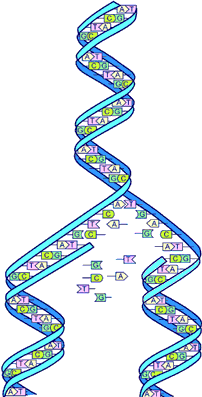 A slight mutation in the matched nucleotides can l...
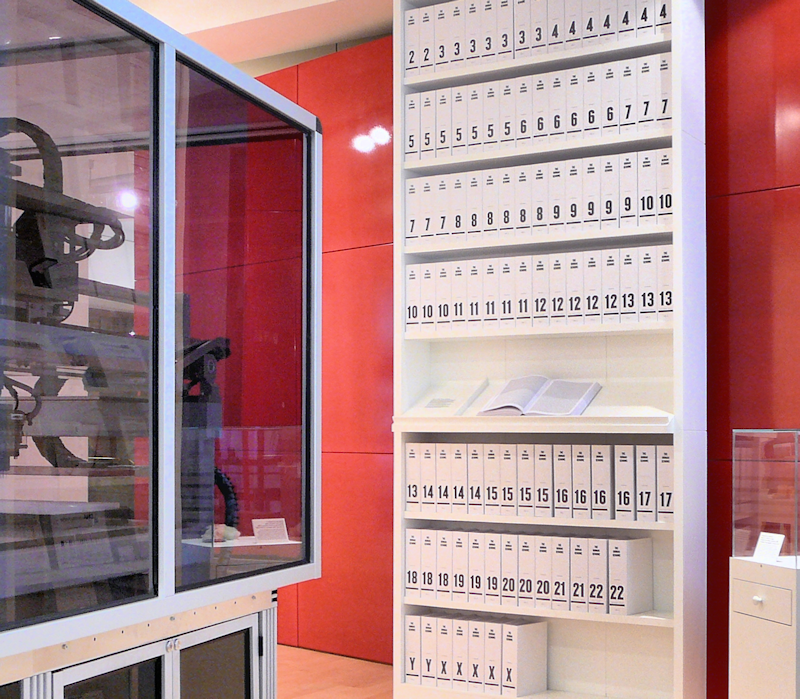 English: The first printout of the human genome to...
But, if you ask someone what DNA is? Then they probably can give you some examples that they are familiar with what DNA actually is.
Just think that Watson and Crick got the ball rolling on DNA and actually how that we as a society could understand more as a whole what it is blows my mind. The Human Genome Project was conceived in the mid-1980 and was widely discussed within the scientific community and public press through the last half of that decade. Some of earliest and most obvious applications of genome research are tests for genetic disorders, such as forensic uses to establish identity (to determine paternity, to link suspects of physical evidence of rape or murder, or as a molecular "dog-tag" in the military). Genome research also promises to find genes expeditiously, making the genetic approach attractive as a first step...