Schizophrenia
Schizophrenia is a chronic, severe, disabling mental disorder typically characterized by a separation between the thought processes and the emotions (Torrey). Schizophrenia affects about one percent of the adult population and signs of it usually emerge in the late teens to the middle twenties (Schizophrenia). This disorder usually appears earlier in men than in women; however, it affects both equally. Men ordinarily develop the disorder in their late teens or early twenties. Women, on the other hand, develop it in their twenties to early thirties. It is possible for children to develop schizophrenia after the age of five, but it is very rare before adolescence.
The illness was first identified by Emil Kraepelin in 1896 when he distinguished it from the mood disorders. Kraepelin believed that all psychiatric disorders were caused by organic factors, and his experience suggested to him that the onset of the disease occurred early in the life of the individual.
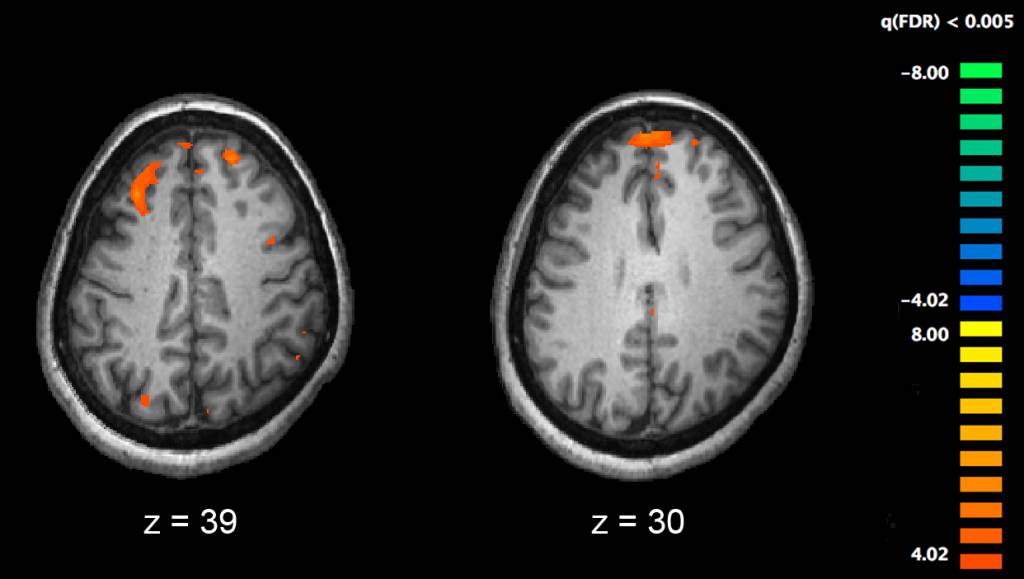 English: Image showing brain areas more active in ...
 English: A schizophrenic patient at the Glore Psyc...
 House decorated with bizarre writings. The inhabit...
Hence, he called it dementia praecox, a term originally introduced by the French psychiatrist Morel. Emil's thoughts were later disputed by many psychiatrists. One of these was Eugene Blueler, an eminent Swiss psychiatrist, who, in 1911 found that the onset of the disease could in fact occur in the later years. He also reported that schizophrenia was not characterized by the progressive deterioration over the life of the patient, but rather that most patients, after an original severe deterioration, tend to stabilize and remain at the same point in their psychosis for extended periods of time. Blueler also felt that in order to avoid any misunderstanding of the nature of the illness, the disease would be much better served if it was referred to as "schizophrenia," a combination of two Greek words meaning split and mind. This emphasized a splitting apart of the affective and...
Great
this was a really nice essay, helped me a lot to understand Schizophrenia and a project that I am doing, thanks for posting
0 out of 0 people found this comment useful.