Essay relating Plato's Allegory of the Cave to the movie Matrix
Comparison of the Matrix and Plato's Allegory of the Cave
The following essay is based on the comparison between the Allegory of the Cave written by Plato and the movie the Matrix produced by Joel Silver. Both stories, the Allegory of the Cave and the Matrix, illustrate the difference between what is fantasy and what is real. The Allegory of the Cave tells a story about a prisoner chained in a cave who believes the images projected on the wall in front are real and is the basis of his life. The Matrix is about a computer programmer, Neo, who is also a part-time hacker is dissatisfied with his existence tries to find the true meaning of his life. The Allegory of the Cave and the Matrix centers on Plato's four types of thinking: fantasy, trust / public opinion, scientific / mathematical thinking, and dialectic thinking.
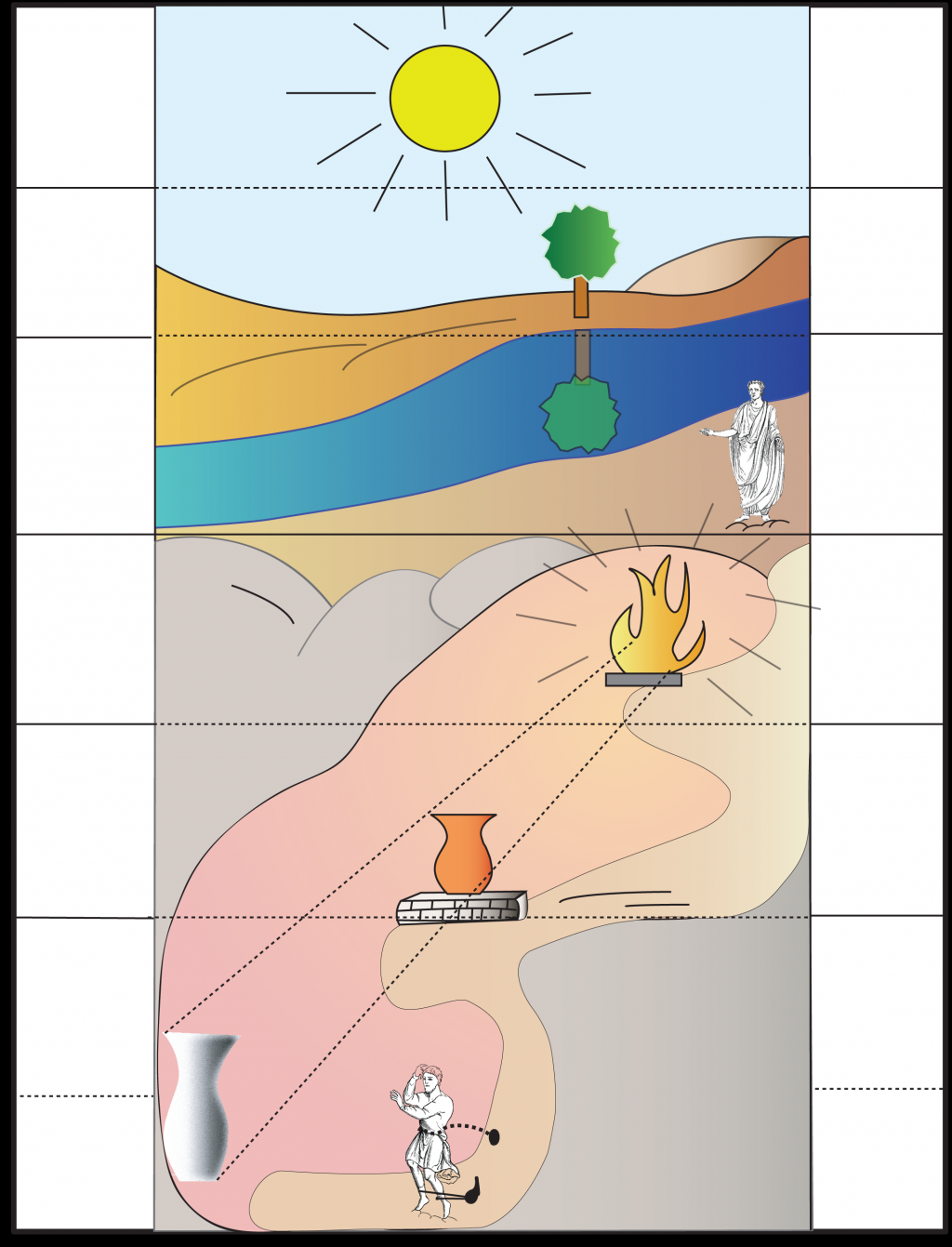
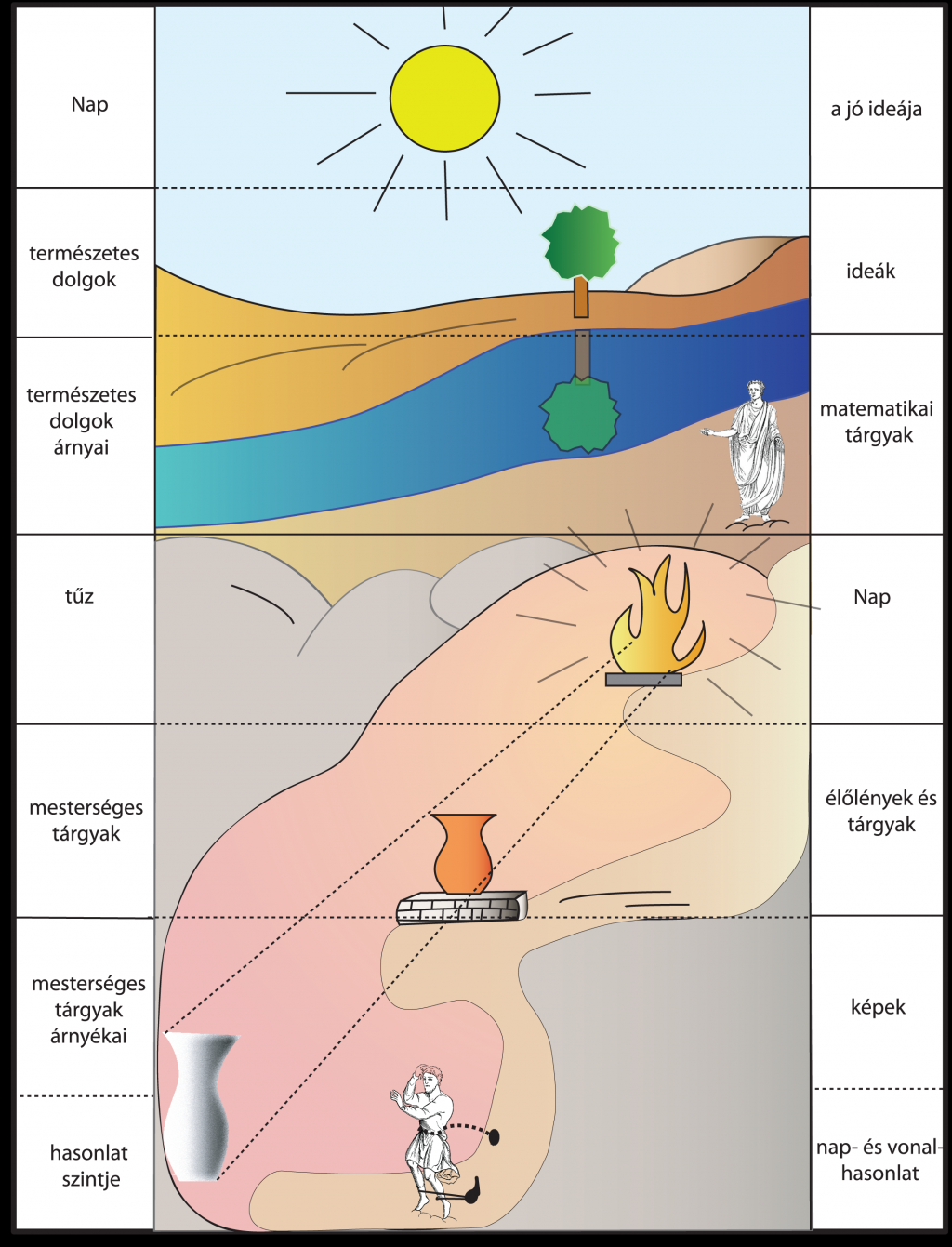
Plato's first type of thinking is fantasy. In the Allegory of the Cave, Socrates describes to Glaucon prisoners who are chained to a seat and facing a wall. The prisoners have been in the cave since childhood and their heads and necks are chained in such a way that they cannot turn their head to see what is taking place behind or around them. Behind the prisoners is a low-built wall that has guards walking on a raised walkway behind the wall. Further back beyond wall and the guards is a fire. As the guards walk behind the low-built wall, the guards are holding artifacts that cast shadows onto the wall in front of the prisoners because of the artificial light being projected by the fire. Socrates explains that these shadows represent truth when he says, "To them the truth would be literally nothing...
Reviews of: "Essay relating Plato's Allegory of the Cave to the movie Matrix"
:
I really enjoyed reading this essay because I am a HUGE fan of The Martix, and The Allegoey of the Cave sounds really interesting, great job, 10/10!!!
This is a pretty good essay, although you do need to watch your in text citations.
A good essay in general but even more excellent reference for essays about the matrix.
This is pretty good but you need to take care in some areas. Never use "I think..." in an essay. Always state the fact as if you know what you're talking about, even if you don't.
More Contemporary Philosophy
essays:
In Plato's Symposium, Socrates describes many aspects of the true nature of Love and the objects of Love's desires.
... in Plato's Symposium, Socrates describes many aspects of the true nature of Love and the objects of Love's desires. By systematically contradicting and invalidating the preceding arguments, Socrates establishes ...
Philosophy Of Plato
... use the analogy of a cinema where the images are projected onto the screen at the front. The third page of the seminar text relates to the application of the cave analogy or allegory. The sun ...
Plato's Cosmology: The Timaeus
... translation of the Timaeus), this translation is incorrect. At best, Plato's text is grammatically ambiguous: it reads "and this is what we call time," where the reference of 'this' could be either 'number' or 'image'. But ...
An Analysis of The Republic
... at the same time. However, we would say that his head is moving, while his arms are moving, and while his head is moving. This helps Plato present the idea that there may be one part of the soul ...
Crito And the Lessons to be Learned from his Failed Attempt to Save Socrates
... position as a philosopher. Crito seems to often bring up the opinions of the majority, or other people, when arguing with Socrates. Socrates is not swayed by the people's opinion, and as a philosopher is more concerned with making a ...
An essay on Plato's theory of forms.
... world. The parable of the cave reflects this. Plato explained this with the philosopher who escaped the cave or "World of appearances" and saw the "World of forms ...
Philosophical interpretation of "reality"
... light and are essential for the life in the world of ideas. He came up with another analogy to affirm his theory. This is a famous metaphor generally known as the allegory of the cave. He ...
A look at plato and why he was a classical writer.
... Form of nail, the Form of hair, and the Form of mud were also part of this world of forms. Its been said that Plato believed that "if a human can see it in his mind, it must exist in ...
Good comparison
i never thought tthat there would be a work similar in thinking as the Matrix. I probably will go check out Plato's Allegory of the Cave to see for myself.
4 out of 4 people found this comment useful.