The First World War
The Western Front
On 3 August 1914, the German army invaded Belgium. Britain declared war the next day. The British Expeditionary Force (BEF) went to France.
For the first two months, the armies fought each other in a 'war of movement'. The German army came within 30 miles of Paris, then it was defeated at the Battle of the Marne (6-10 September 1914) and pushed back.
Towards the end of September, the Germans dug the first trenches of the war. By November 1914 the line of trenches stretched from Switzerland to the English Channel. The advance of the British and French armies was stopped.
In 1915 the British government - at Winston Churchill's suggestion - tried to open a 'second front' at Gallipoli, in Turkey. It was a bloody disaster. The Allies realised they would have to slog it out on the Western Front.
Conditions in the Trenches
For the soldiers, conditions were terrible.
 British trench near the Albert–Bapaume road at O...
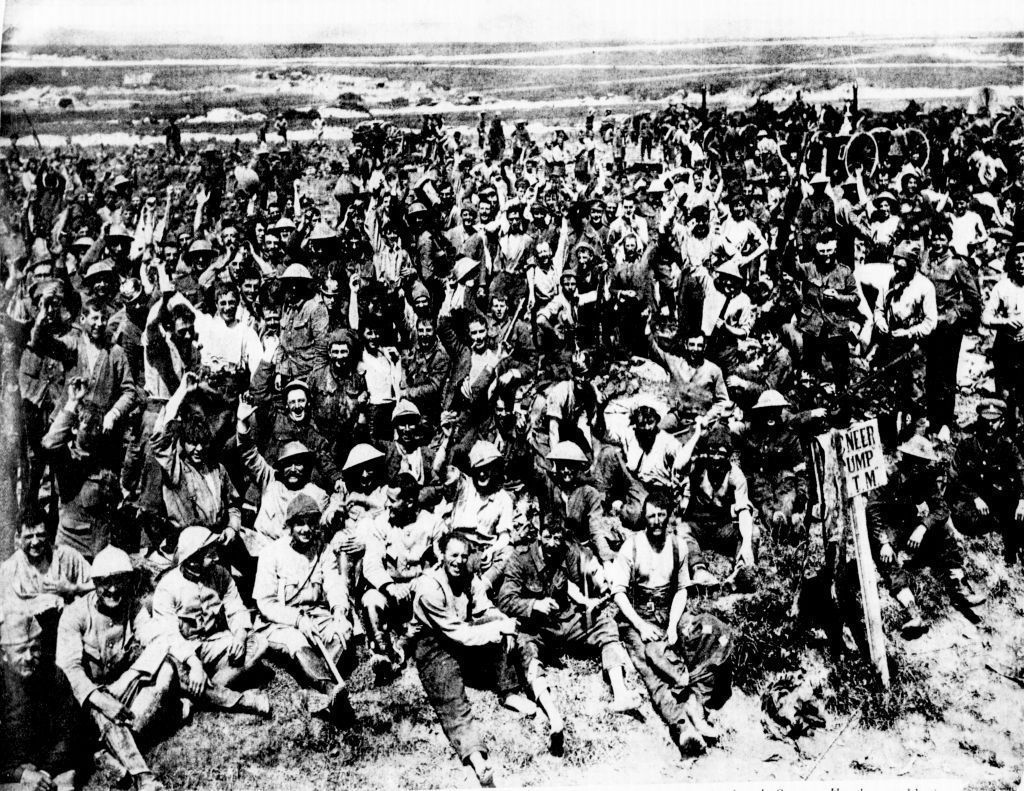 The Royal Fusiliers were among the British troops ...
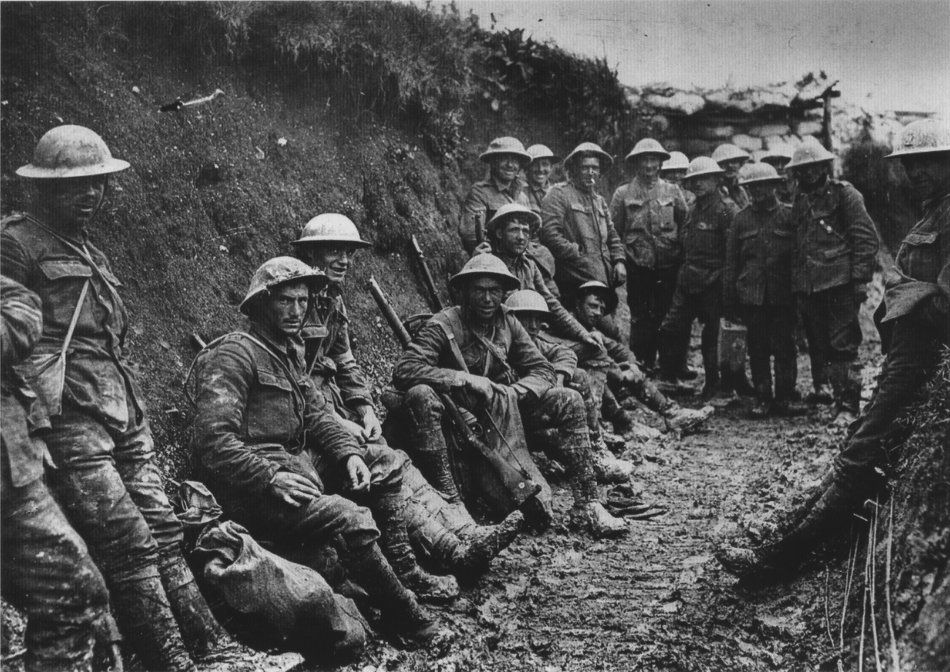 A ration party of the Royal Irish Rifles in a comm...
Rain and cold were constant problems. Artillery fire destroyed the drains, so the battlefields became quagmires of mud - often, men drowned in the mud. Sanitary arrangements were unsatisfactory, and disease killed as many men as the enemy. The hundreds of human corpses made disease (and flies) inevitable, and trench rats grew fat on human flesh. And thousands of casualties. Antibiotics had not yet been discovered, and - in the dirt - even a small wound often led to blood poisoning, gangrene and death. Perhaps worse was to recover, profoundly disabled or mutlilated.
The War of Attrition
Both sides realised that they would have to 'wear down' the enemy. The war became a deadly stalemate. Any attempt to break through the enemy's line resulted in slaughter. Men defended with machine guns, and used trains to rush extra soldiers to trouble spots. They...
Well done
its good but it doesnt read like an essay, you have lots of seperate sections not paragraphs that link to others, no real sense of continuity although in terms of content it is brilliant, if your interesetd i did a similiar essay answering various questions in an essay form, just clik my name to find it and mab you can fins sumthing usefull to you in it. keep it up :D
2 out of 2 people found this comment useful.