The Perspectives of EuthanasiaEuthanasia is a topic that has been debated for many years. Euthanasia is the "bringing about of a mercifully easy and painless death for persons suffering form an incurable and painful disease."� There are many opposing views regarding this act. There are for major types of euthanasia and each has its people that agree with it and people against it. The following will examine the different ways people interpret euthanasia and its opposing views.
Euthanasia comes form Greek, meaning a "good death"�. Euthanasia is divided into four types: active voluntary, passive voluntary, active involuntary, and passive involuntary. Voluntary means that a patient has decided to end his life. Involuntary means that a patient is not competent enough to make the decision and some else is to decide what is best. Active euthanasia is an actual lethal action is taken to end the patient's life. Passive euthanasia is to stop giving medication and to let the patient die by the illness.
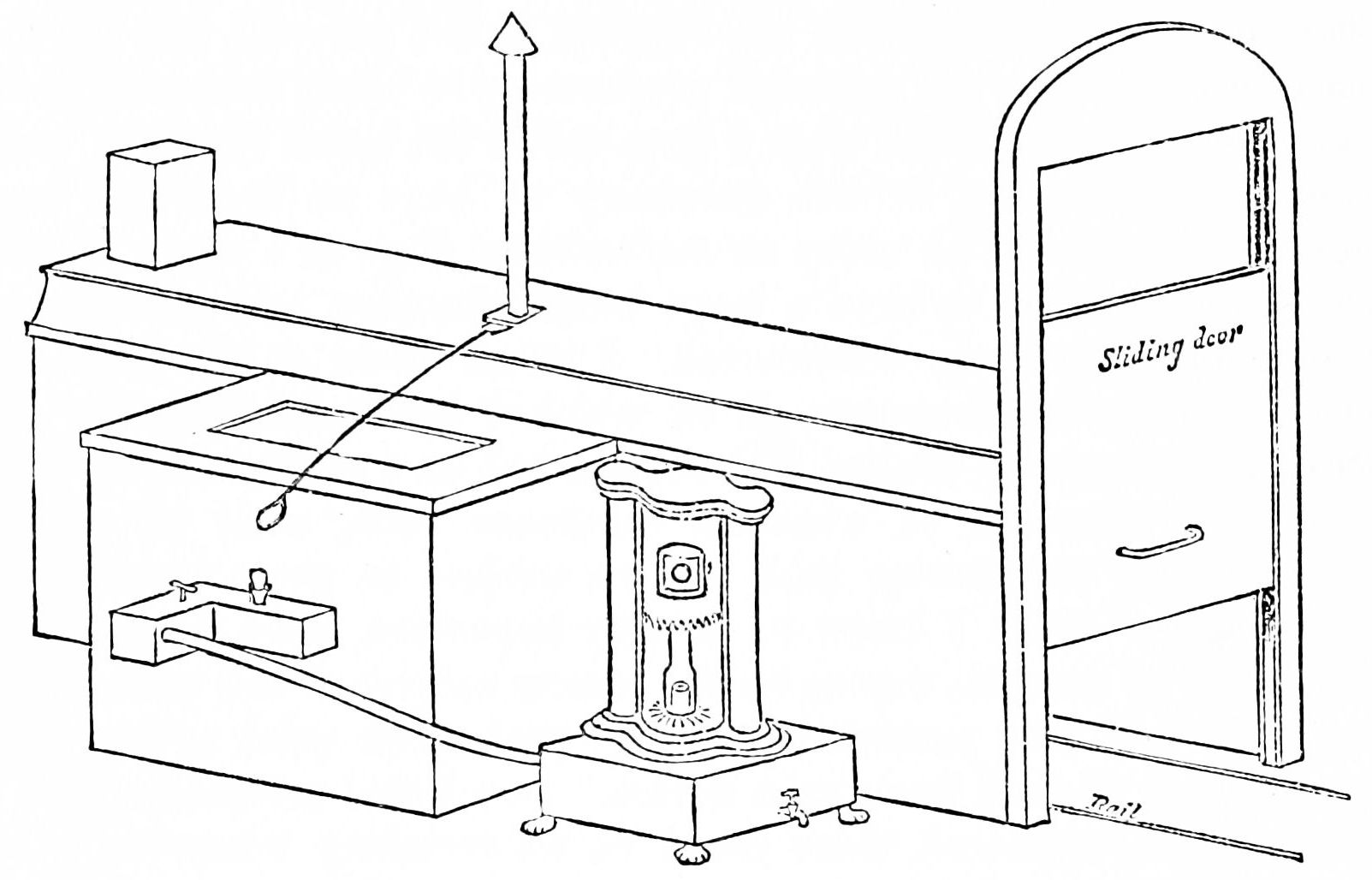 The lethal chamber for animal euthanasia
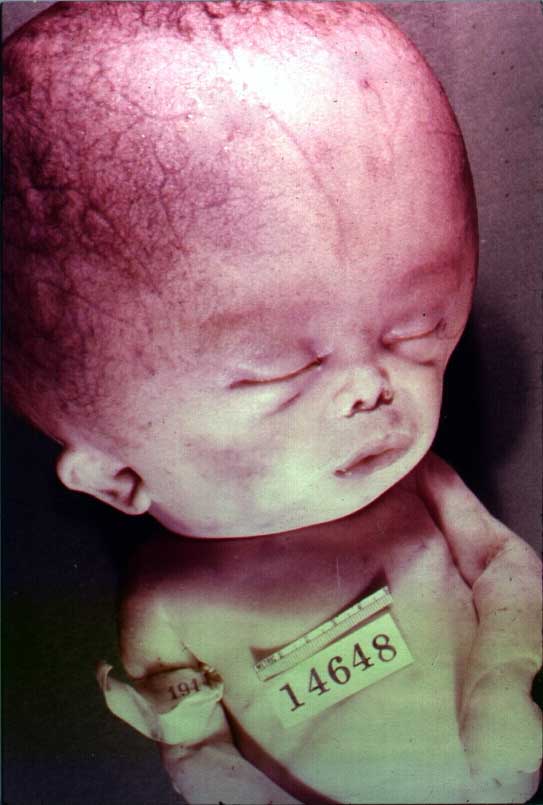 English: Photo of baby with hydrocephalus (spina b...
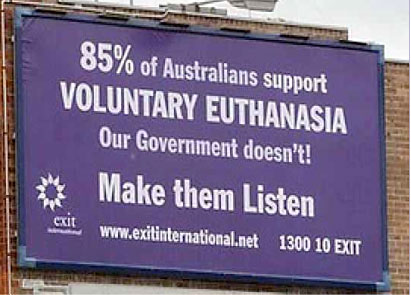 photo of controversial and historic billboard made...
Active voluntary euthanasia is a situation where a patient has decided to have a doctor assist in his death by some kind of lethal action. Intentional overdose or morphine drip, are example of lethal prescriptions for the patient. This method of euthanasia is clearly a form of suicide. Passive voluntary euthanasia is when the patient's choice is made to end his life by withdrawal of any help of prolonging his life. A living will is an example of passive voluntary euthanasia. A living will says that a patient is planning to die if he becomes incompetent. A do not resuscitate order (DNR) that is given by the patient is another example of this type of euthanasia.
Active involuntary euthanasia is to induce death without the consent of the patient. This is when the patient is not...