Every day life in Pompeii and Herculaneum
Leisure Activities:In both Pompeii and Herculaneum, entertainment came in many forms. People could attend the theatre, people could go to the amphitheatre, people could gamble, people could spend a day at the baths, people could throw parties such as dinner or dance parties and they could go to a local tavern and get drunk. Simpler forms of entertainment which could be conducted at home might be playing board games with dice, reciting poetry or playing music. From excavations of both Herculaneum and Pompeii, numerous taverns have been discovered, four public baths in Pompeii and two public baths in Herculaneum have been discovered, and two theatres have been found in Pompeii and one theatre in Herculaneum. There is one large amphitheatre in Pompeii but thus far no actual amphitheatre has been found in Herculaneum.
One of the most popular forms of entertainment at this time was blood sports where gladiators would fight both men and animals with their lives on the line. Nothing excited the people of this time more than a good bloody fight. The amphitheatre which was found in Pompeii seats between 15,000 and 20,000 people. From wall paintings and various inscriptions as well as other written evidence like game advertisements, gives us good information on the types of sports conducted in the amphitheatre. The sports performed included boxing, gladiatorial combats and wild beast shows where gladiators would fight the animals or animals would be goaded into fighting each other.
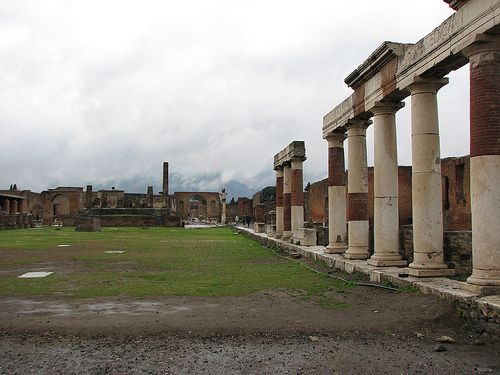
There have been two theatres excavated in Pompeii and only one in Herculaneum. The larger of the two in Pompeii can seat around 5,000 people and the smaller seats around 1,500. The theatre in Herculaneum can seat up to 2,500 people. From wall paintings and mosaics we have learned that the popular performances in theatres were initially tragic stories...
More Roman History
essays:
Ancient Rome's Animal Cruelty for their entertainment in the Amphitheatre and to maintain Political Status Quo.
... public on some of Rome's 'hot gossip'. These bloody forms of entertainment served an important political function, helping maintain the political status quo. The administration saw it as important, as it assisted in teaching the local Romans how to fight ...
Research paper on three Roman aspects of life: roman baths, roman theatre, and the roman army
... think of bathing as a private activity, while Romans usually bathed in public facilities that in some ways resemble modern spas or health clubs. Roman baths were generally used for entertainment, healing ...
The Roman Empire, from Caesar's reign through Augustus, and finally the infiltration of the Germanic barbarians. 7-8 pages, double spaced, 10pt Times New Roman, with 'quick references'.
... clothing to the Visigoths in exchange for their service as fighting allies, was the beginning of the end for all Roman army tradition and discipline. Later ... number of active legions from 50 to 25, and made their service an expense of the ...
Athens / Rome Planning and Structure.
... invention" of the public square in 17th century France (Place des Vosges). Similarly, ancient Rome was a mixture of, what has become to be known as classical architecture, in the form of (governmental ...
Discuss how far football stadia resemble the Roman Colosseum in their provision for spectators.
... sense of duty. However, Seneca felt that butchery was no form of entertainment; both Seneca and St Augustine were philosophers, they looked at moral reasoning, they had very different views towards the games than ...
What are the main sources of information we have available for the Roman Empire?
... for entertainment but also the architectural excellence of its designers due to the perfect acoustics of the building. Other public buildings and structures such as libraries ('library of Celsus' at Ephesus is an example of an excavated library ...
Where the Roman Authorities Justified in Claiming that the Campaign of 43ad was a Brilliant success
... fighting needed to be done for an entire victory. Nonetheless Claudius was so desperate to proclaim a victory that he claimed he had won anyway and he made such an elaborate farce ...
Hannibal Barca
... cruel 'game' was over, 'Hannibal then addressed his own soldiers, and told them what they had just witnessed was not an entertainment but an object lesson of their ...