In The Crucible, a play written by Arthur Miller, the strict Puritan community of Salem is bombarded with the hysteria of witchcraft. It starts when five young girls of Salem are caught dancing in the forest. Instead as mere children playing, this behavior is viewed upon by the Puritans as the work of the devil. As the hysteria builds momentum, more and more accusations radiate. Reverend Hale, a well known expert on witches, is brought into Salem to 'cleanse' the town of it's evil. At the beginning of the play, Hale leads the onslaught of punishment for the accused; but by the end, he radically changes his views, denouncing the court and its proceedings.
At first, Hale believes that the witch trials are necessary, and stands by them unconditionally. When he first comes to town, he concludes that Satan is at work. 'And I mean to crush him utterly if he has shown face!' (p.39)
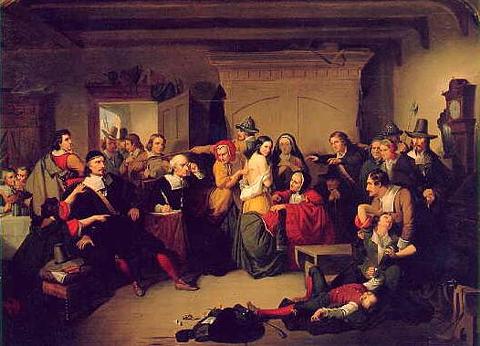 Examination of a Witch by T. H. Matteson, inspired...
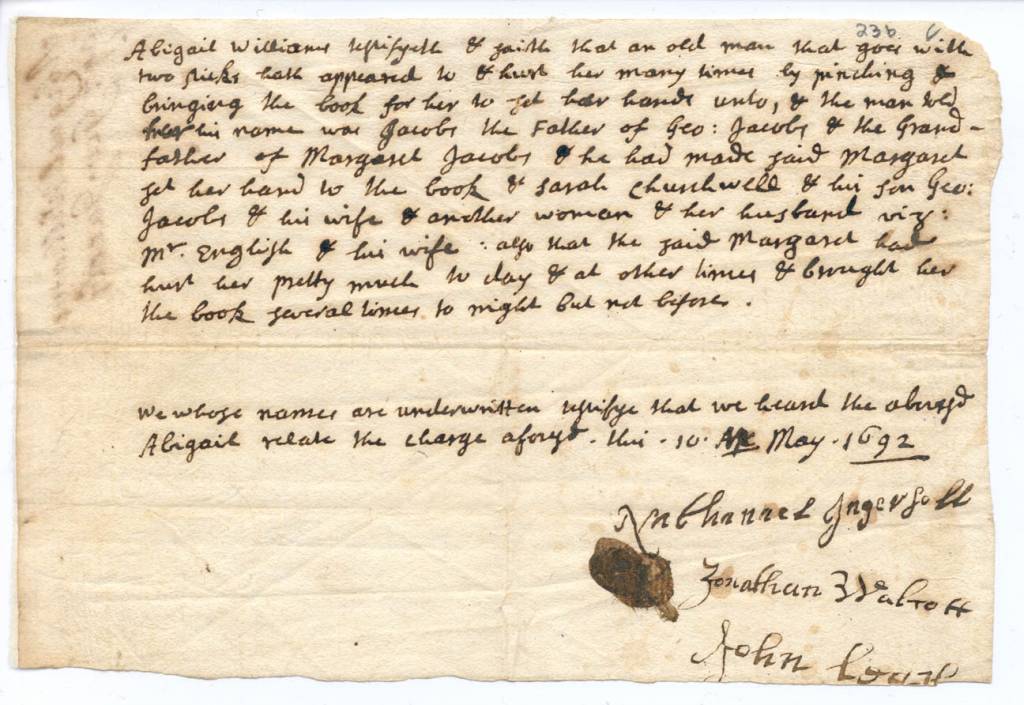 Deposition of Abigail Williams v. George Jacobs, S...
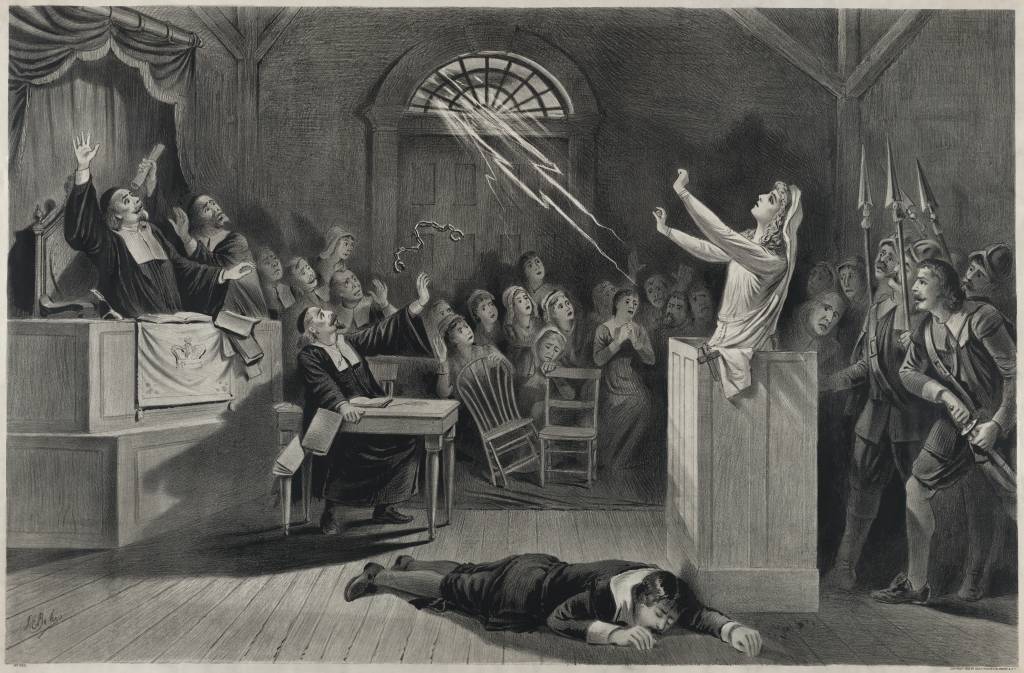 "The witch no. 1" lithograph
Hale shows his strong abhorrence toward evil. He is willing to follow the church's authority to do anything to put a stop to it. While he is talking to Abigail, a girl who was caught dancing in the forest, he yells, 'You cannot evade me...' (p.43) Hale expects to find evidence of witchcraft. This expectation leads him to early, not fully thought out conclusions. Hale is determined to end the alignments these witches have with the Devil, and he knows the court is too.
Later, Hale's views on the courts change and he becomes less obedient to it's decisions. When the judge finds out that John Proctor, an accused witch, plows on the Sabbath, he becomes disgusted; but Hale questions his authority. 'Your Honor, I cannot think that you may judge the man on such evidence.' (p.78) Hale is slowly starting to see how...