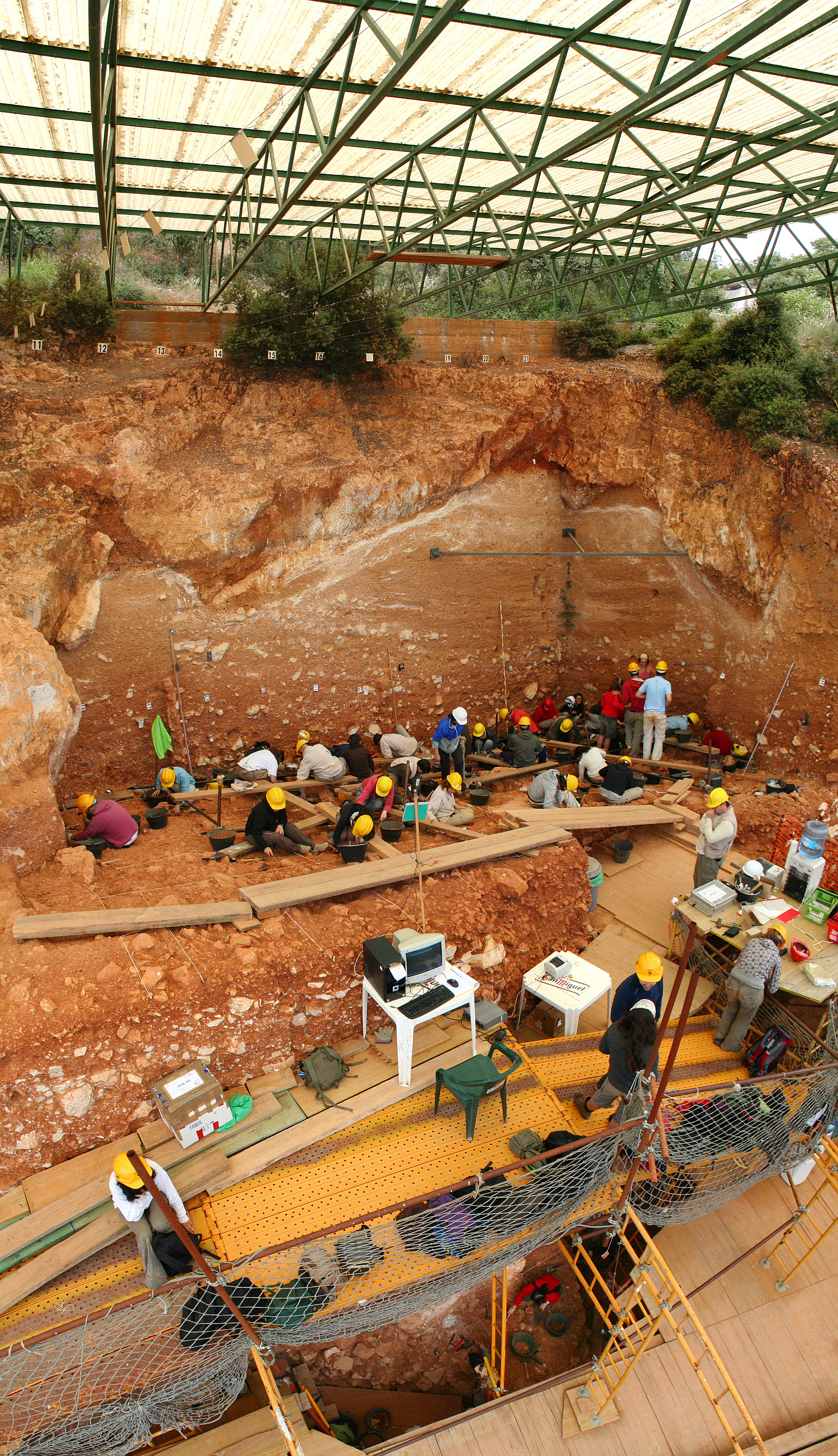
Excavation is destruction." Explore with examples a range of justifications given for excavating sites.
Before an excavation can take place many surveys must be undertaken, such as remote sensing techniques, to analyze the likelihood of the site containing something of historical interest. By excavating a piece of land a great deal can be found out about the past that simply can't be found out using aerial reconnaissance, magnetic survey methods or other such techniques. It is important to understand that excavation isn't undertaken lightly. A site will be studied for many months before hand using a wide range of methods from field walking to electromagnetic methods. The techniques used before the decision to excavate is taken can be viewed as checks and balances against reckless excavation, done without in-depth research which could scar the land. As a result the chances of an inappropriate excavation are vastly reduced. There are predominantly three main reasons as to why excavations take place, which help argue the validity of excavations. These are Research excavations, Social excavations and Rescue excavations.
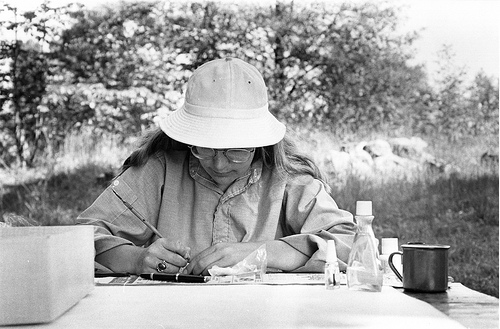
Research excavations take place less often. They differ from other excavations because they are excavations undertaken by institutes of academic learning, otherwise known as universities. The funding for these excavations is a lot more limited than for excavations of a more mainstream nature. Occasionally the excavations are funded by local businesses, organizations such as the British Academy or local government. As the title may suggest the excavations take place for academic purposes, they aim to answer and enhance regional history as well as questions of an academic nature. They take place over several years, providing students with their first experience of an archaeological dig. Although quite often not of national interest or relevance these sorts of excavations do perform important tasks in that they help bring through the next generation of archaeologist. They also concentrate less on finding "treasures",
More Archaeology
essays:
Human Evolution: Discuss the significance of the recent discovery of homo floresiensis for paleoanthropology.
... this sense the discovery was significant in it's corroboration of the above. MORPHOLOGY Differing Explanations Of The Discovery. Before analysing the importance of the discovery to paleoanthropology, the different interpretations of the remains and each interpretation's validity must ...
Movement of a pre historic culture The Nebulosa Chain
... long range of inhabitation. Of the remaining three excavations, only two of them are on the islands and fairly ... the Reindeer/Caribou bones as they are on both Hecate and Lingula. There could have possibly been trade from the people on the main lands, but for some reason I doubt this. With Foggy Bottom ...
Discuss: Methods by which archaeologists carry out the uncovering or excavation of archaeological sites
... show soil changes through the unit. Photographs of features and completed units are also taken to further document the excavation. Once a unit has been excavated there is no way to go back and check for overlooked information, which makes it ...
How agriculture cropped up
... Origins and Spread of Agriculture: A New Model Current Anthropology 21 (6): 751-772 Wolle, A. 2002Catalhoyuk: Excavations of a Neolithic Anatolian Hoyuk Wright, G. A. 1992Origins of Food Production in Southwestern Asia: A Survey of Ideas ...
Evidence for a Goddess Cult at Çatal Hüyük
... already excavating at the site of Hacilar, James Mellaart did not begin further surveying and excavations at the site until 1961 when the excavations at ...
Gondwanaland: A Study of the Continent in a Theoratic Sense.
... the great continent of Gondwanaland break up into the landmasses we see today? The answer lays in the interior of the earth its self. The Crust of the earth is composed of several piece of rock ...
The archaeological importance of the study of pottery
... result of a piece of pottery fired in an open kiln. It is also possible to apply more scientific methods to establish details of a piece of pottery ... this and can tell a great deal about the people involved in its production. Recent developments have transformed archaeology from "closets of curiosity ...
Annotated Bibliography: Evidence for a goddess cult at Catal Huyuk
... Reflexive Method in Archaeology: The Example at Çatalhöyük McDonald Institute for Archaeological Research. This is Hodder's second comprehensive site report for Catal Hoyuk. Though this report focuses on the field techniques and methodology of the excavations, several ...