"Fascist rule could only exist by exploiting the fears of the masses." To what extent would you agree with reference to either Germany or Italy up to 1939?
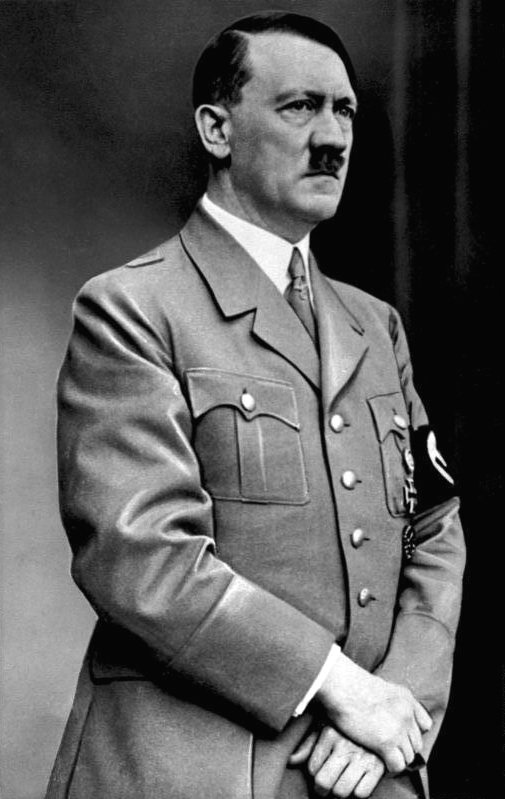
Between 1933 and 1939, the Fascist Nazi state, under the rule of Adolf Hitler was reliant on a combination of fear caused by force, and popular support for its maintenance. It is difficult to decide exactly whether fear or support was more effective, as because of the Fascist regime, the German public were forbidden to express their opinions as the historians Noakes and Pridham had commented, "an independent public opinion did not exist in the Third Reich." Therefore, there is much historical debate and controversy caused among those who believe that fear caused by force was the main factor keeping Hitler in power and those who believe that the Nazi state survived due to popular support from the German people. The historian Buchheim is an example of someone who considers the exploitation of fear to be responsible, as opposed to Wilt, who gives more credit to popular support for Nazism. It is important to consider and evaluate both methods to reach a balanced conclusion on which factor Hitler and his Nazi state was more dependent on for survival.
Undoubtedly, exploiting the fears of the German people by use or threat of force played a highly important part in helping Hitler to maintain power. The first step towards this was persuading President Hindenberg to hold new elections in which Hitler hoped he would gain a majority but unfortunately for Hitler, the Communists were a great threat to the Nazis and before the election there was vicious rivalry between the Nazis and the Communists as open fighting took place between the parties to prevent each other from holding political meetings. However, the German Reichstag was mysteriously burned to the ground on the 28th of February 1933. Found near the building was a Communist Dutch vagrant so Hitler saw this as a reason...
More German History
essays:
'Hitler's charismatic personality and policies only partly explain the Nazis' rise to power in 1933.' To what extent do you agree with this statement?
... the Nazis' rise, were in the depths of the Great Depression. These events gave Hitler many opportunities to reach out to the German public and ...
To what extent, and by what means, did Hitler create a totalitarian regime?
... though Hitler was never 'degraded to the level of mere executant of other people's wills and opinion,' he was still answerable to public opinion. Consequently ...
Germany disliked the "Treaty of Versailles" only because of the following reasons: a) Loss of land b) Cuts in their armed forces c) Reparations Do you agree with this statement?
... warnings of his doctors, made a national tour to mobilize public sentiment for the treaty and the League. On 25th September ...
Why is the resistance of the South during the Italian liberation against the Germans during WWII ignored, or hardly remembered?
... Giunti Gruppo Editoriale The author of this book is a historian of the 90s. He specializes on the less investigated arguments ... it might be extremely biased. The article was meant for public view and thus it must had to report something appealing ...
Why is the resistance of the South during the Italian liberation against the Germans during WWII ignored, or hardly remembered?
... Giunti Gruppo Editoriale The author of this book is a historian of the 90s. He specializes on the less investigated arguments ... it might be extremely biased. The article was meant for public view and thus it must had to report something appealing ...
What does Bismarck's speech on the issue of the Poles reveal about his understanding of the German nation?
... the German nation he espoused, certain allowances had to be made for German public opinion; therefore ... third of its seats were held by Prussians. The second was an agreement to accept a unified Germany based on a constitution that combined ...
The Wars of the unification of Germany
... were impudent demands made on the Germans (particularly on July 12, 1870) and there was serious misinterpretation of French public opinion. Nevertheless, he who thinks war ... for the Confederate armies and to mobilized the forces of the smaller states. When the Bavarian proposal won by a vote of 9 to 6, ...
What obstacles were there to the re-establishment of Jewish life in occupied Germany and in the two German states during the 1950s, and to what extent were they overcome?
... former Nazis got their second chance in the bureaucracy, in the army and in the judiciary system. The public opinion in ... eastern German state was strongly influenced by Stalin and the anti-Semitic policies of the Soviet Union. Anti-Semitism and fascist activities ...