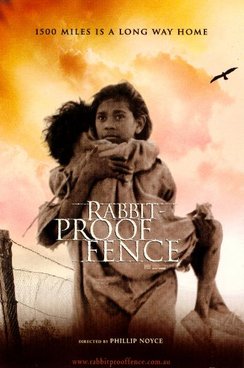
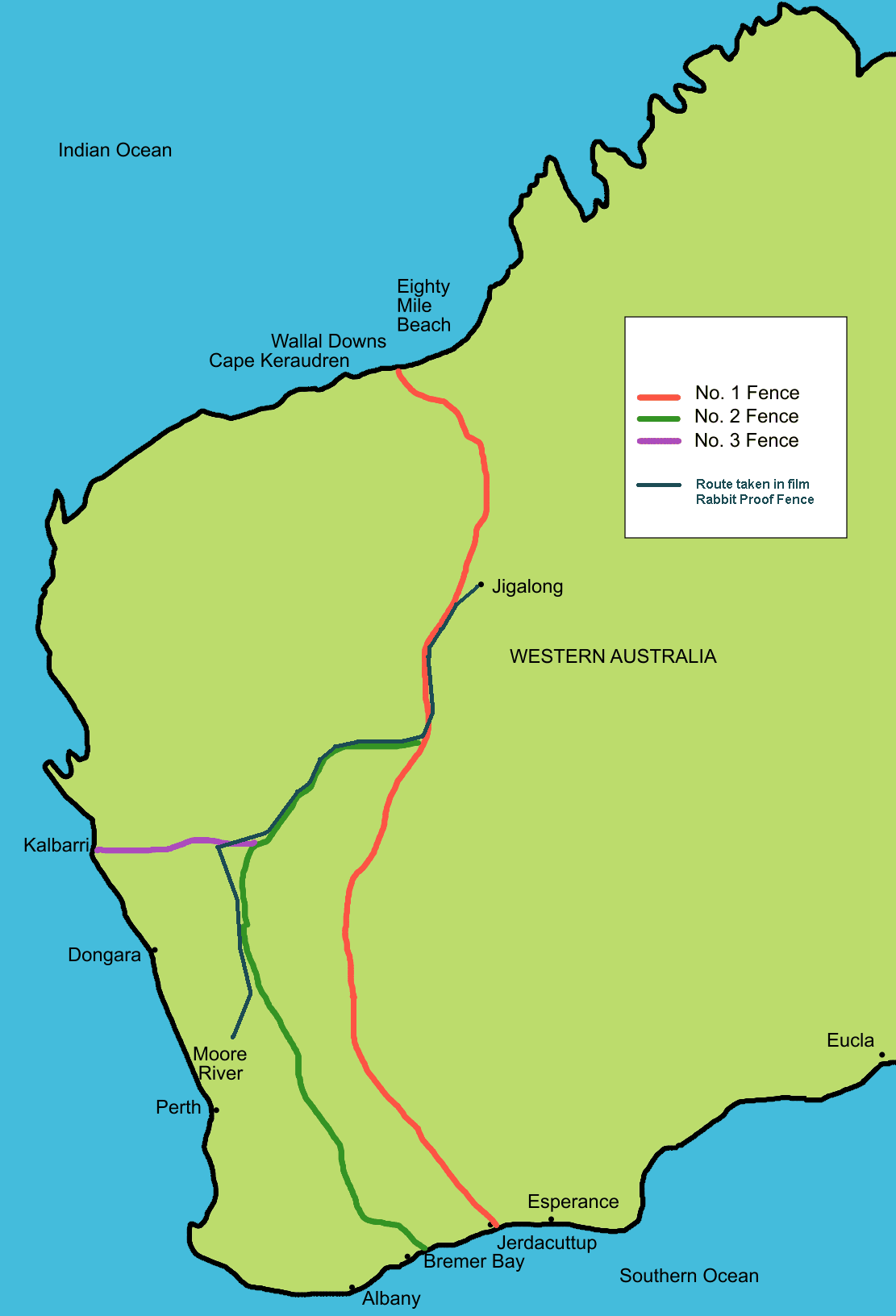
In the film Rabbit Proof Fence, We, as the viewer, are positioned to see Mr Neville as a mostly unsympathetic character. How has the director, Phillip Noyce used various techniques to achieve this?
In the film Rabbit Proof Fence, the character A.O. Neville is portrayed as a mostly unsympathetic character. The director, Phillip Noyce used the technique of camera angles to develop Nevilles character as very authoritative and controlling of the other characters in the movie. The soundtrack, particularly the sound effects, are also used to develop Nevilles character. He is shown to be very isolated from the suffering of Aborigines and only concerned for rules and regulations. The lighting and colour in both his office (where he is seen most of the time) and whilst making a presentation, are used in the film to demonstrate Nevilles attitudes and beliefs. Finally, the editing of scenes contrasts Nevilles actions and orders with those that he affects, creating a controlling, heartless character. However, despite all of this, he is not entirely unsympathetic. Neville believes that he is doing the right thing for the Aboriginal people. He is well-meaning and simply doesnt understand. It is the way he acts upon these beliefs that make him an unsympathetic character.
Noyce makes Neville appear very powerful and authoritative through his use of close-up and tilted-up camera angles. In the scenes where the viewers are introduced to Neville, he is shown sitting at his desk, going over paperwork with a very stern expression on his face. The camera is tilted up towards him, giving and impression of being very tall and imposing. As he reads through papers in a very serious manner, the camera is a very close to his face. His face fills the screen as he reads, making him appear very officious and dominating. Through these shots, the viewer is positioned to see Neville as a very harsh, cold and controlling person.
Furthermore, at the Moore River settlement, Neville is depicted checking the colour of the skin...
Reviews of: "In the film Rabbit Proof Fence, We, as the viewer, are positioned to see Mr Neville as a mostly unsympathetic character. How has the director, Phillip Noyce used various techniques to achieve this?"
:
More Directors
essays:
Similarities between "Fight Club" and "Seven" to produce a cinematic signature of David Fincher
... discovering the true manner and working ability of Fincher. The use of violence in his films clearly portrays an unapologetic point of view as the camera pans to reveal every detail of the set ... variety of camera angles and shots to add yet even more intensity to the film ...
Compare and Contrast of POV used by Hitchcock and Poe
... those of flamboyant special effects or abstruse language. In Hitchcock's Rear Window and in Poe's "The Fall of the House of Usher," both storytellers use a first person point of view to ...
A discussion of Martin Scorsese's films and the violent influence they have had on the American people
... was the temptation of women were he got distracted and lost his virginity. On side, Scorsese wants to do the right thing, and on the other ... to express how real death actually is, and that it is not something you can walk away from. The whole point of the movie ...
A review of the life of alfred hitchcock and all his works.
... spy and chase films. When three years had gone by with no Hitchcock release, people began to think that Hitchcock had retired. He, too, was getting restive without a project that could be filmed. For convenience only, he purchased the rights ...
Hitchcocks Motifs: An in depth reading of Vertigo.
... be doing this and feeling unsure of himself. The shot we get of Madeleine in front is effective. Hitchcock liked to include P.O.V (Point of View) shots ...
Alfred Hitchcock 50 Years of Movie Magic
... publicized, and some critics feel that the original intent of his unusual camera shots were no more than a publicity stunt at first. Regardless, Hitchcock brought cinematography to new levels, pioneering the point-of-view shot, which among other things was ...
Hitchcocks ROPE (1948) its production, distribution and exhibition, film techniques, special effects and audience.
... front of the camera therefore blacking out the action very briefly while people changed from camera to another and starting the next ...
German Cinema and Murnau
... Harsh lighting, obscure camera angles and the conveyance of extreme angst and anxiety were all aspects of this high contrast and surreal depiction of life. Expressionism placed greater value on emotion than realism, and its effects were ...
Excellent analysis.
Great detail with lots of depth.
1 out of 1 people found this comment useful.