The First Movement of Bela Bartok's Concerto for Orchestra.
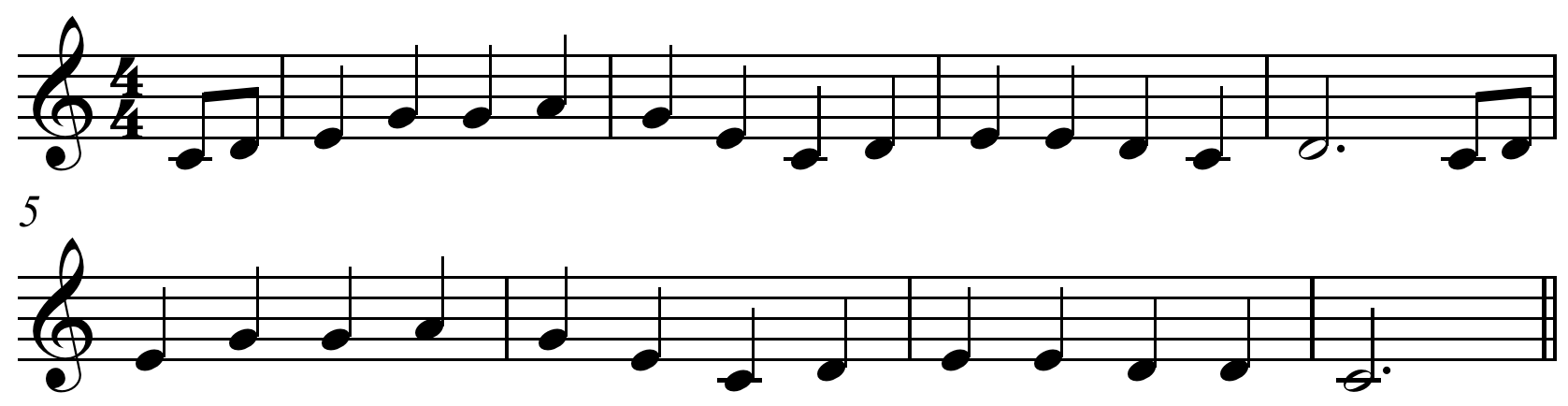
This movement is called 'Introduzione.' It is based on the key of F minor and in sonata form. It begins with an 'andante non troppo' section and moves into 'allegro vivace.' Within the movement, evidence of Bartok's organisational compositional approach can be seen in the precise timings given for each section and his organic approach can be seen in the natural growth of his ideas. This style has been influenced by classical and baroque concerto forms, with it's slow introduction and elements of the baroque 'concerto for orchestra' and 'concerto grosso' (although this cannot be clearly seen in this movement). Much of the work is based on a scalic idea Bartok called his 'germinal motif.' It is based on an Arabic scale, and is found in much eastern European traditional music.
The introduction can be divided into three sections. It begins with a pentatonic based idea in the lower strings under chromatic tremolo in the strings and runs in the flute. A new idea is introduced in the flute leading into the second section. An ostinato (derived from the opening idea) and pedal accompany a melody which has been developed from the earlier flute theme. The third section develops this further, with a 'sliding' tonality. The lead up to the first subject consists of an ostinato which the subject is then based on.
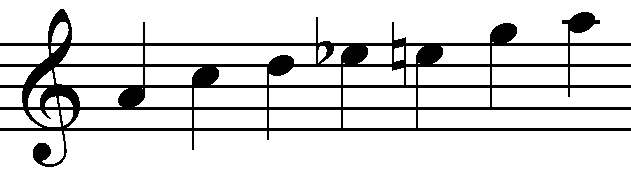
The germinal motif is very evident in the first subject. He allows the idea to grow, while never losing it, and includes a few strong references to the pentatonic idea. Tremolo leads into the second subject, where a new idea is introduced with strong rhythmic qualities. This is developed and a rising chromatic figure introduced in the woodwind, before returning in the lower strings to form a lead into the development.
The development can be divided into...
More Music History & Studies
essays:
Beethoven, Bach, and Bartok.
... keyboards. Orchestra divided into four distinct sections. Rapid advance of technology. Electric instruments, synthesisers, computer-produced sounds etc. Contrasts of Elements between: Bach: Concerto no. 5 Mozart: Piano Concerto 1st Movement No. 23 in A Bartok: Concerto for ...
Symphony No. 4 in F Minor by Pyotr Ilyich Tchaikovsky- An Analysis
... and sections of music. C. Symphony in F Minor: General Info and DiscussionThe Symphony in F Minor is ... the complexities of Tchaikovsky's mental state, turned the marriage into an instant disaster that didn't even last three months. As a result, Tchaikovsky fled back to St. Petersburg ...
Tchaikovsky's Symphony in F Minor.
... of F minor. Tchaikovsky composed this piece between 1877 and 78. He wrote it during the time of his disastrous marriage to Antonia Milyukova. Because of this, one can assume that the great passions and contrasts that are written into the ...
A Formal Analysis on Beethoven's Piano Concerto No.3 in C minor , Op. 37
... classical tradition and the romantic "wanderings" after him. The classical solo concerto scheme, of a first fast movement in concerto form (that has similar attributes to the sonata form), a slow movement ...
Paper on The History of the Stringed Instrument to 1800
... with three plectra or picks made of ivory or plastic fitted into leather bands which are placed on the right hand’s index finger, middle finger, and thumb. Traditionally, the koto scale is pentatonic (five ...
Impressionism and the Twentieth Century (Important) I cant remember if I have submitted this essay or not so...I guess You will have to look it up website dudes!!!
... and orchestraViolin Sonata No. 1 in F minor, Op. 80The three so-called War Sonatas:oPiano Sonata No. 6 in A major, Op. 82oPiano Sonata No ...
CONCERT PAPER 3
... called Concerto for Clarinet and String Orchestra with Harp and Piano. The Copland piece was in two movements bridged by an unusually long cadenza(Soloist), that lasted over three minutes ...
Jazz & Popular Music.
... wind sections, harmony became less pentatonic, leading up to the complex five, six and seven voice chords of Be-Bop. Rhythm was less jolted and on-the-beat (it had become like that with the influence of the marching music). 108 ...