Evaluating Fiscal Policy Alternatives and the impact of a change in government spending or taxation on the real Gross Domestic Product (GDP) and aggregate income of the economy.
Economics is the social science that studies the production, distribution, exchange, and consumption of goods and services. The study of economics focuses on how individuals, corporations, and societies choose to use the scarce resources provided by nature and previous generations. The two policies in today's economics are none other than the Fiscal and Monetary Policy. Although they both deal with economics you could not find any stranger or a pair of opposites than these. The reason why is because the Fiscal Policy is defined as, changes in government expenditures and/or taxes to achieve particular economic goals, such as low unemployment, stable prices, and economic growth. On the other hand, the Monetary Policy is defined as, changes in the money supply, or in the rate of change of the supply, to achieve particular macroeconomic goals.
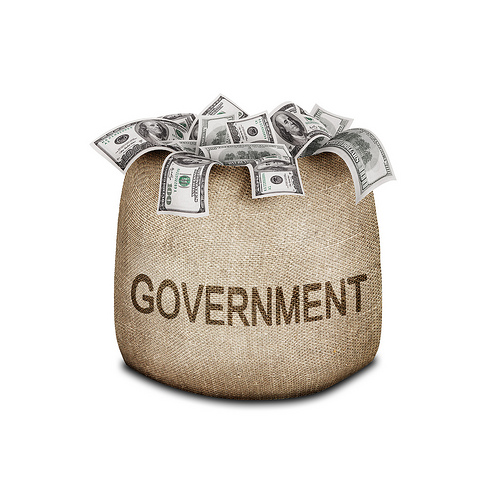 Government spending
 John Maynard Keynes Русский: Джон МеÐ...
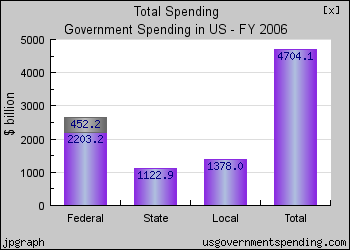 Government spending in the United States for FY 20...
The reason why these two policies couldn't be any more different is because the Fiscal Policy deals with the government, while the Monetary Policy deals more with the private businesses and households, focusing more on the individual rather than the whole. From government spending to government taxes the Fiscal Policy of economics covers it all. For example, military spending, welfare, and Medicare are just a few of the many forms of government spending that our country emphasizes on within the Fiscal Policy.
Fiscal policy describes two governmental actions by the government. The first is taxation. By levying taxes the government receives revenue from the populace. Taxes come in many varieties and serve different specific purposes, but the key concept is that taxation is a transfer of assets from the people to the government. The second action is government...
Fiscal policy
Very well writen I am an economics major at tulane and you are right on with this especially monitary policy but if you want to spice it up a little (not that it needs it)talk about SAY'S LAW in a simple economy to support your points.
8 out of 8 people found this comment useful.