The Four Yoga's Summarizations This is a short essay about the four yoga's in buddhism along with a choice, as requested by the instructor, as to which yoga best discribes mr beliefs.
The Four Yoga's Summarizations
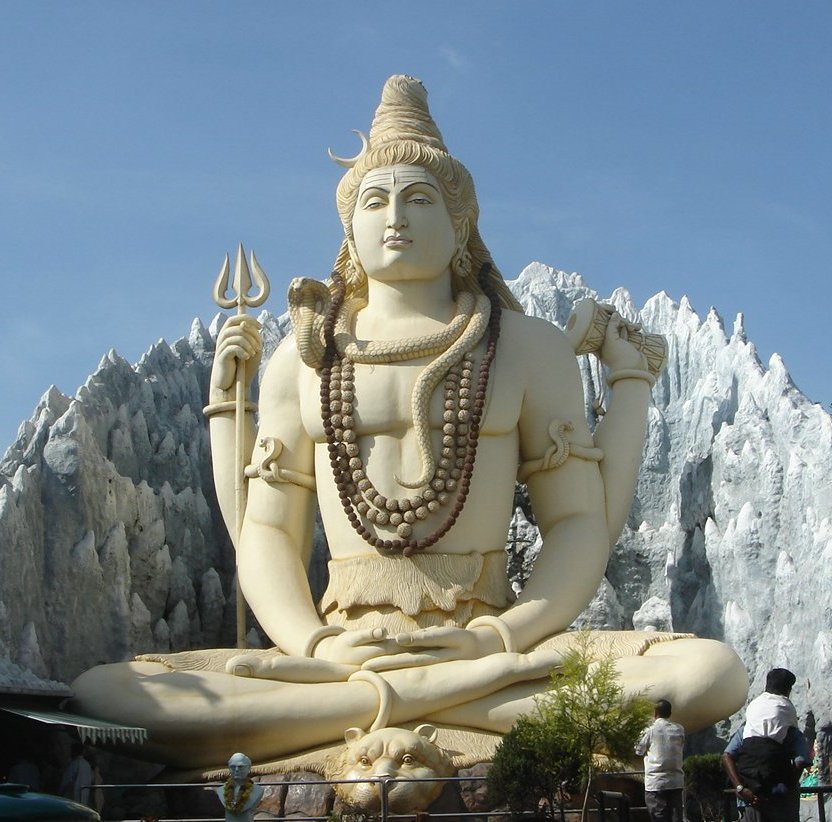
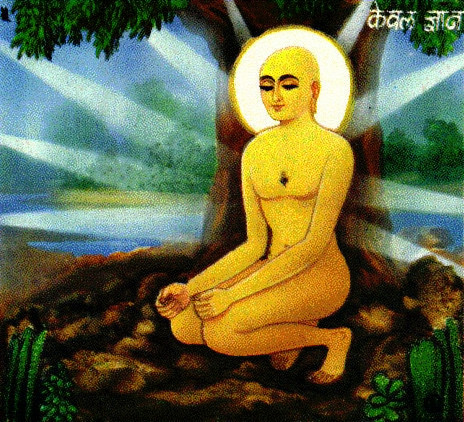
Jnana Yoga - The way to god through knowledge: to transcend the smallness of the finite self through the belief that the individual and god as an infinite self. This path to oneness is distinguishing between the surface self and the larger self that is out of site. This power is done in three stages, learning, thinking and knowledge.
Bhakti Yoga - The way to god through love: to love god dearly with no ulterior motives. Not to identify with god but to adore god with every element of the individuals being. To give ones interest and affection to a personal god. Very similar to Christianity where one loves and believes faithfully.
Karma Yoga -The way to god through work: A way for self-transcendence through working not for reward or recognition. Work is done without thought for ones self but unselfishly. Jnana or Bhakti is incorporated depending on if the path chosen is affective or reflective.
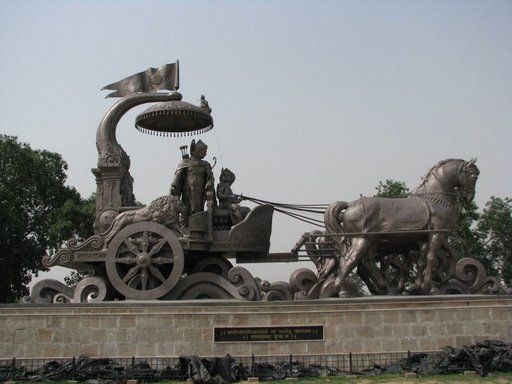
Raja Yoga - The way to god through psychophysical exercises: achieved through psychological and physical experimentation. It is a highly focus of meditation to reach the beyond within. The theory to reach this point requires eight steps. Simply put they are, to overcome hunger, mental distractions, discomfort, drowsiness, to control ones breathing and then to turn ones attention inward. After these first five steps then one must relax or focus the mind until one reaches a deep meditation state and then final the step of oneness.
Which Yoga: of the four summarize defined above and being put in the position that one has to be chosen, I believe that the yoga that comes closest to define myself is the Jnana Yoga. Although I don't follow or believe in any specific religion can relate to the idea that an individual and...
Reviews of: "The Four Yoga's Summarizations This is a short essay about the four yoga's in buddhism along with a choice, as requested by the instructor, as to which yoga best discribes mr beliefs."
:
More Buddhism
essays:
The Buddha's Four Noble Truths - A Logical Basis for a Philosophy
... a person has a craving (tanha) of any sort, they will try to attain the thing for which they have the craving (karma), and in doing so will cause the existence of dukkha in their life. This belief is another way ...
"Buddhism in China: A Historical Survey" by Kenneth K.S. Book Report.
... events, but analyzed there meaning and showed how these events affected diffrent communities economically, politically and spiritually. In his book, Ch ...
This essay is a brief history and background on Budhism.
... that God chooses to punish or reward your actions in life and perhaps in heaven or hell. "Christianity which holds the soul works out its rewards or punishments in a single lifetime. The closest mentioning of Karma is ...
This is a 20 slide Power Point on Buddhism
... behind Christianity, Islam, Hinduism, and traditional Chinese religion, respectively. [1] Buddhism is the fourth-largest organised religion in the world. When used in a generic sense, a Buddha is generally considered to be a person who ...
The traditional (pre 1788) Australian Aborigines had a positive view of the world, while the Buddha had a negative view of the world. Discuss the validity or otherwise of this statement.
... a person could escape this endless suffering. These basic teachings are framed in a fundamental distinction between this world, a negative world of suffering and impermanence, and nirvana, a state of transcendence beyond all conceptualisation. In order to achieve ...
Buddhism and the seven dimensions
... due to the fact that it does not directly affect the way in which members achieve their core objective, its influence is less pronounced than that of other dimensions. Buddhists take a very personal attitude ...
Buddhism and Pop Culture Details the comparison between the movies "The Matrix" and "Fight Club" and Buddhists beliefs.
... the self, "The Matrix" discusses spirituality. Perhaps the most stunningly obvious revelation of this is the plaque in the Oracle's house; a Latin phrase translated "Know Thyself". Jacobus agrees that the only way to achieve ...
A fine essay on the 14th Dalai Lama.
... learn to transcend the differences of race, culture, and ideology to end ... both leaders on both ends of the blocs must come to realize their flaws, and gain affection for their fellow man, because we are all human. The ...
Very nice
this was a bit too short but it was very interesting and it helped me understand better, thanks for posting
0 out of 0 people found this comment useful.