Morality, Kant says, cannot be regarded as a set of rules which prescribe the means necessary to the achievement of a given end; its rules must be obeyed without consideration of the consequences that will follow from doing so or not. A principle that presupposes a desired object as the determinant of the will cannot give rise to a moral law; that is, the morality of an act of will cannot be determined by the matter or content of the will for when the will is materially determined the question of its morality does not arise.
This consideration leads Kant to one of his most important theses. If the moral character of willing is not determined by the content of what is willed, it must be determined by the form:' If a rational being can think of his maxims as universal laws, he can do so only by considering them as principles which contain the determining ground of the will because of their form and not because of their matter'.
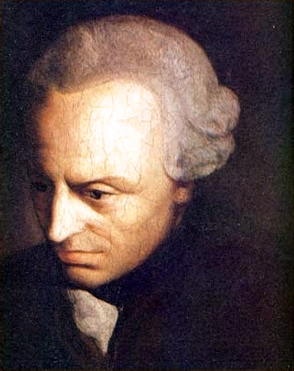 English: , Prussian philosopher. Português: , fil...
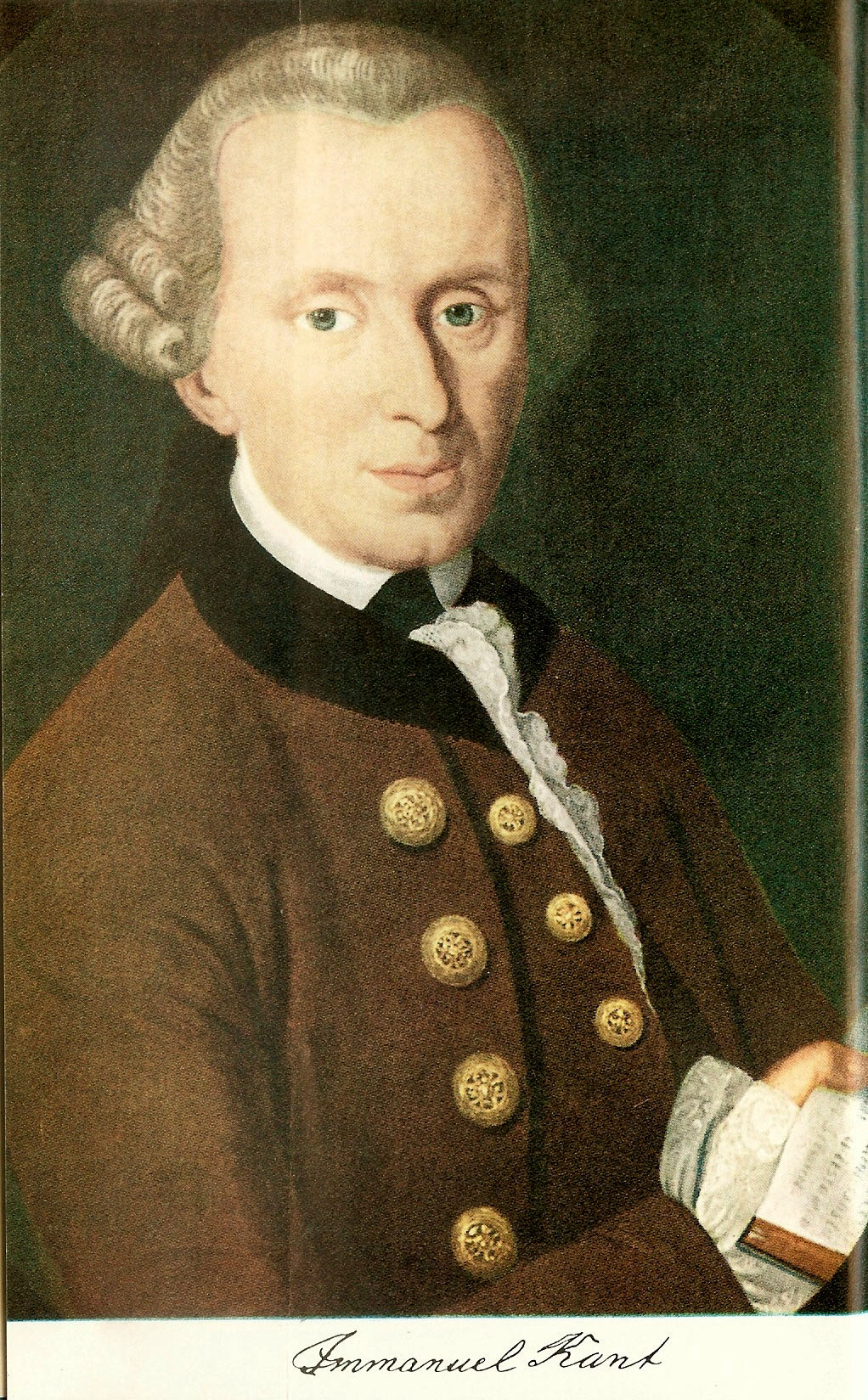 English: Immanuel Kant Deutsch: Immanuel Kant
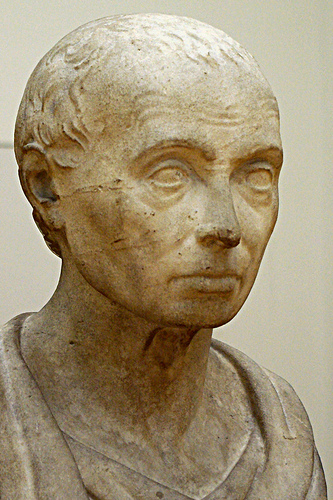 Immanuel Kant
Therefore, the morality of a maxim is determined by its functioning as a universal law, applicable as a general rule to every rational agent.
Since a moral will must be so in virtue of its form alone, the will must be capable of a purely formal determination; that is, it must be possible for a man to act in a certain way for the sole reason that willing in this way is prescribed by a universal law, no matter what the empirical results will be.
A will to which moral considerations apply must be, in the strictest sense, a free will, one that can function independently of the laws of natural causality. The concept of morality, therefore, has to be explained in terms of a universal moral law, and the...
WOW!!!!
I have learnt some philosophy during my Access to Humanities course, which is English 'A'Level standard, so I like to think I can read something like this and understand it. I have to say this blew me away!! I understood alot of it, but the way it is written and the confident use of philosophical terms is just fantastic. I am trying to find out about 'Human Reason' for an assignment right now and this has helped although I feel I will have to read it a few times to absorb all that is covered.
This is not an essay for a beginner in this field, I just barely understood it with my limited knowledge, so I think only someone with the same educational background as the writer would truly benefit from this. It exudes confidence and ease with the subject and I am still in awe!! Well Done!
3 out of 3 people found this comment useful.