While freedom of speech has been guaranteed to us for centuries, the First Amendment today, is mainly a creation of the past 80 years. Because of changes in the way the government is involved in people's religions today, more than in the past, the constitutional protection of religious freedom is more needed today (Modern Era). The First Amendment was first created in 1777, when Thomas Jefferson drafted a Bill for establishing religious freedom. People were migrating to the United States, because they wanted freedom from religious persecution and the right to worship freely, without their government interrupting. The United States faced the challenge of deciding how to unify the nation with so many different religions. So Thomas Jefferson created the First Amendment (First Freedom).
The First Amendment prevents the government from making an official religion. It gives protection to a person's right to practice any faith without the government's interference.
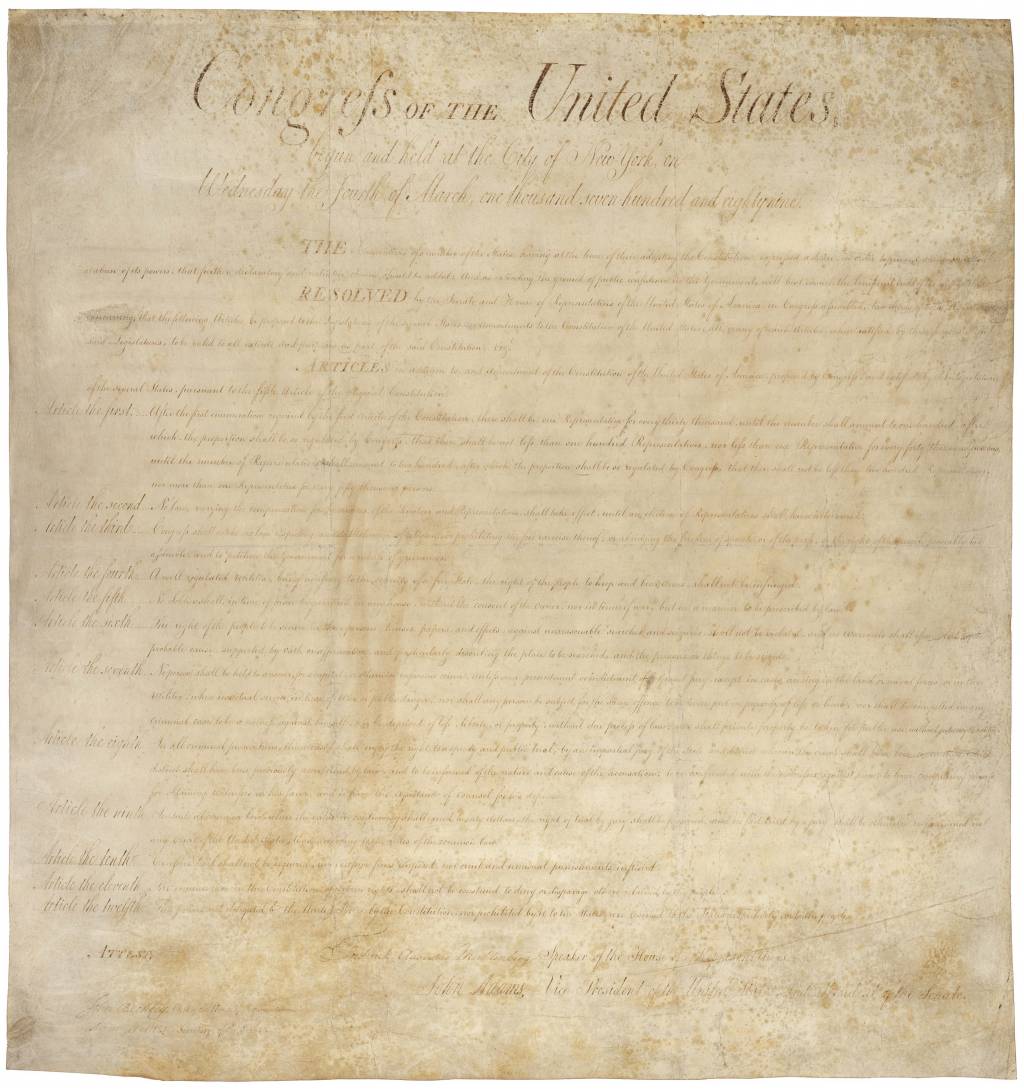 English: The Bill of Rights, the first ten amendme...
 The "free speech zone" at the 2004 Democratic Nati...
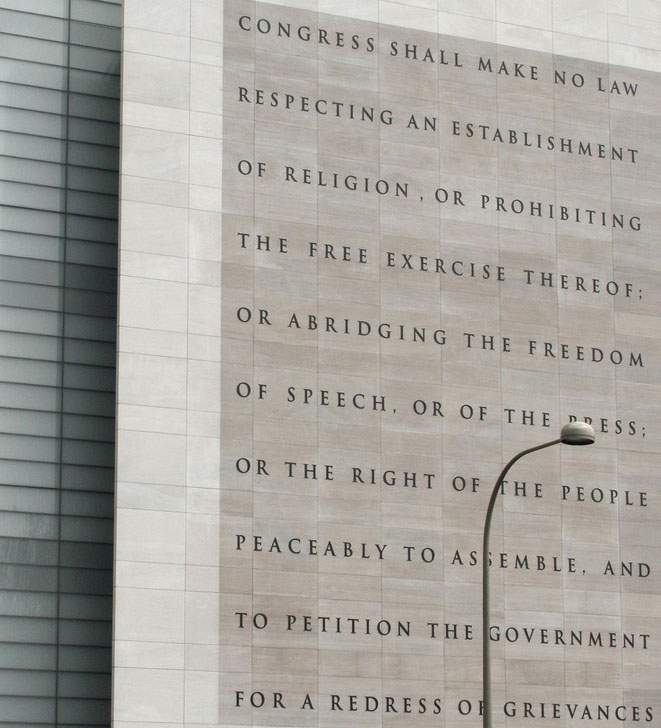 The Newseum's Five (5) freedoms guaranteed by the ...
The First Amendment also deals with free speech; people have the right to speak freely without the government's interference. The first Amendment deals with free press, assemblies, and petitions as well. It states that, "Congress shall make no law respecting an establishment of religion, or prohibiting the free exercise thereof; or abridging the freedom of speech, or of the press; or the right of the people peaceably to assemble, and to petition the Government for a redress of grievances" (Freedom Forum).
After the Enlightenment, when the First Amendment was created, it helped for the most part. Now, the idea that the government and religion should be separate, and not interfere in each other, or the separation of church and state doctrine, is being over exaggerated. In the United States, this idea is based on the First Amendment to the US Constitution. This was just creating a barrier line for the...