Freud, Burkert, More and Atheism on the Origins and Persistence of Religious Faith
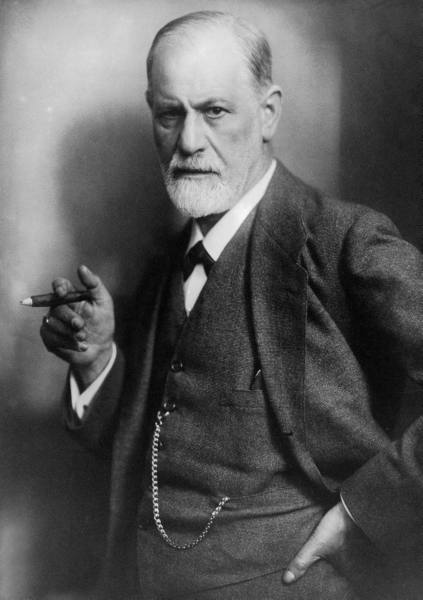
Where did religious faith originate and why has it persisted throughout human history to modern times? This is a burning question which has occupied the thoughts of great scholars and theorists for many centuries. Yet, no single theory ever put forward has been capable of satisfactorily accounting for all the data or stand the test of informed criticisms. Of such theories aimed at explaining the origins of religion, several stand out separate from the rest due to their extraordinary and unique perspectives on the issues. Sigmund Freud believed religion to be an illusion manifesting itself as a collective neurosis in society at large (Freud, 1991). He was convinced that religious faith is a means to wish fulfillment and was hopeful that humans would eventually succumb this psychopathology and relinquish their religious beliefs and practices. Walter Burkert on the other hand maintains that religion did not develop in a void, but rather is the product of thousands of years of co-evolution between biology and culture. For Burkert, religion is an evolutionary adaptation which functions to maintain social cohesion and diffuse natural yet destructive human impulses. To answer the second part of the question posed above, we find the theories of Max More on the persistence of religious faith to be rather informed and insightful. More believes religion to be "a pre-scientific system of explanation and technology; a source of meaning, direction and emotional expression in life; a means of social control; and a means of coping with uncertainty and death" (More, 1990). Finally, there the a viewpoint of large group of people deemed as atheists who are, by definition, those "who do not believe in a deity, God or supreme being" (Barnett, 1999). Atheists believe the persistence of religion to be due to its dynamic ability to change alongside with society...
More Religion & Faith
essays:
Religion - Animism
... 19th century, however, the term has been mainly associated with anthropology and the British anthropologist Sir Edward Burnett Tylor, who described the origin of religion and primitive beliefs in terms of animism ...
Martin Luther The Great Emancipator of Human History - The History of Martin Luther and his role in the Protestant Revolt - Works Cited Included
... one of the great emancipators of human history. (3) He was devoted to the principal of speaking ... the secular employment intended for him, to seek the life of a religious." This appears to be when Luther pulls away from his ...
Discussion on whether Religion has a Place in a Modern Scientific Society
... the origins of religion within each individual person. In this Freud describes religion as illusions, fulfillments of the oldest, strongest and most urgent wishes of mankind. Freud also relates the obsession with religion to ...
The Catholic V. Fundamentalist Question
... Fundamentalist question when he condemned the uses of violence and coercion that some groups justify in obedience to their faith (88). Pope Paul VI offered similar comments when he said that it is not right to appropriate aspects of religion or ...
The Hajj: A Leap In the Faith of Religion
... world of religion as someone may expect. In other worldly religious affiliations it is extremely rare that someone would go to such lengths to declare their faith in ...
The role of religion as a positive or negative or neutral or irrelevant force, in efforts to further national political objectives where human dignity, equality, justice and peace prevail.
... past centuries, wars were announced on the religious bases (even though the initiators hardly had preservation and protection of religion in ... act of justice is done in the name of religion, it somehow changes everyone's perspective on ...
The different religions around the world.
... discouraged religion. Many Chinese practice the teachings of Confucius, which is a political movement rather than a religious faith. Taoism ...
Reflection Paper for Philosophy of Religion: The continous conflict between Religious Pluralism and Exclusivism
... beliefs emerged which gives rise to the inconsistency. There are numerous differences between religions: one versus many gods, personal versus impersonal gods, personal survival of believers versus no survival of believers, moral codes, religious life, etc. As observable in human history ...