This is a full report on elemental Mercury.
Mercury holds the 80th spot on the Periodic Table. It has 80 protons, 80 electrons, and 121 neutrons in a neutral atom. It is in the 6th period, and the 12th group. A neutral atom has an atomic weight of 200.59 AMU. It is a silver color, and it is metallic.
Mercury is the only common metal liquid at room temperature, and it is the heaviest elemental liquid. It rarely occurs freely in nature, but can be found in cinnabar ore, in Italy and Spain. It doesn't conduct heat well, but it is a fair conductor of electricity.
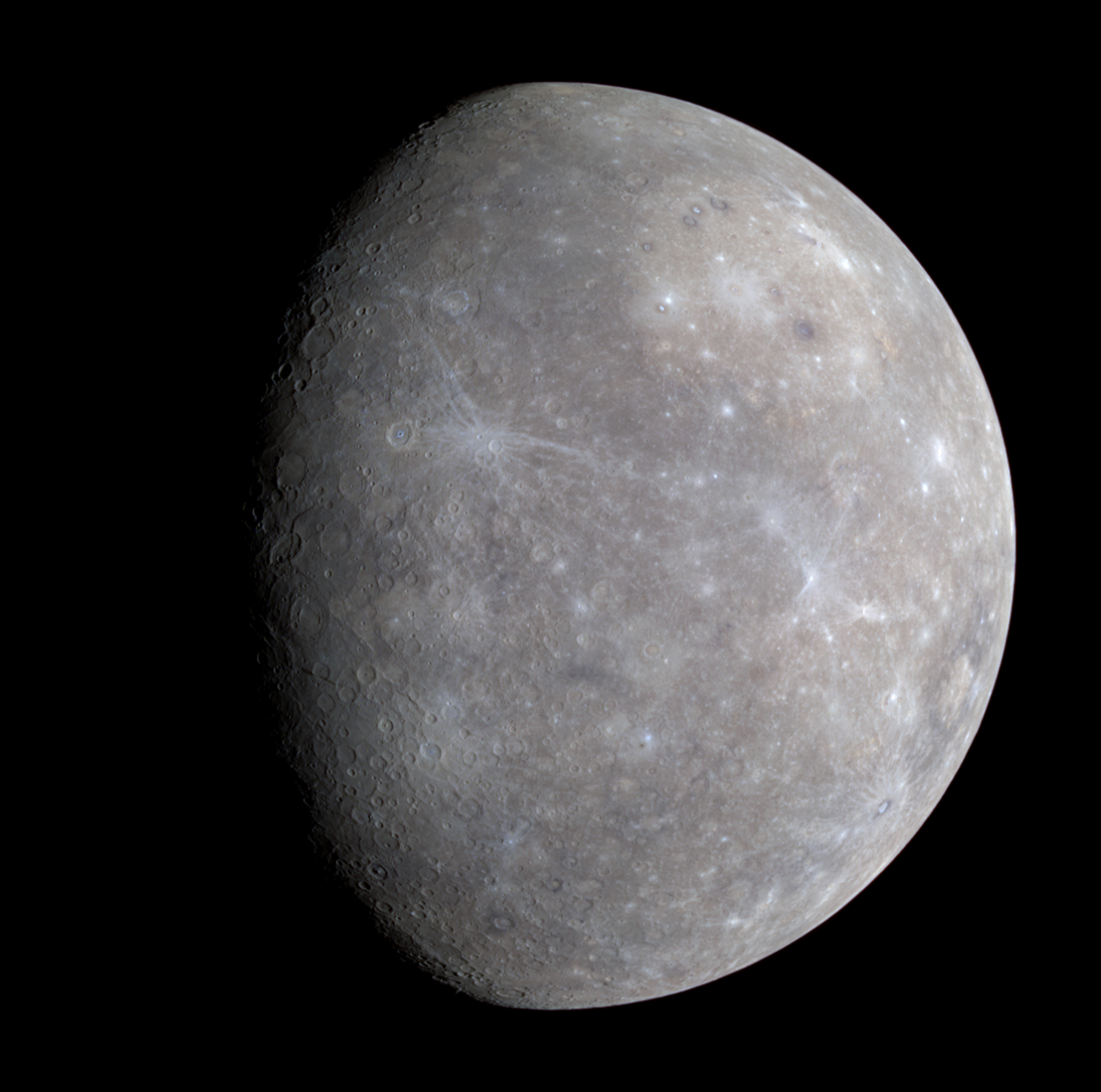
No one knows where, or when Mercury was discovered. All we know is that it was discovered in ancient times. The atomic symbol, Hg, comes from the Latin word "hydrargyrum" which means "liquid silver". It is named after the planet Mercury.
Mercury was known to ancient Chinese and Hindus before 2000 BC, and was found in tubes in Egyptian tombs dating from 1500 BC. The Greeks used mercury in ointments and the Romans used it in cosmetics, but since it is a poison, many died from that.
Mercury is one of the elements, which has an alchemic symbol, which is very similar to the scientific symbol for a female, but with a semicircle at the top. This means it was used in ancient times to try and find the elixir of life, and a method to turn base metals to gold.
When John Dalton was working with atoms, he created his own symbol for Mercury, which is a circle, with 8 lines sticking inward toward the center.
More Chemistry
essays:
This is a full report on elemental Mercury.
... fair conductor of electricity. No one knows where, or when Mercury was discovered. All we know is that it was discovered in ancient times. The atomic symbol, Hg, comes from the Latin word "hydrargyrum" which means "liquid silver". It ...
THis is a general report on copper. It describes it's physical properties, chemical properties, and its uses.
... use copper on a daily basis. Copper is second to silver in it's conductivity of electricity and heat. It's used in outdoor power lines as well as ... an atomic weight of 63.546 and its atomic number ...
This is a lab report on the "Synthesis of Organic Aspirin" for first year chemistry.
... solids of filter paper. Recording Weights. Drying the solids. Adding distilled water. Table 1 ... filter paper sit on the hot plate for a longer period of time. There were minor human errors like inaccurate measurements due ...
This is a chemistry lab report on an Acid-Base Titration experiment.
... ions neutralized the hydronium ions (H3O+) in the solution. This causes a temporary lack of hydronium and thus shifts the dissociation equilibrium of the indicator. The indicator dissociates temporarily revealing an instance of pink coloration. However ...
Summary: This is a touristy book of Hong Kong. On
... they want to go and choose the things they want to see. (132 words) Comment: As the name of the book, ¡§Hong Kong Pathfinder¡¨, this is a guidebook of Hong Kong. This book is for visitors and also for us, Hong ...
Silver Essay: this is a report on silver
... 47 Atomic Weight: 107.8682 Melting Point: 1234.93K (961.78C) Boiling Point: 2435K (2162C) Density: 10.501 grams per cubic centimetre Phase At Room Temperature: Solid Element Classification: Transition Metal Period Number: 5 Group Number: 11 Origin-: The word silver ...
This is a first year chemistry lab. It is a titration to discover which acid reducer (Tums or Hy-Vee brand) neutralized the most acid(portrayed by vinegar).
... until it read "0", again. I then let the burette drip into the "Tums" beaker. After is changed colors, I recorded my results. Results: According to my results, Tums neutralized 5.6 mL of vinegar (representing the acid), while Hy-Vee ...
Group 14 of the Periodic Table of The Elements.
... number of protons, neutrons and electrons, and making an element that would join the ranks of the "super heavies", since it has a huge atomic mass. During the creation of this ...