The Pyramids served many purposes to Egyptian society. They offered both spiritual and practical day to day structure. Initially, the pyramid texts served only to glorify the pharaoh as a God on earth. The artwork on the tombs involving afterlife and the ibu, show importance of the pharaohs' journey to the next life. Later, these texts show evidence that all Egyptians were, throughout life, on a quest for this same salvation, where ones soul or ba was judged by Osiris and hopefully admitted into enter the next life. The pyramids were the Egyptians connection from the temporal world to the spiritual world, they represented cosmic order. The Egyptians would gladly agree to a lifetime of building such massive structures because they believed this act would purify their souls and better reach the heavens. The process of getting to the afterlife was held at highest importance, especially for the pharaohs. The focus, magnitude, and attention to detail involved in everything from constructing a mortuary complex to embalming the dead body is a manifestation of the importance of salvation.
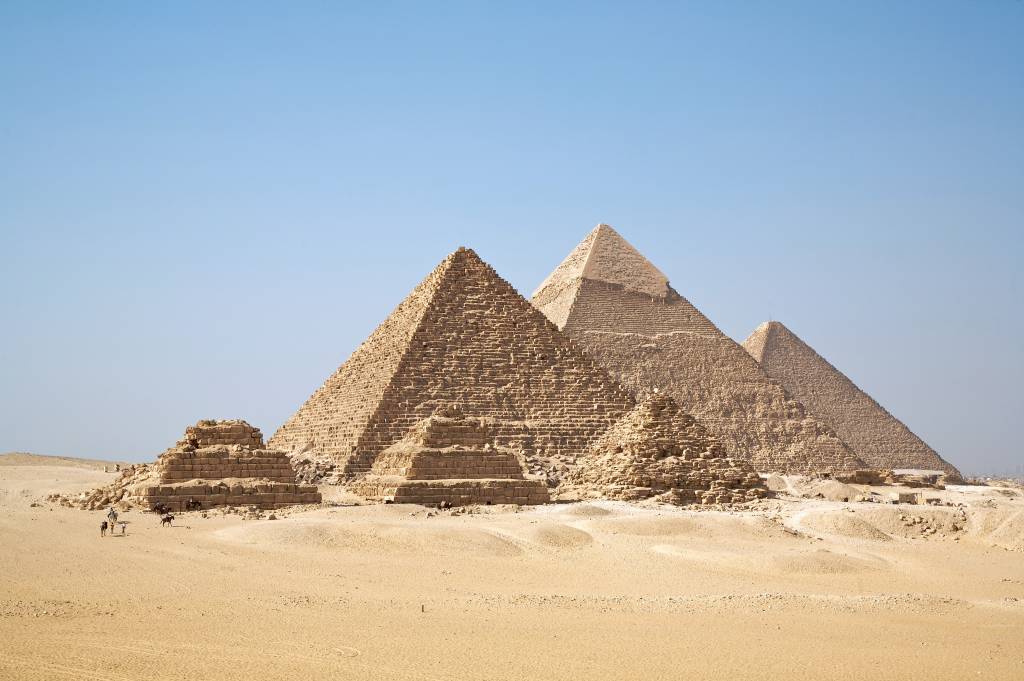 All Giza Pyramids in one shot. Русский: ВÑ...
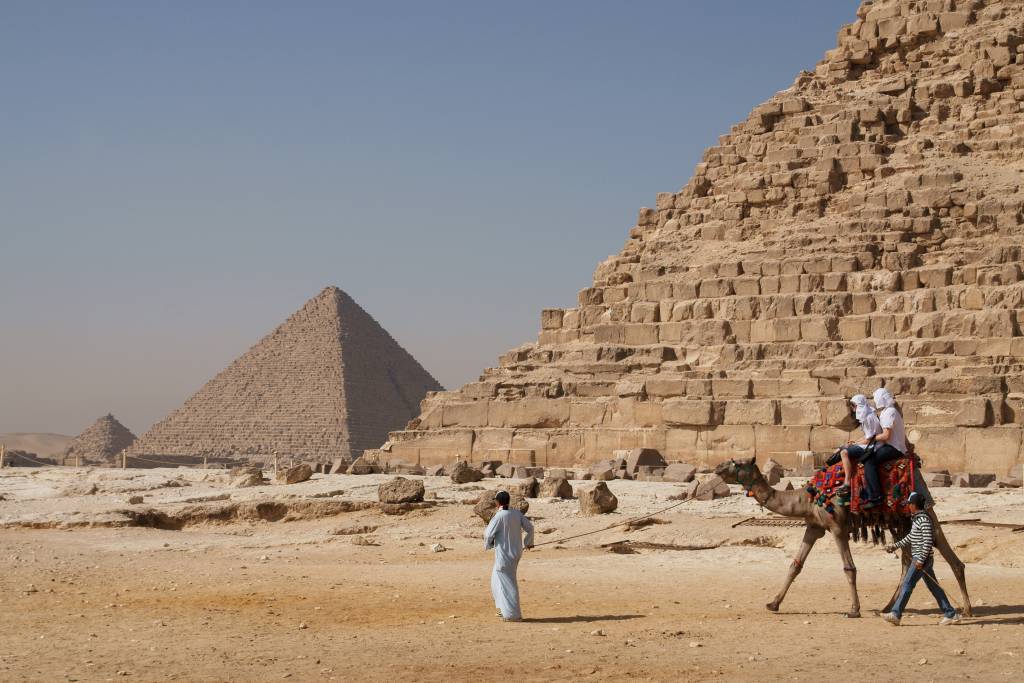 English: Tourists riding a bactrian camel (Camelus...
 English: Menkaure's Pyramid in Giza.
A pyramid complex would have many buildings including an embalming building, a wabet, a satellite pyramid, and a Valley temple, which had the sole purpose of glorifying and honoring the pharaoh's reign. The pyramids at Giza were lined up in a northeast to southwest diagonal line, all facing the north. They had air shafts which extended throughout the pyramid and pointed toward important astrological matter, like Orion and the northern Polar stars. The pyramids had a series of chambers where objects were placed for the ba to bring to the next life. They would put many objects from the pharaoh's temporal life in these chambers, assuming that he would continue doing what he enjoyed doing in this life, in the afterlife. This is...