general explanations of Albert Camus's philosophy
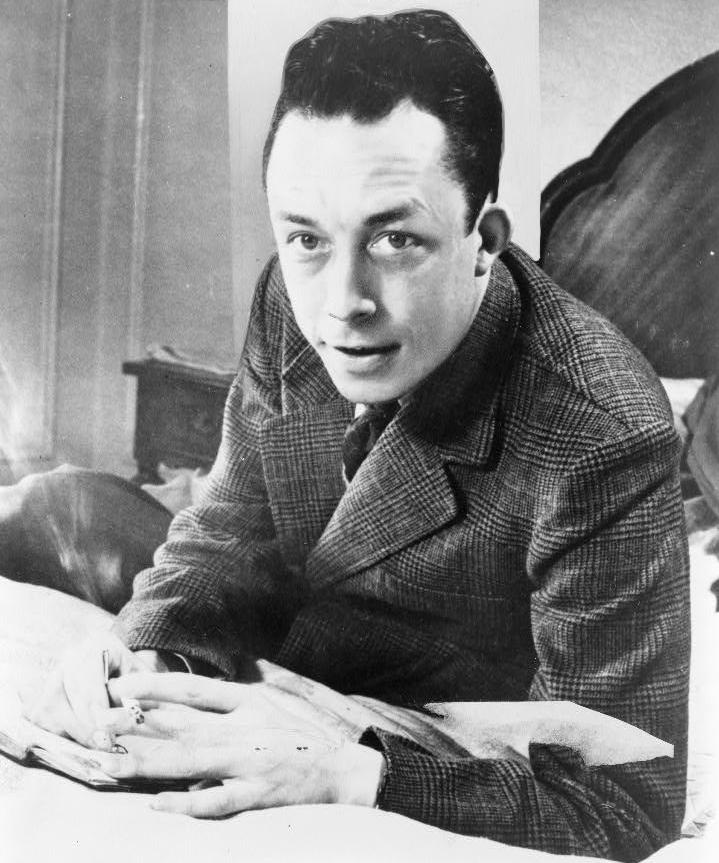
Born on November 7, 1913 in Mandoui, Algeria, Albert Camus earned a
worldwide reputation as a novelist and essayist and won the Nobel Prize for literature in
1957. Though his writings, and in some measure against his will, he became the leading
moral voice of his generation during the 1950's. Camus died at the height of his fame, in
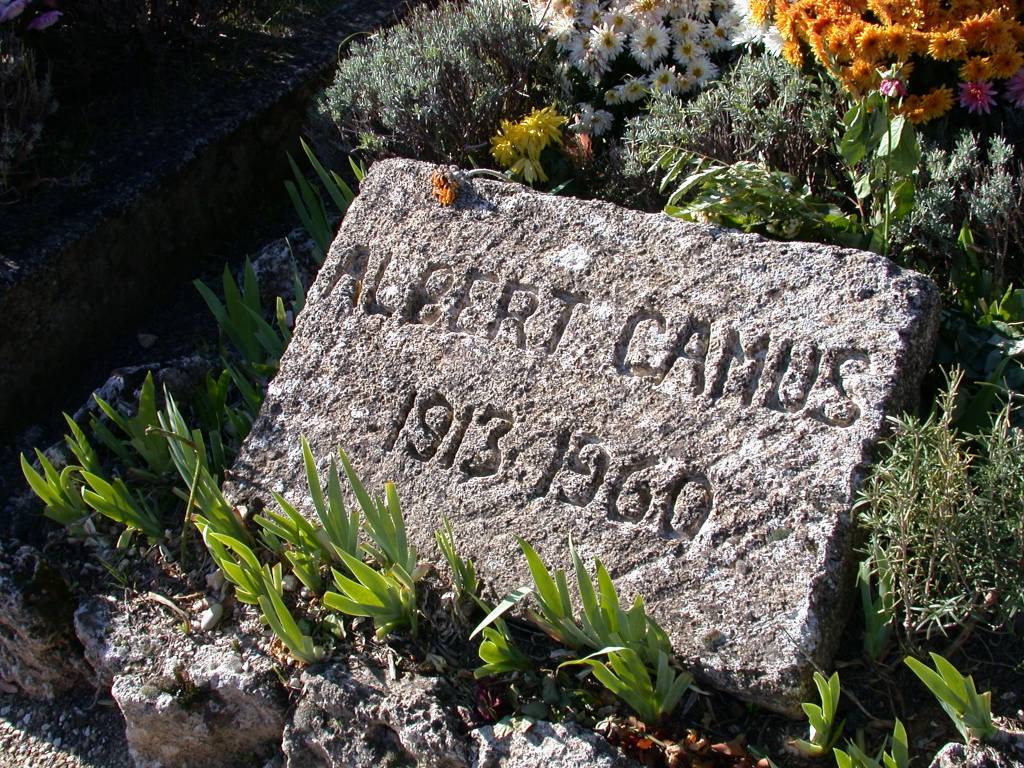
an automobile accident near Sens, France on January 4, 1960.
Camus's deepest philosophical interests were in Western philosophy, among them
Socrates, Pascal, Spinoza, and Nietsche. His interest in philosophy was almost
exclusively moral in character. Camus came to the conclusion that none of the
speculative systems of the past could provide and positive guidance for human life or any
guarantee of the validity of human value. Camus also concluded that suicide is the only
serious philosophical problem. He asks whether it makes any sense to go on living once
the meaninglessness of human life is fully understood.
Camus referred to this meaninglessness as the "absurdity" of life. He believed
that this "absurdity" is the "failure of the world to satisfy the human demand that it
provide a basis for human values-for our personal ideals and for our judgments of right
and wrong." He maintained that suicide cannot be regarded as an adequate response to
the "experience of absurdity." He says that suicide is an admission of incapacity, and
such an admission is inconsistent with that human pride to which Camus openly appeals.
Camus states, "there is nothing equal to the spectacle of human pride."
Furthermore, Camus also dealt with the topic of revolution in his essay The
Rebel. Camus rejected what he calls "metaphysical revolt," which he sees as a "radical
refusal of the human condition as such," resulting either in suicide or in a "demonic
attempt to remake the world...
Reviews of: "general explanations of Albert Camus's philosophy"
:
This was very interesting to read and it had great ideas. you have a nice flow of your thoughts and the paragraphs are all nicely connected and flowing into one another. the philosophical arguments were also very nicely explained. good job and keep up the good work!
More Modern Philosophy
essays:
Existentialism in the early 19th Century. Speaks of writers and philosophers.
... Christian moral tradition in favor of a heroic pagan ideal. Heidegger Heidegger, like Pascal and Kierkegaard, reacted against an attempt to put philosophy on a conclusive rationalistic basis--in this case the phenomenology of the 20th-century German philosopher Edmund ...
The Quarrel About the philosophical question of the Historical Explanation
... Anti-Hempelians have three principles in their objections. 1. A philosopher should stick to the facts that he knows and not ... both have common ground. They are both engaged in the philosophy of history, but this is where the agreement stops for ...
Albert Camus (author of The Stranger) and Existentialism .
... a worldwide reputation as a novelist and essayist, and won the Nobel Prize for literature in 1957. Through his writings, Camus became the leading moral voice of ...
God and The Good Itself
... to Philosophize with the Hammer. Classics of Western Philosophy. Cahn ... Nietzsche says, in the Twilight of the Idols, that the problem with Socrates was not what he had to say because that was ...
Jean-Paul Sartre
... lamented: "France has lost its conscience." Philosophical Background Sartre was born in Paris where he spent most of his life. After a traditional philosophical education in prestigious Parisian schools that introduced him to the history of Western philosophy with ...
John-Paul Satre
... the Nobel Prize for literature in 1964. Sartre being philosophical would not except the award for he felt it was a protest when only Western writers ... of Existentialism. DECISION MAKING TOOL AND MEDIA APPLICATIONS Sartre’s philosophy on the media consists of not allowing the media to ...
Human cloning and Immanuel Kant
... great philosophers. One of the most notable philosophers of the modern era is Immanuel Kant, who was born in Prussia in 1724. Kant paid a great deal of attention to formulating a complex system of morality. The ...
Friedrich Wilhelm Nietzsche: Distinctive Philosopher and Contributor to Modern Philosophy of the Twentieth Century
... from philosophers such as Kaufmann to Camus to Freud honor Nietzsche as an ambitious, provocative person whose thought still puts forth considerable influence on modern philosophy. Bibliography ...
Nice
This one's great. The author kept me from pondering thing out.
1 out of 1 people found this comment useful.