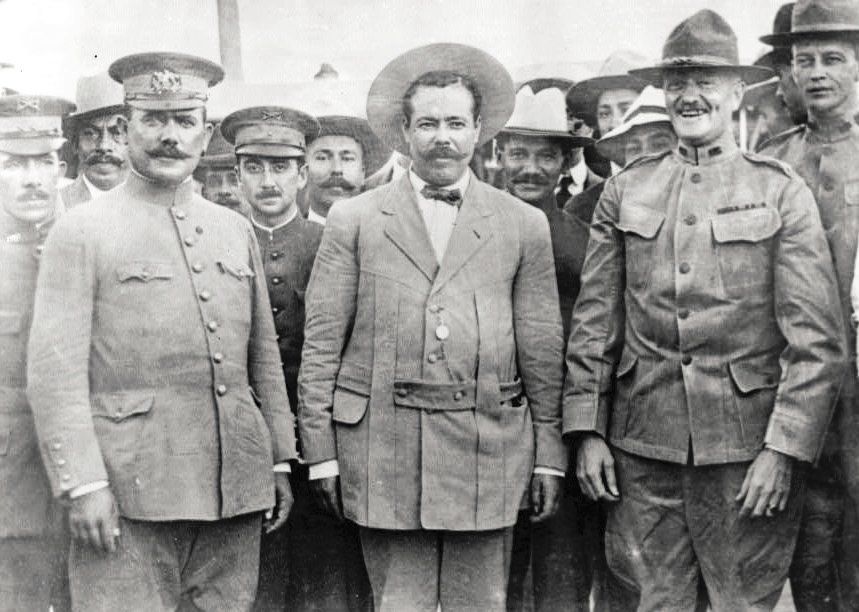
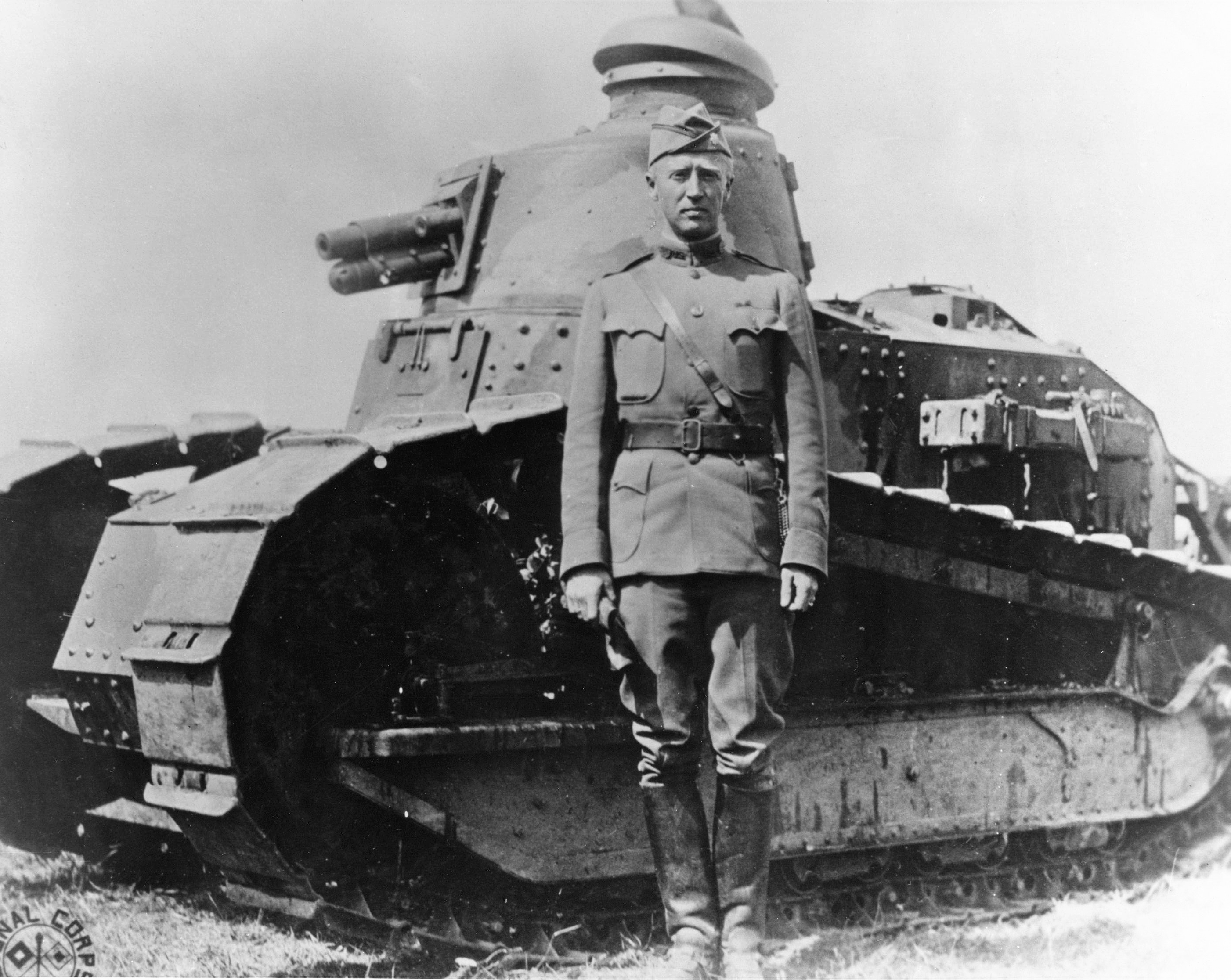
GENERAL GEORGE S. PATTON JR. This report briefly describes his childhood and then gets in to his life in the military more in depth. Mostly focused on his contribution to the victories in WW II.
GENERAL GEORGE S. PATTON JR.
Eric Zuck
Western Civilization II
Bruce Costa
December 1, 2001
Were George and Ruth Patton consciously raising a son to be a great warrior and leader of men in battle? General George Smith Patton, Jr. is considered to be the master at the art of war. His heritage of great warrior ancestors and legacy brought out his true genius of military tactics. It has been said there were many different sides of this complex man. There was the daring and fast advancing combat commander that dashed through Sicily, then broke out of the beaches of Normandy, continued to drive across France and finally smashed into the German heartland in the Spring of 1945. Then he was also the mystic, who believed he had been a soldier in previous lives and would return as a soldier after every death. Other sides of the General were the devoted family man, the sportsman, and the poet. Patton is considered to be one of the most impressive military leaders of World War II; he was known to always be generous in sharing the glory of victory while he knew the full burden of responsibility for a defeat would rest solely on him. The officers and soldiers who served in Patton's command were well aware of his faults, but they also remembered his excellence. And because of his men, an everlasting image of command presence is portrayed by The Patton statue at West Point Military Academy.#
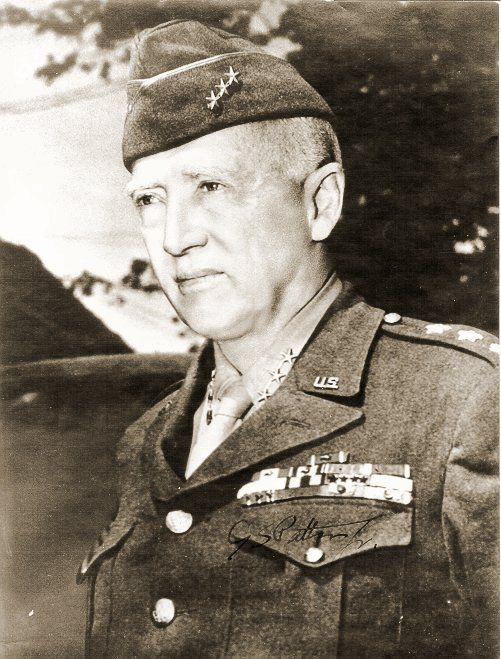
While researching the vast amounts of information on World War II, I narrowed my topic down to information involving the man I deem to be the true genius at the art of war, George S. Patton, Jr. (1885-1945). I came to learn that General Patton was one of the most intelligent leaders of troops...
More World War II
essays:
D-Day, the beginning and the key to the fight to take back Europe.
... it's twelve German strongpoints over 34,000 troops and 3,300 vehicles would be involved in the Omaha Beach invasion. The large number was partly because of the fact that beginning in April of the same year German military had ...
Dieppe: A Canadian Disaster
... embarkation's were made from the sea no matter what the weather was, this was also done to harden and discipline the men for the upcoming battle. Allied military leaders believed ...
Nazi Propaganda During WWII
... The art of lying credibly, remembering that the continuous repetition of a lie worked wonders' (xvii). Goebbels' job, in essence, was to build Hitler up as a great leader and ...
How Did Hitler's Final Solution Policy Come About,
... Hitler’s aim. When the Blitzkrieg failed, however, the Nazi commanders in Poland and Russia found themselves with millions of Jews on their hands, and more coming in from Germany. In the light of the circumstances many leaders took ...
This essay is about world war 2's many mistakes and how it effected Canada and the rest of the world. Will help anybody doing research or needing an essay on WWII
... ton of war materials, and training all of the Commonwealth's air forces. Conscripting was not needed from Canada at this point, and the leader of this ...
The Thin Red Line compared to World War II (tutor's comment: i like that you see the comparison and soldiers do have dreams of something other than the hell they face.)
... August of 1942, the movie really concentrates on comparing the beauty of nature to the brutality of war. The soldiers in ... destructiveness of war through the juxtaposed images of nature, beauty, and peace. World War II is often seen as glorified and its reasons just, but when the scene of the ...
Assess 'Did the Americans know about the planned attack on Pearl Harbour'?
... loss of lives, 2403 men and women, leads to the belief that the president nor any high military or state officials knew about the attack. The communications which had been intercepted and decoded did not reach those in command until ... our leaders in Washingtion knew of an attack in a matter of hours ...
The decision to drop the atomic bomb
... casualties in the first ninety days and only one third of them would be deaths. Japan at the end of the war had numerous economic and military problems ... a million to a million lives would be lost if we led a ground invasion first on Japan's island of Kyushu and then the rest of Japan. ...