Schizophrenia is a disorder that can affect anyone. It is the greatest disorder that effects teenagers. There are one million to two million people have long-term schizophrenia, and 100,000-200,000 people become schizophrenic every year. In addition, about fifty percent of people in hospital psychiatric care have schizophrenia.
There are many possible causes for the disorder, and many doctors believe that there is more than one cause. What is thought to be the main cause is a chemical imbalance in the brain. This could be an imbalance in the number of neurotransmitters and/or an imbalance in the amount of dopamine. The exact cause(s) of schizophrenia remains unknown at this time. However, both nonbiological (psychological) and biological (genetic, chemical imbalances) factors are thought to be involved. As technology allows disorders of the brain to be further defined, biological causes are becoming better understood. Some other possible causes of schizophrenia include genetic predisposition, infectious agents, allergies, and disturbances in metabolism.
 English: An American Lady butterfly against a clou...
 English: New York 1 political reporter and Inside ...
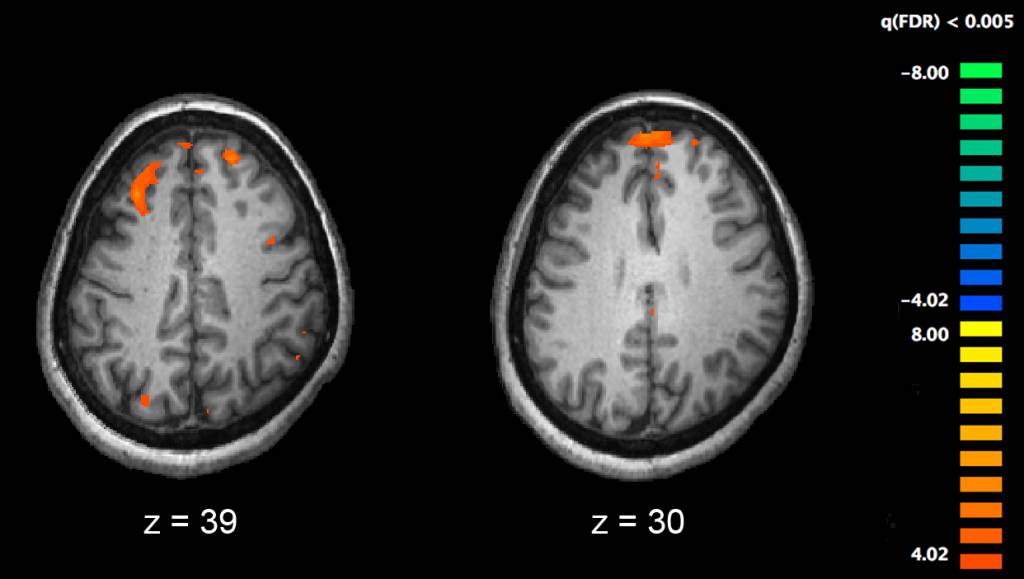 English: Image showing brain areas more active in ...
As more research becomes available, it will be easier to identify which factors truly cause schizophrenia.
This article discusses several types of schizophrenia. The first one, disorganized schizophrenia (also called simple schizophrenia,) is characterized by disorganized behavior, disorganized speech, and a flat personality. The next type of schizophrenia is catatonic schizophrenia. The symptoms of this are usually extremely strange behavior and lack of or too much movement. Undifferentiated schizophrenia has symptoms of many types of schizophrenia, but not enough to be any of those types. Next, residual schizophrenia is when a person has at least one episode of schizophrenia, but has not shown the necessary symptoms to be diagnosed with a particular schizophrenia. The active symptoms of schizophrenia must be present at least 6 months in a patient in order for the patient to be diagnosed with schizophrenia. Those are the main...