The Giant Panda
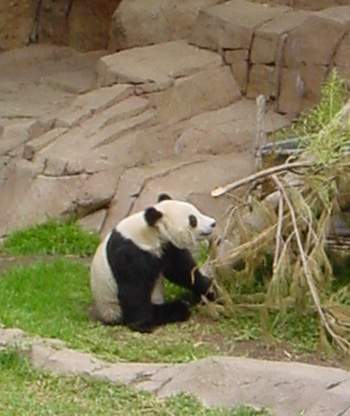
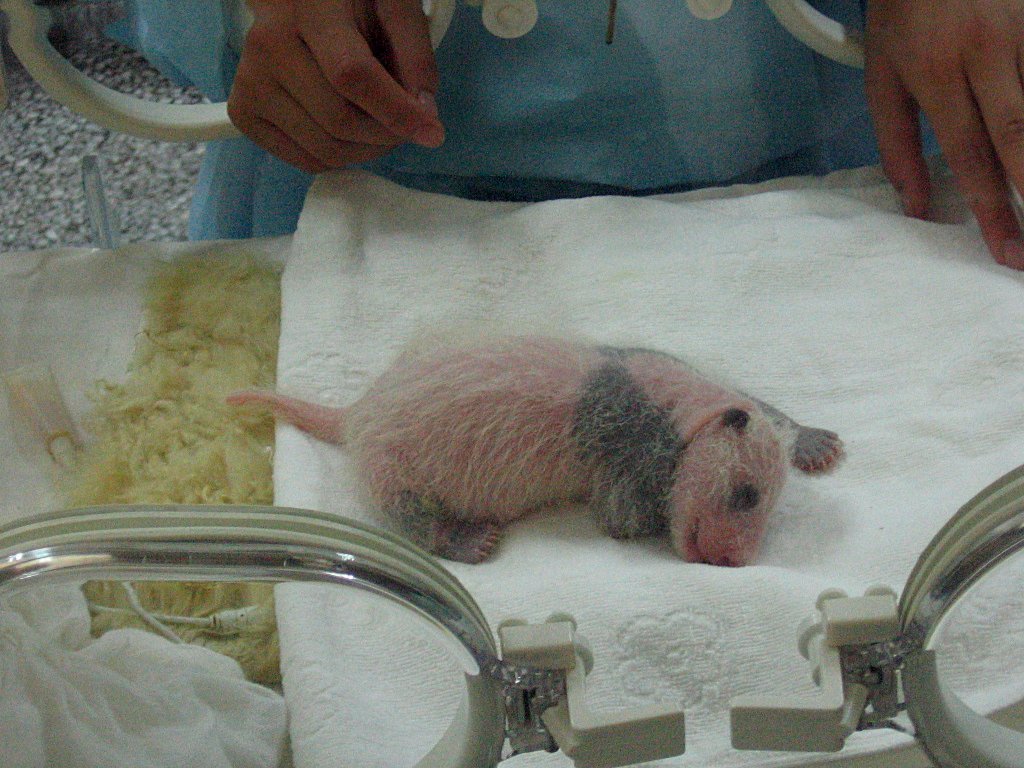
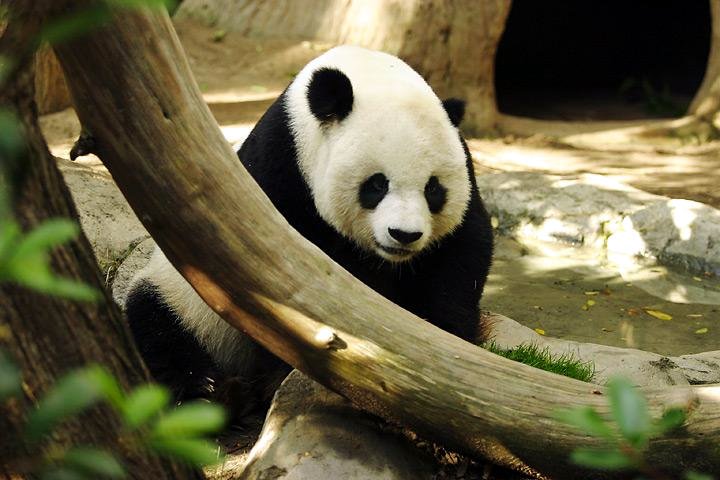
The Giant Panda is a small black and white bear. Most of its stomach and head are white with a black saddle across its back, black limbs and black ears. It can weigh up to 275 pounds. It lives in six small areas in inland China. Its habitat is a cold, damp, coniferous forest with a bamboo understory between an elevation of 4,000 to 11,000 feet. The Panda bear eats over 15 different types of bamboo but they have been known to eat other plants, fish, eggs, and insects for their protein. Because of their bad digestion system Pandas must eat for twelve to sixteen hours a day, they can devour twenty-two to forty pounds a day. The Giant Panda is very close to extinction.
Only 600-1000 live in the wild and that number is growing less because of China's growing population and poachers who sell Panda skins.
However, about 110 panda's live in captivity around the world. The Chinese government recently approved a 10 year plan to improve existing reserves, build new reserves and create habitat passageways between reserves. This program was developed by World Wildlife Fund and the Ministry of Forestry and is estimated to cost $50 - $100 million. The money to carry out this conservation program is not yet available, but AZA hopes to support in fund-raising for execution of this project. The Panda is on its way to recovery and hopefully it can return to its former glory.
More Zoology
essays:
America's Zoos
... the Chinese government reserve a 100,00-square-mile area in a region of Tibet for the sake of the country's treasured, but endangered, pandas (Stevens ...
Tiger Subspecies
... South China tiger population was reduced to 400. The Chinese government then instituted a 'Save the Tiger Program!' South Chinese tiger ... Southwest Chinese tiger are now extinct doesn't give you aportrait of the process of extinction. The Javan tiger became extinct in ...
The Koala site: http://www.thekoala.com/koala
... their digestive system for a relatively long period of time, maximising the amount of energy able to be extracted. At the same time, this slow metabolic rate minimises energy requirements and they will sleep for up to 18 hours per ...
Owl Research Paper By Michi Metas (WARNING: A ten page paper)
... their digestive system. An owl's excretion has an acid that becomes the white part of a healthy owl dropping (gross). Pellet Formation A couple hours after ...
Captive Breeding as a form of Species Conservation.
... than 15,000 plants and animals are said to face extinction (Endangered). Captive Breeding and reintroduction into the species natural habitat has been ...
Wildlife Conservation
... Siberia, China and Bali in the East. Today and the eve of the new millennium, the Caspian, the Javanese and the Balinese tigers are extinct and the situation of the Siberian and South Chinese tigers ...
Baiji Dolphin
... galloping white horse capable of flying across lakes and rivers, there now may be fewer than 30 Chinese River Dolphins left in existence. Today on the riverside towns are rapidly growing into cities as Beijing spreads the wealth of China's ...
"Overfishing of the Ocean" The essay is on sharkfinning and the effects it has on the ocean. It also gives information about overfishing and the depletion of certain species.
... are definitely at the top of the list for marine fishes that could go extinct in our lifetimes". Also, according to Baum, overfishing has caused ... been doing. According to the Miami Herald, Philippe an upscale Chinese restaurant has pulled shark fin soup off their menu and ...