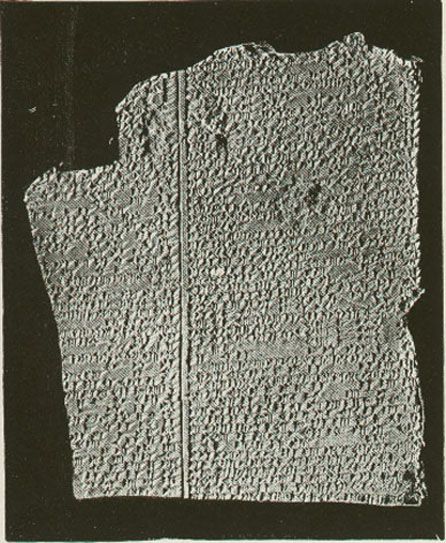
Gilgamesh
With such an interesting storyline and well developed characters, how could one not want to keep the Epic of Gilgamesh in circulation? But it was not just lore, it effectively taught the outlook of Sumerian culture and instilled morals. This epic brings a historical insight into how Gilgamesh lived and ruled through his actions as a king. The simple fact of its ability to teach, explain history, and outline religious beliefs remains a very practical tool for the Babylonians to use and pass down to future generations. There are many factors why the Epic of Gilgamesh became sacred literature.
One such reason why Gilgamesh has survived is due to its accurate account of the gods and the beliefs that made them so crucial to these ancient people. A fine example of this is shown in the line, "I am going to that country, O Shamash, I am going; my hands supplicate, so let it be well with my soul and bring me back to the quay of Uruk"(72) Here is accurately portrayed how Shamash was related to Gilgamesh and acted on his behalf. This document provides a vivid account of the overall religious theme to which the Sumerians belonged. Through this story, the keepers of the text could easily depict the gods and their roles in the Sumerian society.
Another reason for this story's sanction by the Babylonians is that it provides historical documentation of the actual king, Gilgamesh. Since the Babylonians were able to see his creations and his incredible skill in building in the story, they realized that this was a great man. These walls provided verification of his existence and showed that this king was a very powerful man, yet the Babylonians kept Gilgamesh for the fact that they could gloat over their conquest of this society.
More Religion & Faith
essays:
Epic of Gilgamesh, Eve, and Pandora from Hesiod's Works and Days
... in the wilderness with my wife had all the treasure I wished" (Epic of Gilgamesh 90-91). Shamash makes Enkido realize what the harlot has done for him ... , I who slew Humbaba and now see what has become of me" (Epic of Gilgamesh 91). The fact that Enkido realizes that he caused himself the pain, and ...
Describe the religious beliefs and practices in pre-Islamic Arabia.
... emergence of Muhammad was a time of many different and varying religious practices. To understand the religious beliefs and practices of the time, it is necessary first to have some basic appreciation of Arabia ...
The Flood Stories: The Validity Debate Continues.
... findings of the Assyrian Tablets (Babylonian writings) is still able to describe the main events of the Flood. The Flood analysis, as depicted in the Epic of Gilgamesh, originates from the Sumerian Dynastic ...
Religious Beliefs of the Ancient Mesopotamians and the Hebrews.
... their religious beliefs and these differences shaped their societies. Religion was the basis of civilization for the ancient Mesopotamians; it dominated every aspect of their ...
Analytical Essay on the Flood Narratives in 'Gilgamesh' and the Bible
... the Sumerian epic of Gilgamesh and in the Bible and although they are very similar, they are also very different. The Sumerian version of the ... his generations, and Noah walked with God." (the Bible, p. 11 § 8-9) Noah lived his life by the laws and commandments of God, he is truly religious and ...
Comparing Religious Beliefs
... One of the oldest aspects of Hinduism is as much social as religious, and that is the caste system. It is important to understand the caste system before delving into Hindu religious beliefs. According ... and beliefs of many other religions and cultures. In this essay the major beliefs of Hinduism ...
Deductive vs. Inductive reasoning
... on facts gathered around them and ideas and knowledge they have been exposed to. A person of religious belief utilizes ... seek their entire life for the answers to the questions of conduct, reason, morality, courage, dedication, temperance portrayed in their chosen faith, and how ...
The Egoism of Jonathan Edwards
... interest of each individual under a Davis 6 canopy of benevolent altruism succinct with his religious beliefs, Hall ... promotion of one's own good is in accordance with morality."(Internet Encyclopedia of Philosophy, 1) While psychological egoism is more a statement of fact without ...