Globalisation refers to the increasing economic integration between countries leading to the emergence of a global market place and customisation of goods, services and technology. Indonesia is the world's fourth most populous nation and the anchor of Southeast Asia politically and economically. The country has a strategic location, a large labor force earning relatively low wages, and abundant natural resources.
Globalisation has introduced a series of structural adjustments to Indonesia's economy through liberalisation, marketisation, deregulation, and privatisation. It has enhanced Indonesia's international competitiveness through introducing benefits from developments in the global economy. Indonesia's period of rapid globalisation (1987-1996) led to changes in policy direction, progressive economic liberalisation, massive capital inflows, and substantial economic transformation.
Globalisation has led to rapid growth in world trade. This has enabled developing countries such as Indonesia to import capital that is critical to long run growth. Indonesia's trade and investment regimes have been substantially liberalised.
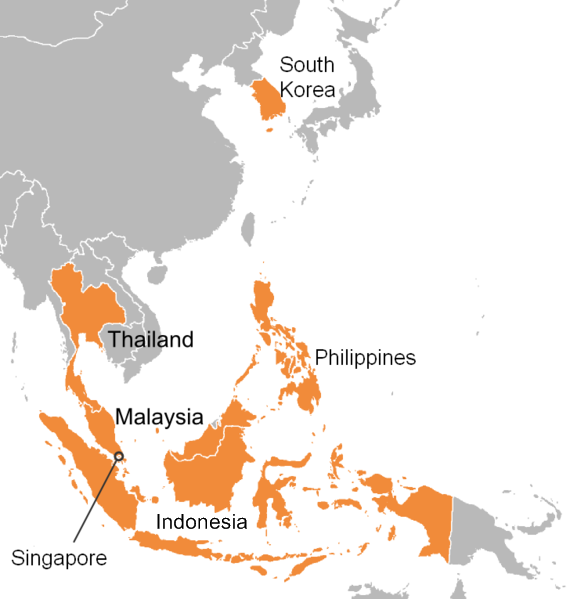 Countries that were most affected by the 1997 Asia...
 The Mount Bromo volcano on the island Java of Indo...
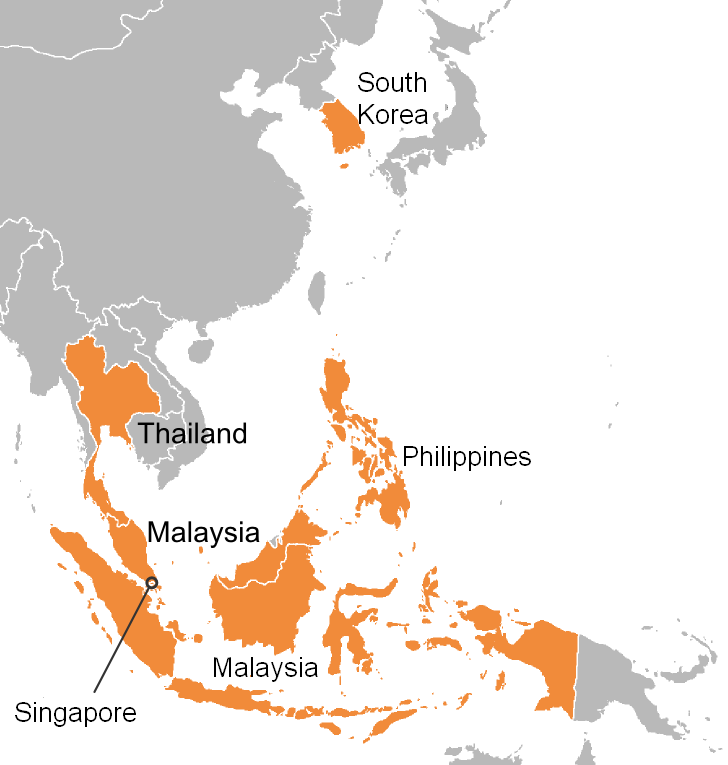 Countries that were most affected by the 1997 Asia...
Policies have been introduced in response to a trend toward globalisation and the international integration of markets. Indonesia reduced its tariff levels, and reopened several sectors previously closed to foreign investment. Many import licenses and non-tariff barriers were also removed. The country's financial industry was opened up to competition, reserve requirements were reduced, and limits on foreign borrowing were removed. Deregulation in the financial sector led to rapid growth of modern and capital intensive sectors. These reforms led to a financial boom which contributed to a worsening income distribution in urban areas and inequality. While globalisation was successful in reducing poverty many people were still living below the poverty line.
Globalisation has given the Indonesian government a strong justification for undertaking market-oriented reforms that can help maintain high and sustainable rates of exports necessary for strong economic growth. The composition of Indonesian exports has changed significantly with manufactured goods overtaking...