The Great Depression did not just happen in America, it was born. In the 1930's a sequence of key events and problems led to the fall of America's economy. These included speculation, depressed farms and industries, wealth distribution, low money supply, no safeguards, overproduction, unemployment, and decline in foreign trade.
Speculation was a way of gambling with short term investments. Speculators bought low stocks, which they thought, would rise in price, and when they sold them they would receive a profit. This was like gambling on the stock market, which seemed to attract thousands of Americans. The stock market boom was very unsteady, because it was based on borrowed money and false optimism. When investors lost confidence, the stock market collapsed, taking them along with it. Depressed farms and industries caused wages to drop and forced employers to lay off their workers. With their low incomes, many farmers and workers could not afford the manufactured goods that the industries have been producing at a fast rate.
 Forex Money for Exchange in Currency Bank
 Exchange Money Conversion to Foreign Currency
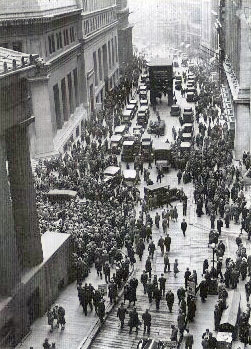 A solemn crowd gathers outside the Stock Exchange ...
This underconsumption became a major disadvantage in the economy. Wealth distribution referred to the big gap between rich and poor. The top 5% received 30% of the wealth, which was social inequity. Even though business profits rose in many industries, workers did not receive a fair and equal share of these profits. This forced goods and products to pile up in warehouses across the nation because there were not enough buying consumers due to the fact that they did not have any money. Overproduction was advanced by the use of the assembly line, which increased the efficiency rate and took less time to make the same product. There was too much supply and not enough demand. After the assembly line invention, many companies started laying off workers because of the efficiency rate dramatically increased...
Good
You described the history behind the depression very well. I like your transitions and your defence of your thesis.
1 out of 1 people found this comment useful.