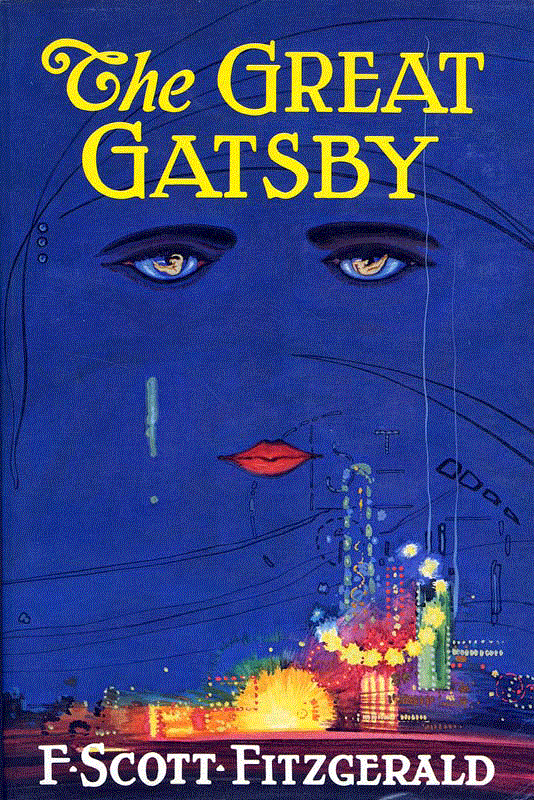
"The Great Gatsby" by F. Scott Fitzgerald.
In the epic novel The Great Gatsby by F. Scott Fitzgerald, a naïve Midwestern boy trying to make it in New York City, Nick Carraway, narrates a story complete with many underlying themes relating to 1920's society. The main focus of the story is the negative effects of the obsession with materialism and 'The American Dream'. Throughout the novel, Fitzgerald makes the evils of greed and materialistic desires apparent by making all the characters lives miserable and empty- a philosophic statement about the typical American viewpoint of money and possessions.
If we look back to the time when The Great Gatsby was written back in 1925, America was full swing into what is referred to as "The Jazz Age". During this post World War I time, the attitude of the typical American was highly ambitious: New millionaire tycoons were springing up everywhere, the stock market was flying high, and 'new money' was popping up everywhere. "A portrait of the Jazz Age in all of its decadence and excess, Gatsby captured the spirit of the author's generation and earned itself a permanent place in American mythology."(Amazon). It is because of this economic trend that Americans became so money-hungry, and it is this negative almost anti-glamorous life that Fitzgerald so vividly describes and warns against in The Great Gatsby.
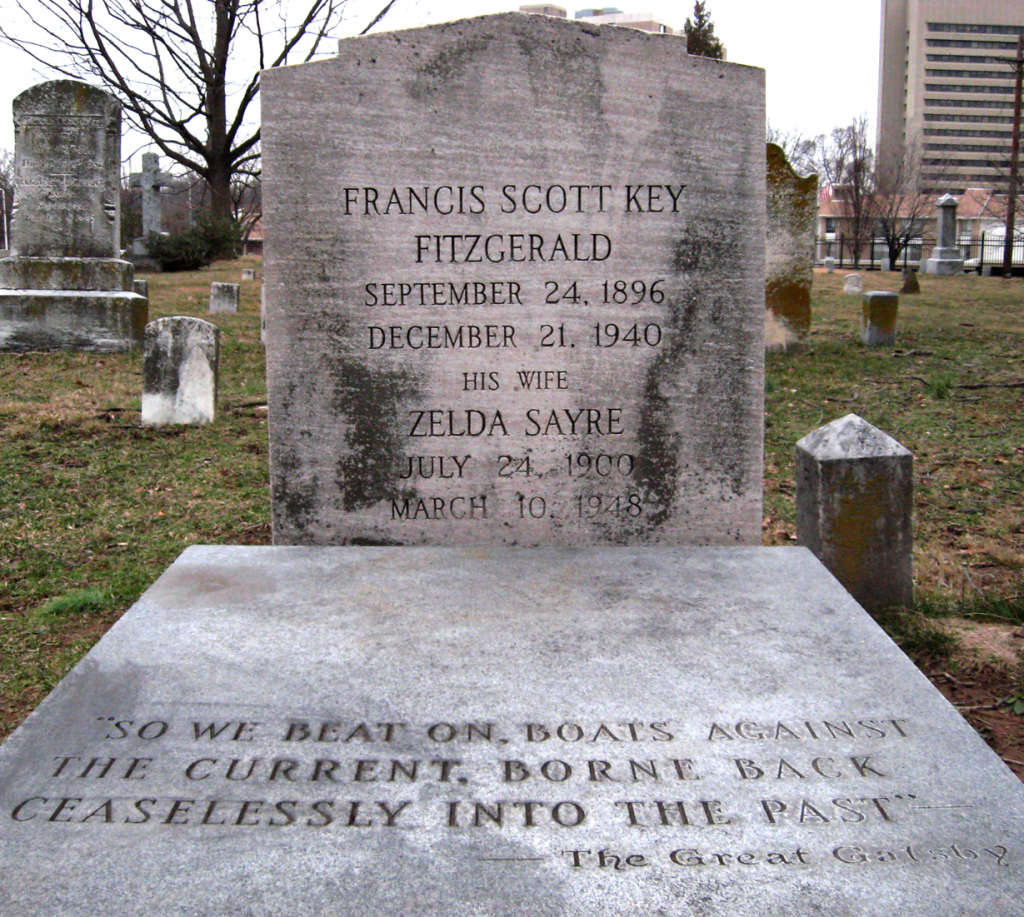
The story opens with Nick Carraway moving from Minnesota to New York City with an appetite for money but still retaining his morals. He moves into the West Egg part of Long Island, which is populated by 'new money' people, or those who have the financial means to be considered rich but lack the social connections of the 'old money' residents of the East Egg. Nick's sole connection to the East Egg is through his cousin, Daisy, and her husband, Tom. Daisy and...
Reviews of: ""The Great Gatsby" by F. Scott Fitzgerald."
:
More "The Great Gatsby" by F. Scott Fitzgerald
essays:
Daisy's love in F. Scott Fitzgerald's "The Great Gatsby"
... F. Scott Fitzgerald's The Great Gatsby, the character of Daisy Buchanan has many instances where her ... tale of wayward love to a saga of unhappy lives. Fitzgerald portrays Daisy as a 'doomed' character from the very beginning of the novel. She seems concerned only of her own stability and is ...
F. Scott Fitzgerald's "The Great Gatsby" Main Characters' Moral Reassessment
... F. Scott Fitzgerald's The Great Gatsby exemplifies the didactic ending that novelist Fay Weldon describes; an ending of significant realizations or ... experiences a change that will alter his life completely. The novel itself is dictating through him, heightening his significance and role of narrator ...
Gatsby's Dream. The central character of F. Scott Fitzgerald's "The Great Gatsby"
... , the central character of F. Scott Fitzgerald's The Great Gatsby symbolizes the American dream. The American dream offers faith in the possibility of a better life. Its attendant illusion is the belief that material wealth alone can bring that dream ... . Scott Fitzgerald's The Great Gatsby symbolizes the American dream. The American dream offers faith in the possibility of a better life. Its attendant illusion is the belief that material wealth alone can bring that dream to fruition. Through Gatsby, Fitzgerald ...
The Unattainable American Dream in F. Scott Fitzgerald's "The Great Gatsby"
... two--therefore proving that the American Dream is nothing but a dream. In conclusion, through F. Scott Fitzgerald's The Great Gatsby, two characters, Tom and Gatsby, show, through their differences, that the American Dream is unattainable. Because of faults and ...
How have the contexts of each composer influenced the ways in which women have been represented as 'behaving badly' in Chaucer's "Wife of Bath Prologue" and F. Scott Fitzgerald's "The Great Gatsby"?
... to adhere to the tight moral rules for females and the context in which this label applies is ultimately determined by the cultural values and attitudes of society. Bibliography:"Wife of Bath's Prologue" - Chaucer"The Great Gatsby" - F. Scott Fitzgerald ... the los of al mankynde, portrays female sexual freedom and self-determination as the 'ruin of mankind'. F. Scott Fitzgerald's The Great Gatsby explores the result of this patriarchal society and the effect of forced ideals on women. Daisy represents ...
"The Great Gatsby" by F. Scott Fitzgerald.
... personality, many of these people were not as attracted to F. Scott Fitzgerald's The Great Gatsby as he had hoped. Some felt it was a masterpiece ... any information he could never know. This was one of the reasons the novel was so convincing. The setting also contributed to the endless mood of the ...
"The Great Gatsby" by F. Scott Fitzgerald.
... American Love Story F. Scott Fitzgerald's The Great Gatsby can be characterized as being one of the great American love stories of the 20th century. Love is clearly a theme throughout the novel. Whether it be between Nick and Jordan ... . Scott Fitzgerald's The Great Gatsby can be characterized as being one of the great American love stories of the 20th century. Love is clearly a theme throughout the novel. Whether it be between Nick and Jordan, George and Myrtle, Myrtle ...
"Linguistics of the Great Gatsby". This paper describes F. Scott Fitzgerald's linguistic style as represented in his modern story, "The Great Gatsby".
... F. Scott Fitzgerald in The Great Gatsby As The New Lexicon Webster's Dictionary of the English Language tells us, linguistics is the scientific study ... own. It has been said in certain circles that The Great Gatsby is "the great American novel," and with good reason. It has remained as fresh, vibrant ...
American dream
The american dream in whatever form it takes has its root in the illusion of happiness. You should've displayed Gatsby as a victim of the times and of societies misconception of what happiness really is rather than paint a picture of a money hungry man. I found it very comprehensive and well structured.
1 out of 1 people found this comment useful.