The Greek God: Zeus
Thousands of years ago many people believed in a god named Zeus. He was considered to be the god of the sky and weather and his image appeared on most Greek coins. The people of Greece worshipped this idol as their god. Zeus became one of the Seven Wonders of the World.
Phidias, a famous Greek sculptor and his laborers carved a giant statue of Zeus in a special workshop behind the temple. It was made entirely of ivory and gold (Chryselephantine). When finished it sat in the temple on an elaborate throne along with sculptures and paintings of Greek myths and legends. Zeus was the most celebrated statue of ancient times because of its greatness, charm and worth.
Zeus was the supreme god and ruler of Olympus. He was known by many titles: Lord of the Sky, the Cloud- gatherer, the Rain-god and Zeus the Thunderer, all of which show which force of nature was considered to be the most important in Ancient World - rain.
 Zeus
Zeus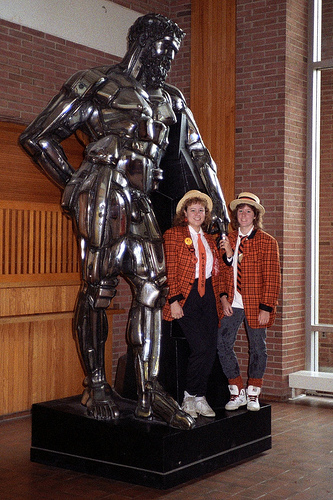 Zeus (Crop)
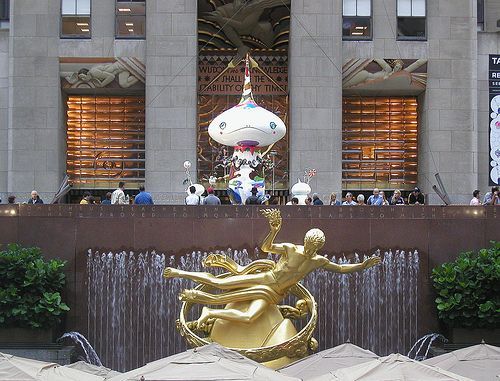 Murakami at Rockefeller Center 04: Buddhism vs. Gr...
In most other mythologies the "ruler-god" was usually associated with the sun, but in Greece the climate is hot and dry making rain the scarce, life-giving force.
Zeus was the sixth child born to Cronus and Rhea, Because Cronus, ruler of the Titans and the supreme god at the time, was afraid that one of his children would overthrow him, just like he overthrew his father, Uranus, he swallowed his first five children - Poseidon, Hades, Hera, Demeter and Hestia. This, of course, infuriated Rhea and when Zeus was born she tricked Cronus into swallowing a rock wrapped in blankets. Zeus is more powerful than any other god or even all the other gods combined. But, unlike many gods in other religions he was neither omnipotent nor...
Zeus
You've done a good job in writing your essay about the Greeks' chief Olympian. While most don't believe any of the tales about the Greek gods and goddesses, there is no denying that they make great story telling. The stories are valuable for extolling virtues such as courage, integrity, and ingenuity. It is interesting that the ancients invested their gods with human foibles. The Greeks of old must have taken solace in knowing that their gods had the same sort of character flaws which mortals possessed. For example, Zeus was notoriously moody and lecherous, hardly characteristics one would expect to find in a chief god.
The Romans so admired Greek culture that they adopted their gods, while giving them different names. We admire both the Romans and the Greeks to such an extent that it is doubtful that their myths will ever be allowed to die. Thus, their mythical gods and goddesses will in
fact be immortal so long as humans love stories of wondrous deeds and adventures--and that will be a very long time indeed. Fine work!
15 out of 18 people found this comment useful.