Early LifeHelen Adams Keller was born in a small town in northern Alabama to Kate Adams Keller and Captain Arthur Keller, a Confederate Civil War veteran. At nineteen months, Helen suffered an illness that left her blind, deaf, and eventually mute. She remained locked in this lonely state of sensory deprivation until she reached the age of six, when her family employed Anne Sullivan, the twenty-year-old daughter of working-class Irish immigrants, as her tutor. Sullivan herself was visually impaired.
With Sullivan's devoted, creative, and stubborn help, Helen soon rediscovered the concept that concrete things are associated with linguistic symbols-in her case, the letters of the manual alphabet spelled into her hand. Once that breakthrough was made and communication was reestablished, the young girl worked quickly to master manual lip-reading, handwriting, typewriting, Braille, and basic vocal speech. Helen's recovery of communication was aided by the residue of language skills that had developed before she went deaf, by a stimulus-rich home environment, by the early age at which her adaptive education began, and by her own remarkable intelligence and perseverance.
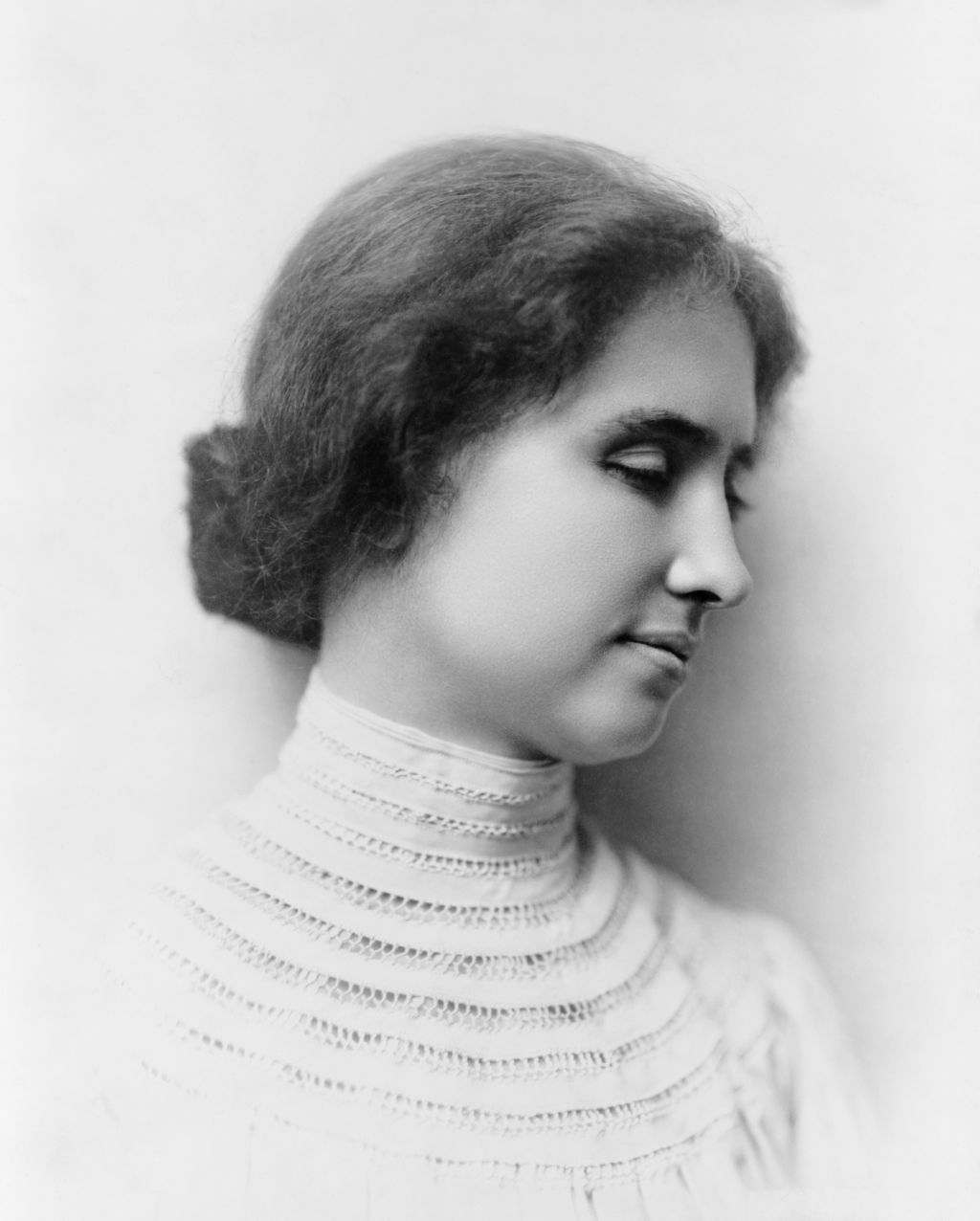 English: Helen Keller. Français : Helen Keller.
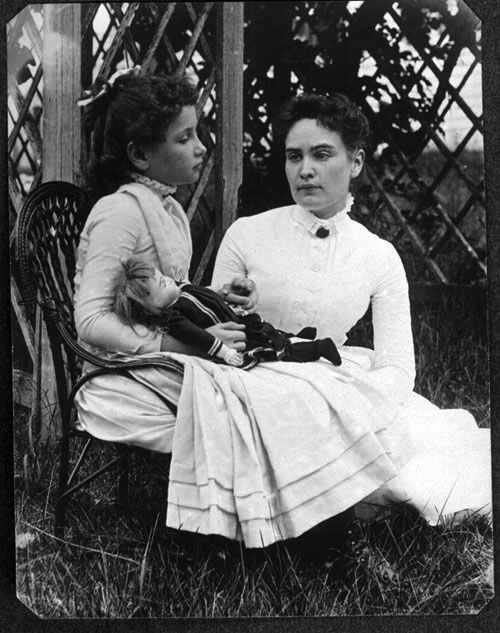 Photograph of Helen Keller at age 8 with her tutor...
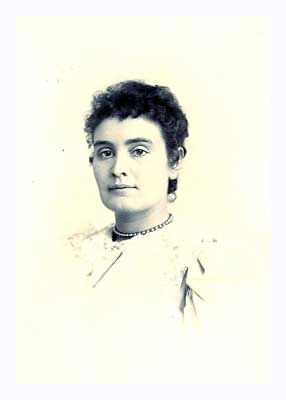 Anne Sullivan Macy, Lehrerin von Helen Keller
Accompanied and assisted by her tutor, Helen attended the Perkins Institution for the Blind (Boston), the Horace Mann School of the Deaf (New York), the Wright-Humason School for the Deaf (New York), and, eventually, Gilman's preparatory Cambridge School for Young Ladies and Radcliffe College (both in Cambridge, Massachusetts), from which she was graduated with honors.
While she was still a schoolgirl, Keller began her lifelong career of philanthropic fund-raising, collecting contributions for the education of a destitute blind and deaf boy when she was eleven, giving a tea to benefit the kindergarten for the blind when she was twelve, and campaigning for money to start a public library in Tuscumbia when she was thirteen.
She also began her career as a writer...